Get Full Government Meeting Transcripts, Videos, & Alerts Forever!
Get email alerts on the Gaza Humanitarian Access topic
No spam. Unsubscribe anytime.
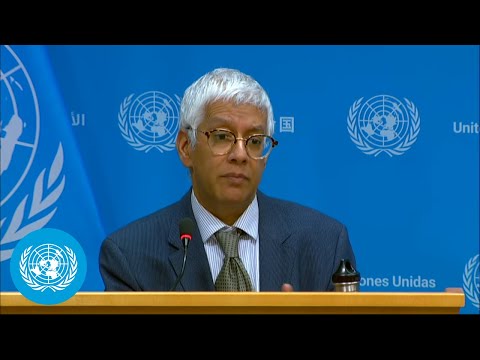
U.N. briefing: OCHA says access constraints in Gaza are blocking food and aid; 47 patients evacuated
Summary
The U.N. Office for the Coordination of Humanitarian Affairs reported that coordination attempts for aid movements into Gaza faced high denial and delay rates; the World Health Organization supported medical evacuation of 47 patients and 129 companions.
Farhan, a U.N. spokesperson, summarized U.N. humanitarian concerns in Gaza, saying teams continue "to collect supplies from the Israeli controlled crossings and replenish those platforms with new supplies from outside," but that access constraints are causing supplies to be taken before they reach community distribution points.
Citing OCHA figures for the week ending Tuesday, Farhan said there were 92 attempts to coordinate aid movements: nearly 16% were denied outright, 26% were initially accepted but impeded, 47% were fully facilitated and 11% were withdrawn by organizers. He quoted OCHA as warning that "unimpeded humanitarian access within Gaza is essential. Without it, time and resources are wasted, lives are lost, and the response cannot match the scale of the needs."
The spokesperson said the World Health Organization reported it "supported the medical evacuation of 47 patients and 129 companions from Gaza," while noting the challenges facing humanitarian convoys and the need for more crossing points. In response to a question from a journalist, Edie, about whether the 47 evacuees included malnourished children, Farhan replied, "I'm not aware...I'll check," and added that U.N. efforts focus on getting nutrition to people inside Gaza rather than routinely evacuating malnourished children.
Farhan said the crossings being used at the time continued to be Kerem Shalom and what the transcript recorded as "Sikkim East," and reiterated the U.N. position that "we need to have more crossings operational than that."