Get Full Government Meeting Transcripts, Videos, & Alerts Forever!
Get email alerts on the Commercial Property Maintenance topic
No spam. Unsubscribe anytime.
Pryor Creek council pauses proposed commercial disinvestment ordinance after public pushback
Summary
After extensive public comment from business owners and residents, the Pryor Creek City Council amended action on a draft ordinance that would register and penalize neglected commercial properties, changing its motion to take no action and directing staff to revise and merge the draft with the city’s existing nuisance and abatement code.
The Pryor Creek City Council heard sustained public comment on a draft ordinance aimed at addressing dilapidated and neglected commercial properties and then changed its action to "no action," sending the draft back for rework.
The draft, presented as an ordinance addressing "disinvestment of retail spaces," would have required owners of retail or commercial properties vacant for more than 90 consecutive days to register with the city, provide a stated intent for future use and proof of liability insurance, remove former-tenant signage within 30 days of vacancy, secure buildings against entry and maintain landscaping and exterior lighting. The draft also allowed the city to declare certain properties a public nuisance and to impose abatement actions and fines of up to $500 per day for continued noncompliance.
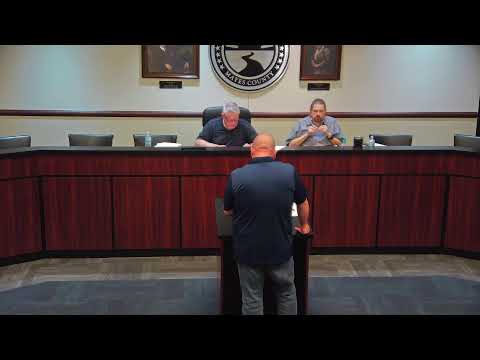
The ordinance drew sharp public attention at the start of the meeting. Reagan Erdman, who identified herself as a local business owner, a lifelong resident, a member of the Planning and Zoning Commission and a mother, urged the council to hold commercial property owners to the same standards as homeowners, saying neglected buildings depress property values, create safety risks and deter investment. "Abandoned buildings hurt everyone," Erdman said. "A disinvestment penalty isn't about punishment. It's about accountability and community responsibility." Erdman also cited outside research on vacancy impacts on property values and crime rates.
Several other speakers opposed parts of the draft. Brent Taylor, a long-time downtown commercial property owner, told the council that commercial real estate is a different market from residential and warned that a $500-per-day fine could effectively impose a $15,000 monthly lien on owners who cannot immediately lease a building. "If somebody's considering buying a building in Pryor and they think after 90 days they're going to be charged $15,000 a month, this is not good for business in Pryor," Taylor said. Chris Crenet and other residents urged a graduated enforcement plan with notifications and reasonable timeframes for remediation, rather than immediate steep fines. Neal Roberts voiced support for the ordinance and criticized a property owner who did not attend the meeting.
Mayor (identified in the transcript as the mayor) and staff clarified repeatedly that the document before the council was a draft and that several passages (including language tying the measure to mere vacancy) had been proposed for removal. The mayor emphasized the draft was intended to target dilapidation and neglect rather than ordinary vacancy, saying, "It's not about the vacancy. If they're dilapidated or neglected, then it's a problem." The mayor described the city's existing abatement process for nuisances and said the intent was to "meld" the commercial-focused language into the existing nuisance and abatement ordinance rather than create an entirely separate penalty scheme.
After discussion and invitations for the public to provide written suggested edits, a council member moved to change the motion to take no action on the draft as written. The motion to take no action was seconded and the council called the vote; the roll call included recorded votes of "yes" by Councilmember Trammell and one other recorded affirmation. (The meeting transcript records the change to "no action" and the roll-call confirmations; a full roll-call tally beyond the recorded confirmations was not provided in the transcript.)
The council agreed to revisit the issue at an upcoming meeting in August, and the mayor asked opponents who spoke to provide suggested edits and to review the city's current nuisance and abatement ordinance so the two measures can be merged.
The draft's main provisions that drew comment and that council asked staff and the public to rework included: the 90-day vacancy definition; the registration requirement listing owner intent and insurance; the 30-day sign-removal rule; and the potential for daily fines and abatement with costs assessed to the owner. Councilmembers and the mayor repeatedly described the draft as a working document and said the city will focus enforcement on properties determined to be dilapidated or unsafe after repeated citations rather than penalizing ordinary vacancy.
Next steps announced in the meeting: staff will incorporate tonight's feedback and present revisions to the nuisance and abatement ordinance language at the council and at the planning/ordinance committee meeting in August. The mayor urged cooperation between property owners and the city if remediation cannot be completed immediately, noting the abatement process historically involves progressive notices and hearings before abatement.
Ending: The council's decision to take no action on the draft effectively pauses immediate implementation. The council invited written input from property owners and residents, and the mayor said the council prefers to merge clarified commercial-focused language into the existing nuisance and abatement code so enforcement is consistent across residential and commercial properties.