Get Full Government Meeting Transcripts, Videos, & Alerts Forever!
Get email alerts on the Co Responder Program topic
No spam. Unsubscribe anytime.
Larimer County co-responder unit expanding but faces clinician vacancies and a funding shortfall
Summary
Sheriff's Office reported staffing, successes and a funding gap for its co-responder teams; the unit handled most mental health/substance-use calls but officials said clinical vacancies and a cut in ROAC funding created uncertainty.
The Larimer County Sheriff's Office reported July 28 that its co-responder program has expanded coverage and reduced arrests and hospital transports, but the unit faces clinician vacancies and a funding shortfall that could affect future staffing.
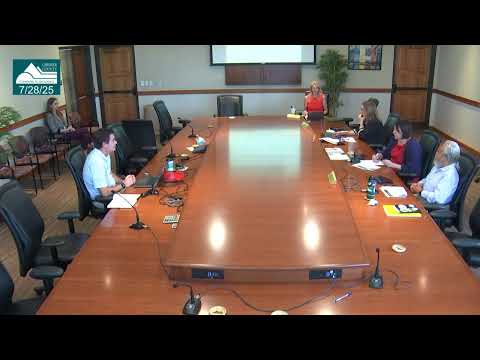
Sergeant Robert Cook summarized current staffing and results: the unit currently has "5 deputy positions, 6 clinicians, 1 corporal, and 1 sergeant," providing four community response teams plus a fifth team embedded in Thompson School District, he said. Cook said the unit handles about "68 percent of all the calls that come in for service for mental health, substance use, or a combination of the two," enabling patrol units to avoid those calls.
Program outcomes cited by Cook included a low arrest rate and reduced emergency department transports: "only about 2.8 percent [of contacts] result in a criminal arrest" and about "10 percent of our subjects contacted were placed on a hold and went to area hospitals." In contrast, roughly "52 percent of our subjects that we contact were placed on an involuntary hold," Cook said, noting many others accept voluntary transport after de-escalation.
Funding and staffing concerns: Cook said the unit had received roughly $550,000 from the Regional Opioid Abatement Council (ROAC) in prior years to help fund deputy positions added in 2023, but for the current year that ROAC amount dropped to $284,000, which "only pays for about 60% of what the costs are." He said clinician funding had been supported by grants and SummitStone contracts but that one SummitStone clinician position has been vacant for more than two years and a SummitStone clinician supervisor role remains unfilled.
Operational issues included differing vendor views about clinician equipment. Cook said clinicians prefer an outer, removable vest carrier so clinicians can remove it in the office and put it on for field work and be more identifiable in the community; "SummitStone has a different opinion on that," he said, and the parties remain at an impasse.
Board members asked about expansion to other school districts: Cook said discussions with Poudre School District have occurred, but PSD cited limited resources. Commissioners also asked for ride-along opportunities; Cook and staff said commissioners could schedule them.
Ending: Commissioners thanked staff for the unit's work and said they would explore ways to address the funding and operational issues identified by the sheriff's office.