Get Full Government Meeting Transcripts, Videos, & Alerts Forever!
Get email alerts on the Website Accessibility topic
No spam. Unsubscribe anytime.
Larimer County says website largely compliant with new accessibility rules but warns of remaining gaps and fines
Summary
County staff reported the county meets the state's accessibility-statement requirement but is about 95% compliant with other web-accessibility rules; officials said training, procurement changes and sustained vendor work are next steps to avoid fines.
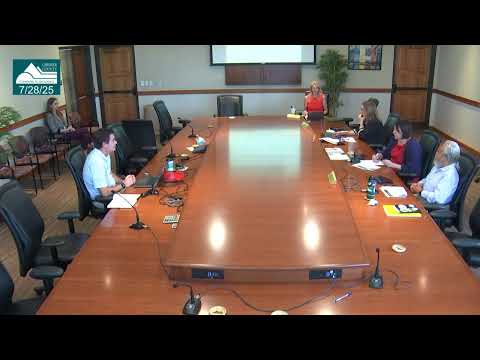
Larimer County officials told the Board of County Commissioners on July 28 that the county meets the new state requirement to publish an accessibility statement but remains short of full compliance with technical accessibility standards for online content and services.
Mackenzie Lowe, Larimer County's ADA coordinator, told the board, "We meet that part of the law 100%" when referring to the requirement for an accessibility statement, and added the county is "95% of the way there" on broader technical compliance.
Why it matters: County staff said the state rules that came out in May take effect this year and include a July 1 compliance expectation. Officials warned there is financial and legal risk for remaining noncompliant: Mackenzie Lowe said "the risk for noncompliance is basically a fine for every single little instance," and that federal enforcement remains possible through the Department of Justice.
County staff described the remaining work as operational: implementing a vendor roadmap, expanding staff training, changing procurement practices and prioritizing which documents remain PDFs versus which should be converted to web pages. "We just want to stop the bleeding," the ADA coordinator said of efforts to limit new inaccessible content being posted online.
The county's consultant recommended four primary actions that staff have begun to adopt: digital accessibility training for staff, procurement and development changes to prioritize accessibility, a stronger process for reasonable accommodations and focused prioritization of legacy PDF material for remediation. Staff emphasized the practical limits of technology: some content (for example, detailed building plans) currently requires alternative accommodations such as descriptive phone or in-person explanations.
Board members asked about public engagement and state collaboration. Lowe said the county has received feedback from community groups on issues such as video captioning and PDF accessibility and that "there's a lot of that collaboration going on" with other local governments. County manager Lorinda Volker and staff also noted internal "accessibility cafes" for the teams that maintain web content and that an internal resource hub with training is being stood up on the county intranet.
Next steps include implementing the training program and vendor roadmap and adding sustainable processes so staff do not repeatedly create inaccessible content. Lowe said the county is moving from short-term fixes to a sustained compliance program and will return with updates as implementation continues.
Ending: Commissioners praised the work and asked staff to provide more detail on timelines and the county's ability to respond to individual complaints and remediation requests.