Get Full Government Meeting Transcripts, Videos, & Alerts Forever!
Get email alerts on the Student Discipline topic
No spam. Unsubscribe anytime.
Laredo ISD board approves 2025–26 student code of conduct; board discusses device vandalism, tracking and mental‑health supports
Summary
Trustees adopted a revised student code of conduct aligned with recent legislation; presenters and trustees discussed vandalism and restitution for damaged district devices, device tracking capabilities, and integrating mental‑health supports into specialty pretrial programs for students.
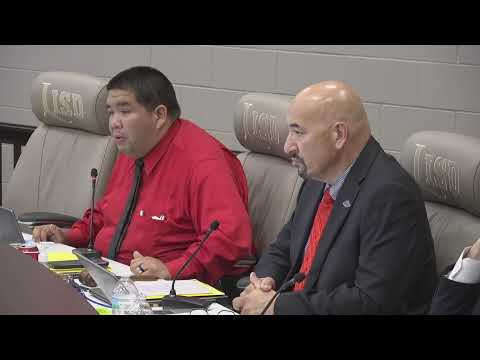
LAREDO, Texas — The Laredo ISD Board of Trustees on July 24 approved the district’s 2025–26 student code of conduct after a presentation from district administrators and discussion of related supports for students, including how the district will handle damaged or lost devices and plans to integrate mental‑health services into specialty programs.
Administrators' presentation and legislative alignment
Dr. Lopez and Dr. Oscar Perez presented the code of conduct and said the document was updated following TASB webinars and state legislative changes, including references to House Bill 6 and House Bill 1481. Dr. Lopez said the code is “aligned and up to date with all of the regulations that are currently in place.”
Device damage, loss and tracking
Trustees raised repeated concerns about district laptops and Chromebooks being damaged or lost. Administrators said intentional destruction of district property may be addressed under vandalism and could result in disciplinary placement (DAP), restitution, and possible criminal charges for criminal mischief in appropriate cases. IT staff explained the district has a device management system that can sometimes track devices, but tracking requires the device to be online; staff did not have a recovery tally available at the meeting and said they would obtain recovery statistics upon request.
Specialty programs, mental‑health components and student monitoring
Trustees also discussed specialty pretrial programs (referred to in the meeting as “pretrial/specialty programs” and the CHANCE program) and emphasized the need for a committee approach to monitor students in those programs. Trustees recommended including counselors, licensed chemical dependency counselors and the chief of police where appropriate, and requested that program reports be provided periodically to the board so progress and referrals for prosecution (when applicable) can be tracked.
Board action
A motion to approve the student code of conduct passed by voice vote after trustees discussed several operational details and asked administrators to incorporate clearer procedures for restitution, tracking and mental‑health referrals. Trustees asked staff to provide timelines and a spreadsheet to track reported device incidents and follow‑up outcomes (monthly or quarterly).
Ending
Trustees approved the code of conduct with instructions to district staff to formalize procedures for device tracking and restitution, clarify case reporting, and integrate counseling and community mental‑health providers into specialty intervention programs where appropriate.