Get Full Government Meeting Transcripts, Videos, & Alerts Forever!
Texas Forensic Science Commission reviews dozens of lab disclosures, adopts licensing and Rapid DNA rule changes
Summary
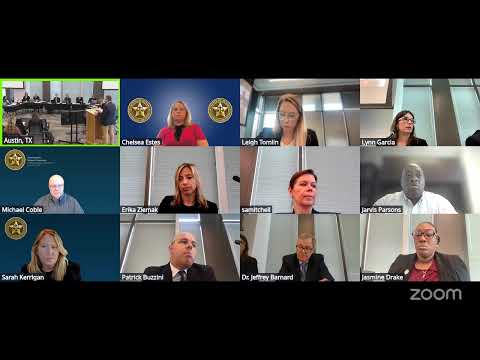
The Texas Forensic Science Commission met July 25, 2025, in Austin and reviewed a heavy docket of laboratory self‑disclosures, complaints and program updates.
The Texas Forensic Science Commission met July 25, 2025, in Austin and reviewed a heavy docket of laboratory self‑disclosures, complaints and program updates. The commission approved staff recommendations of “no further action” for most laboratory self‑disclosures after reviewing root‑cause analyses and corrective actions, tabled several items pending additional follow‑up from laboratories, and voted to adopt rule changes and licensure updates related to Rapid DNA and volunteer licensure pathways.
Why it matters: The commission’s routine disposition of numerous self‑disclosures keeps accredited laboratories and crime‑laboratory operations in regulatory alignment and signals how staff and labs are expected to document corrective actions. The rule changes the commission approved could speed adoption of Rapid DNA pilots and broaden licensure paths for practitioners without traditional university degrees.
Key outcomes and context
- Staff and commission members reviewed more than two dozen laboratory self‑disclosures from state and county forensic laboratories addressing issues such as instrument configuration errors, case numbering / LIMS misassignments, contamination events, incorrect unit reporting (milligrams vs grams), expired or out‑of‑range materials, and personnel departures. After reviewing each lab’s root‑cause analysis (RCA) and corrective actions, the commission followed staff recommendations to take no further action in most cases, citing completed corrective work and/or the departure of involved employees when applicable.
- Several disclosures were tabled for follow‑up because staff considered the lab responses brief or incomplete. Those items will return to staff for additional documentation and answers before the commission takes a final disposition.
- The commission approved a motion directing staff to work with the Office of Court Administration (OCA) to post and hire a senior forensic scientist (a staff‑acknowledged position to provide scientific review support for commission materials).
- The commission adopted rule changes to: (1) incorporate Rapid DNA into the commission’s accreditation requirements and (2) revise voluntary licensure requirements to create alternative competency pathways (including a proposed TDIAI‑proctored competency exam for latent print analysts and adapted pathways for crime scene reconstruction analysts with nontraditional educational backgrounds).
- The commission adopted non‑substantive revisions related to previously proposed licensure and accreditation rules as recommended by the Office of the Governor/Texas Register and moved forward with scheduling for future quarterly meetings.
- Investigations & reports: The commission adopted an investigative report and continued the suspension of accreditation for the DNA Reference Laboratory (report findings included deficiencies in proficiency testing practices, incomplete validations for certain reagents/kits, and unresolved documentation questions). The…
Already have an account? Log in
Subscribe to keep reading
Unlock the rest of this article — and every article on Citizen Portal.
- Unlimited articles
- AI-powered breakdowns of topics, speakers, decisions, and budgets
- Instant alerts when your location has a new meeting
- Follow topics and more locations
- 1,000 AI Insights / month, plus AI Chat