Get Full Government Meeting Transcripts, Videos, & Alerts Forever!
Get email alerts on the Ami Meter Project topic
No spam. Unsubscribe anytime.
North Lauderdale begins 8,400‑meter AMI replacement; installers to knock or leave door hanger if meter is active
Summary
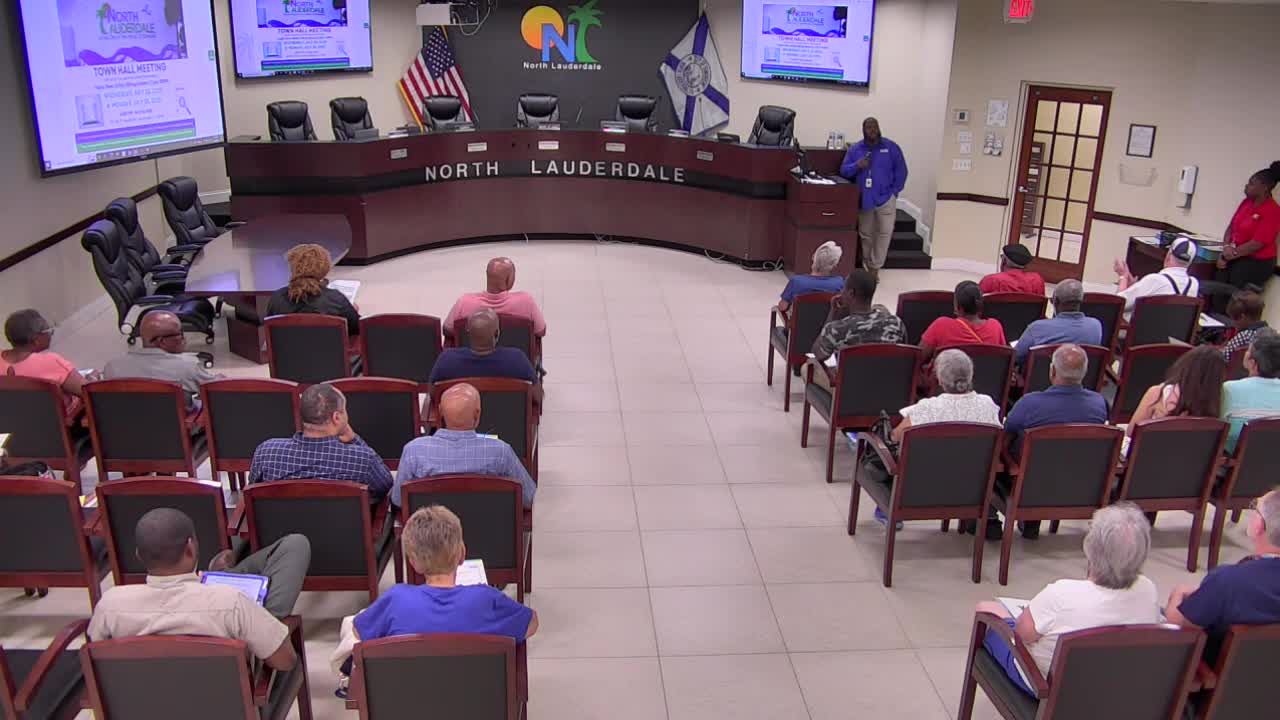
City and contractor staff briefed residents that about 8,400 meters in North Lauderdale will be replaced by ultrasonic electronic meters over a 17‑month AMI project expected to finish integration with billing in July 2026.
City of North Lauderdale staff and US Water described a citywide AMI (advanced metering infrastructure) meter replacement underway that will replace manual‑read, positive‑displacement meters with electronic ultrasonic meters and enable remote reads and future alerts.
Scope, schedule and contractors: David Himes of US Water said the project covers approximately 8,400 meters in the city. At the town hall he reported, “It was 8,400 meters in total that need to be changed. Right now, 158 meters have been changed, and they're scheduled to have another 34 change, and there's 8,216 left to go.” Staff described the meter changeout as a 17‑month project that will run until about July 2026; the new meters will be integrated with the new billing system after the network is complete.
What residents will see: staff said crews will generally work Monday–Friday from about 8:00 a.m. to 4:30 p.m. (excluding holidays and inclement weather). Himes said installers will knock on the door if they see “activity on the meter” (movement) and will leave a door hanger if they cannot make contact: “If they do see it yeah. They're not gonna just come in...If they can't make contact with someone, then they will leave the door hanger.” He explained that “activity” means the meter register is moving (someone using water) or a possible leak at the meter or service line.
Service interruption and timing: Himes estimated meter change‑out downtime typically ranges from about 30 minutes to 120 minutes depending on conditions at the property, vegetation, double meter boxes or required repairs: “Currently, it's anywhere between 30 minutes to a hundred and 20 minutes. And it all depends on the situation that they have in front of them.” He said crews will open outdoor spigots or otherwise relieve pressure before switching meters and that more extensive repairs could lengthen the visit.
Inspection, scheduling and map: the city’s IT department has published a map showing meter status (remaining in yellow, completed in green, scheduled in blue); staff showed residents how to search the map and check whether a meter at a specific address has been scheduled or completed. Himes said the contractor logos residents might see in the field are shown in the project materials; those logos were identified in the town‑hall packet as Coromane and Veil.
Technical features and customer tools: the new ultrasonic electronic meters have digital displays and will provide icons for leak detection and tamper alerts. Himes and Lisonbee Gale said a resident portal (resident access) will display meter icons and, later in the rollout, allow customers to set consumption alerts. Gale said, “The new meters also do give you a display...we're also gonna have the ability for you all to set up alerts that may come at a later time.”
Manual reads continue during rollout: staff stressed that even after a meter is replaced it will be manually read until the AMI network and billing integration are complete — so residents should not expect immediate remote reads for every replaced meter until the July 2026 integration window.
Field safety and customer responsibilities: staff asked property owners to keep meter boxes accessible (remove obstructions and vegetation) to reduce installation time and avoid added repairs. Meter technicians will try to minimize inconvenience, and if crews leave a hanger asking the resident to schedule a visit that indicates the crew attempted to change the meter but could not complete the work without resident access.