Get Full Government Meeting Transcripts, Videos, & Alerts Forever!
Get email alerts on the Economic Development Gas Stations topic
No spam. Unsubscribe anytime.
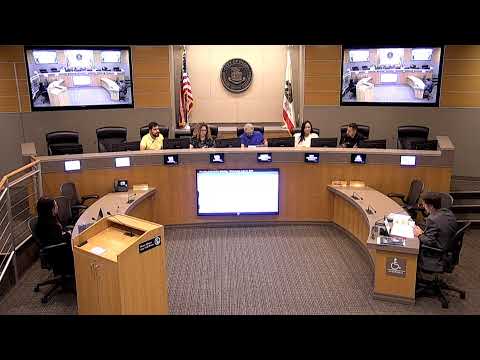
Commission hears economic-development briefing on gas-station demand; staff to return with options
Summary
The Indio Planning Commission heard an economic-development briefing showing unmet retail and fuel demand and directed staff to return with maps and policy options to inform potential limits on where gas stations can locate.
The Indio Planning Commission spent the bulk of its meeting on a study-session presentation by Miguel Ramirez Cornejo, the city’s economic development director, on market forces that drive where retailers and gas stations locate. The briefing followed council direction to study how certain uses, including gas stations, are entering the city after the earlier Maverik application moved to the city council.
Ramirez Cornejo presented retail gap analysis data showing Indio’s consumer demand outpaced supply across many retail categories. He said the city’s total consumer spending demand is about $2.5 billion versus a local supply estimate of about $1.07 billion, leaving an unmet retail demand of roughly $1.18 billion across multiple sectors. For fuel retail specifically, Ramirez Cornejo cited Placer.ai-derived figures indicating roughly $17.93 million in unmet demand for gas station purchases inside the city’s boundaries and about $110 million in annual consumer spending on gas-related purchases overall.
“Businesses choose city; our role is to provide some of the data that we have,” Ramirez Cornejo said, summarizing the economic development office’s role in packaging site-selection data for prospective businesses.
Ramirez Cornejo described the primary data source as Placer.ai, which aggregates cell‑phone mobility and spending patterns, and contrasted that with other analytics services such as Esri. He told the commission Placer.ai’s city‑bounded geofence produced the $17.93 million figure as a current unmet demand estimate rather than a multi‑year forecast.
Commissioners and staff discussed several related topics during the roughly 90‑minute exchange: the city’s visitor volumes (Ramirez Cornejo cited roughly 1.4 million annual visitors), the role of truck/diesel service in some site plans, and electric-vehicle charging infrastructure. Staff and commissioners noted constraints on power capacity for fast chargers — an example figure discussed was roughly 4 megawatts to support 16 fast chargers — and said that electrical capacity and willing property owners affect whether charging stations are feasible.
Several commissioners asked staff to return with additional analysis and options, including:
- A citywide demand map showing where demand is concentrated and overlaying existing and proposed gas stations; - Per-capita and per-intersection comparisons with similar jurisdictions (commissioners requested comparisons to cities with development on both sides of I‑10 rather than immediate neighbors whose geographies differ); - A CalEnviroScreen or disadvantaged-communities overlay to show whether new stations are clustering in vulnerable areas; - A tally of gas stations approved or permitted in Indio since 2023 and a per-capita count relative to peer cities; - An assessment of electric-vehicle charging capacity and where charger installations are pending or feasible; - Options municipalities used elsewhere, such as limiting the number of stations at a single intersection or other land‑use controls, and examples from peer cities.
Commissioner Frantz summarized the exchange by noting the market demand “is here, and it’s not going anywhere, at least not in the near future,” while other commissioners pressed for analysis showing where gas stations are being sited in relation to housing, mixed‑use designations and disadvantaged communities.
Planning staff and economic development said they would return to the commission and then the city council with options and further data; no formal action or binding policy changes were adopted at the meeting.