Get Full Government Meeting Transcripts, Videos, & Alerts Forever!
Get email alerts on the Nurse Family Partnership Funding topic
No spam. Unsubscribe anytime.
Lane County commissioners lean toward $392,000 bridge to sustain Nurse Family Partnership home-visiting program
Summary
County public health officials told the Board of County Commissioners that a state funding bill failed this spring, creating a local match shortfall. Staff recommended a one-year bridge of about $392,000 so the county can continue full service levels while pursuing state and federal options and a competitive grant.
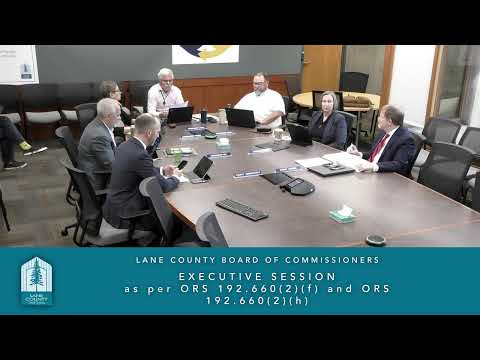
Lane County public health officials asked the Board of County Commissioners on July 22 to direct staff to identify one-time local resources to bridge a funding gap for the county’s Nurse Family Partnership (NFP) home-visiting program, recommending an additional $392,000 for the current fiscal year to sustain services.
The request followed months of uncertainty after the Oregon Legislature did not pass expected funding to cover the local match that enables Medicaid targeted case management billing. “Every $1 invested in Nurse Family Partnership results in a $6.10 return on investment to Oregon,” said Chelsea Whitney, family and child health nursing supervisor, as she described program outcomes and local data showing reductions in child abuse and improvements in maternal and child health.
Why it matters: County staff said NFP serves one of the highest-need populations in Lane County and leverages Medicaid billing (targeted case management) to bring in about $1.7 million in reimbursement annually. That federal/state revenue requires a local match; without the state match the county must provide the match to continue drawing the Medicaid funds and maintain program capacity.
Program and outcomes overview Chelsea Whitney described the county’s family and child health service array and summarized long-term outcomes tracked locally since NFP launched in Lane County in 2012. Local results staff cited include 88% of enrolled babies fully immunized, 98% breastfed for some duration, 90% born full term, and a reported 25% reduction in intimate partner violence among NFP clients. Whitney also cited national trial results, including a 48% reduction in child abuse and neglect and a 67% decrease in certain behavioral and intellectual problems among children tracked to school age.
Local program scale and needs Brian Johnson, communities unit manager for public health, said the family and child health team serves roughly 300–400 families annually across programs, delivering about 3,700 home visits in a full year. Johnson described three funding scenarios for Nurse Family Partnership now that the anticipated state match did not materialize: - Option 1 (recommended): a one-time additional investment of approximately $392,000 to fully leverage Medicaid reimbursements and sustain services with minimal staffing reductions. Staff said the county already invests about $540,000–$550,000 locally to support the family and child health suite of programs. - Option 2: a smaller local investment that preserves the Medicaid match but requires several support-staff reductions, with projected service reductions of about 10% (an estimated 30–40 fewer families served) and 3–4 positions cut. - Option 3 (no additional local investment): staff estimated loss of multiple programs and 5–6 positions, with at least 100 fewer families served.
Johnson described the funding mechanics: targeted case management billing generates roughly $1.7 million in revenue; the local match needed to unlock that reimbursement is a bit more than $700,000 annually. The county had expected the state to assume the match going forward after the recent legislative session but said the bill did not pass.
Near-term and longer-term actions discussed County staff outlined near-term options: (1) identify one-time general fund or other available local dollars to bridge the current fiscal year’s gap; (2) press the state in the short legislative session to adopt ongoing match funding; (3) pursue a competitive NFP expansion grant (staff applied for about $930,000 over three years and expected an award decision in August); and (4) press the state Medicaid office (DMAP) to reopen rate-setting for targeted case management, which has not been updated since 2019.
Commissioner discussion and direction Multiple commissioners said they understood the program’s long-term benefits and expressed support for Option 1 if staff can identify funding. Commissioners discussed general fund reserves, video lottery reserve options, and competing priorities. One commissioner asked for assurances that the county would not face recurring requests; county staff replied that absent a state match sustaining the program long-term would require a county policy decision and recurring local funding.
Staff request to board and next steps Staff asked commissioners for informal direction to pursue Option 1 (the $392,000 bridge) and to direct the administrator to identify available resources and return with an order setting those resources out formally. The board signaled consensus leaning toward Option 1 and asked staff to come back with choices on funding sources and the fiscal implications. No formal board order or vote took place during the July 22 meeting; staff said they would return with an action item (order) if the board’s direction is to provide general fund bridge dollars.
Local context and risks Officials warned the board that partial funding risks erosion of trained staff, loss of program infrastructure and a slower, more costly restart if the county later seeks to re-expand services. Staff also noted the county serves families with very high needs: Whitney said about 90% of NFP clients have significant mental health concerns, 44% are unhoused or unstably housed, 40% have substance use conditions, and median annual household incomes in the program are about $9,000–$12,000.
What to expect next Staff will identify potential local funding sources, return with a formal order if the board directs a general fund contribution, and continue pursuing the federal/state rate-setting and the three-year expansion grant. Commissioners suggested that staff prioritize clarity about trade-offs and funding implications when they return with formal recommendations.