Get Full Government Meeting Transcripts, Videos, & Alerts Forever!
Get email alerts on the Humanitarian Aid Gaza topic
No spam. Unsubscribe anytime.
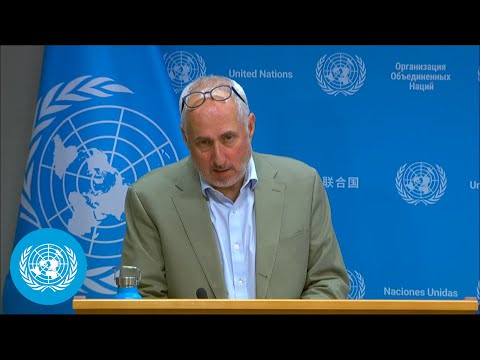
UN spokesman says Gaza faces 'trickle' of aid, urges ceasefire and visa clarity after OCHA allegations
Summary
At a U.N. briefing, the U.N. spokesperson described a severe humanitarian collapse in Gaza, called for a ceasefire and unfettered aid access, and said punitive visa restrictions and allegations against OCHA staff complicate relief efforts.
The U.N. spokesperson, identified in the briefing as Steph, said the humanitarian situation in the Gaza Strip is unprecedented and urged an immediate ceasefire and unfettered humanitarian access.
Steph said aid deliveries face “severe security risks,” that “crossings remain unreliable,” and that “critical supplies are routinely delayed or blocked.” She added: “The amount of aid that has been entering Gaza is only a trickle compared to the immense needs.”
Why it matters: The U.N. warned partners that hunger and malnutrition among children have reached catastrophic levels and that hospitals risk shutdown because of fuel and supply shortages. The U.N. said a ceasefire would allow humanitarian agencies to scale up operations and provide food, water, shelter, medical care and protection.
Details from the briefing: The U.N. said humanitarian partners delivered 158,000 cooked meals through 64 community kitchens as of Sunday, a figure the spokesperson noted represents a decrease of more than 70,000 daily meals compared with the previous day. The Office for the Coordination of Humanitarian Affairs (OCHA) and 198 organizations warned that mass starvation is spreading across Gaza. The U.N. also reported that hospitals, including Al Shifa, face imminent risk of shutting down within days because of fuel shortages.
On the humanitarian workforce, Steph said aid workers are operating “in active combat zones” and sometimes face direct danger when civilians approach U.N. trucks. She said drivers “need multiple access approvals as well as a pause in the bombing and for the iron gates to slide open.” She also said troops must not be present along convoy routes and that humanitarian staff must be permitted to operate safely and freely.
OCHA and visa restrictions: The briefing addressed Israeli punitive measures announced against OCHA staff and allegations reported by the Israeli ambassador. Asked about those allegations, Steph said they are “very serious” and said she expected the Israeli government to share any evidence “as quickly as possible.” She said the announcement that certain visas would no longer be automatically extended was new and that visa issuance and length had long been a challenge discussed between U.N. officials and Israeli authorities.
On UNRWA funding: When asked about forecasts that would leave UNRWA without enough funds through August, Steph said lower funding ‘‘means less work, less people getting the aid that they need’’ and urged member states to increase donations.
Context and limits: Steph emphasized that labeling hostile conduct as genocide is a matter for a competent court, and that U.N. bodies such as the International Panel on the CFS/IPC (a scientific mechanism cited by U.N. speakers) have their own procedures. She reiterated that the U.N. stands ready to scale up in the event of a ceasefire but that Israel must enable safe and unimpeded aid delivery and re-open crossings.
Looking ahead: The spokesperson said the U.N. will continue pressing for access and for clarity on visa and investigation-related matters affecting humanitarian staff. “We stand ready to seize the opportunity of a ceasefire to significantly scale up humanitarian operations,” she said.