Get Full Government Meeting Transcripts, Videos, & Alerts Forever!
Get email alerts on the Wheel Tax topic
No spam. Unsubscribe anytime.
Gibson County holds public hearing on proposed vehicle-registration ‘wheel tax’; no ordinance adopted
Summary
County staff outlined changes from House Bill 1461 and how a higher wheel tax would affect Gibson County’s eligibility for state road funding. Public commenters pushed both for and against raising the fee. The council held the hearing but took no final vote.
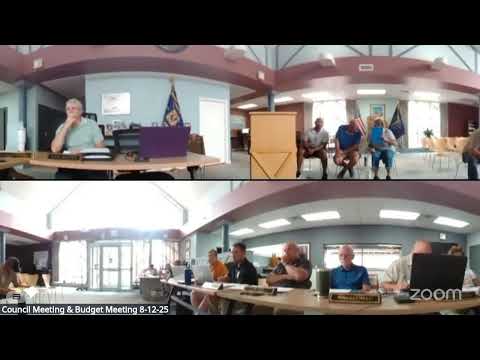
GIBSON COUNTY, Ind. — County staff opened a public hearing on a proposed increase to Gibson County’s wheel tax during a regularly scheduled council meeting, outlining state law changes that would affect how local road money is distributed. County officials and members of the public discussed how higher local vehicle-registration fees could increase direct state distributions but also raise costs for residents; the council took no final action at the meeting.
The hearing focused on House Bill 1461 and related changes to the Community Crossings grant program. Staff said the new law makes communities with a locally adopted wheel tax eligible for a direct distribution tied to lane miles, and reduces the size of the competitive grant pool. Staff also described a timeline for adoption: a local adoption by Sept. 1 would be required to collect a new rate beginning Jan. 1 of the next calendar year.
Why it matters: Under the state changes discussed, adopting a wheel tax would make Gibson County eligible for a direct distribution based on lane miles — potentially a significant revenue source for local roads — but would also immediately increase vehicle-registration costs for local residents. Council members said they must balance road funding needs against the tax burden on households and businesses.
Staff presentation and context Staff member Matt (county staff presenter) summarized the state task force findings and legislative changes that informed House Bill 1461, saying the task force "found there was a $2,400,000,000 gap, required to maintain roads and bridges in good condition." He described how the new law would reserve a direct distribution for jurisdictions that adopt a wheel tax and that the competitive Community Crossings grant pool would be smaller in the near term (the speaker said the competitive pool would be reduced to $100,000,000 statewide for the competitive awards in the current cycle and that Indianapolis had a separate allocation).
Matt told the council Gibson County currently collects the statutory minimum wheel tax (described in the presentation as $5 for passenger vehicles and $7.50 for commercial) and that the statutory maximum allowed by the legislature is $50 and $80 respectively. He also gave rough 2023-based estimates from staff showing the county could see “increased revenues of the highway department of over a million dollars a year” if the tax were raised toward the maximum, and said the direct distribution under the new formula could range into the low millions depending on how many municipalities adopt local wheel taxes.
Public comment and council reaction County Commissioner Chuck Lewis, speaking during the public comment portion, emphasized the county did not pursue the change voluntarily: "I just want to affirm that this is not something that the county commissioners wanted to do. This is something that based on the legislation and the changes at the state house... it's kind of enforced on us." Lewis said the commissioners’ recommendation was to adopt the maximum so the county would not need to return later for a second increase that might cause a larger public backlash.
Residents at the hearing expressed mixed views. Mark Berenbacher of Fort Branch said he understood county officials were under pressure but voiced opposition to higher taxes: "I don't want taxes going up like anybody." He added that officials would take the political heat regardless of the decision: "We're gonna get the blame for it regardless of what you're gonna do." Another resident walked the council through a real-world registration bill and warned that raising the fee to the statutory maximum could increase some residents’ registration costs by roughly $80–$83 or more, depending on vehicle type.
Key technical and timeline points raised - Current local wheel tax: presented as the statutory minimum (stated in the presentation as $5 for passenger registrations and $7.50 for commercial). - Statutory maximums discussed in the presentation: $50 and $80 (passenger and commercial respectively). - Community Crossings: staff said the competitive grant pool was reduced in the recent legislation and that Indianapolis received a large earmark; the speaker noted that for the next competitive cycle the announced maximum award would be $1,000,000 for the competitive grant round. - Direct distribution: staff explained the new direct distribution will be based on lane miles and availability is contingent on having any local wheel tax in place; staff said Gibson County’s large lane-mile total would likely yield a substantial share compared with many municipalities. - Adoption deadline: to implement a new rate effective Jan. 1, the county would need to adopt the ordinance by Sept. 1 (as stated by staff during the meeting).
No ordinance adopted at the meeting After public comment and discussion, the council did not vote to adopt a wheel-tax ordinance at the meeting. Council members debated whether to adopt the full statutory maximum immediately or to delay and consider a smaller incremental increase after more review. A motion to finalize adoption was not made; a council member observed that without a motion the matter would not advance that day. Several council members said they wanted more time to evaluate numbers and potential impacts before asking voters or adopting an ordinance.
Next steps Council members asked staff to continue analysis and public outreach. Staff and several council members said they plan to return to the issue at a future meeting with additional modeling of revenues, estimates of how municipal adoptions within the county would affect Gibson County’s direct distribution, and more precise resident-impact examples.
Meeting context and participation The public hearing drew several residents and multiple county officials. Speakers pressed staff for comparative data about Gibson County’s road and bridge condition relative to other counties and asked for more precise estimates of revenues and household impacts. Council members framed the issue as balancing pressing maintenance needs with the political and financial impact on residents and small businesses.
Ending The council closed the hearing without making a final decision and left the proposal pending further analysis and a future vote. The proposed ordinance and supporting materials were available on the county website and at the county office, and staff indicated they would return with follow-up information in subsequent meetings.