Get Full Government Meeting Transcripts, Videos, & Alerts Forever!
Get email alerts on the Public Health topic
No spam. Unsubscribe anytime.
St. Clair County meeting sees weeks-long health department dispute move to commissioners amid school-clinic, fluoridation fight
Summary
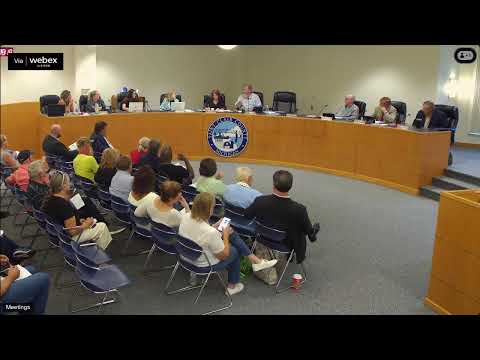
A crowded public comment period at the St. Clair County Board of Commissioners' Aug. 21 meeting focused on the county health department’s clinical outreach, including school-based clinics, and continued debate over community water fluoridation after a medical director memo proposing program changes.
The St. Clair County Board of Commissioners heard more than two hours of public comment on Aug. 21 about the county health department’s clinical outreach and school-based clinics, and a parallel, heated debate over community water fluoridation that drew dentists, public-health advocates and dozens of residents.
The discussion was prompted by a memo from the county’s medical director proposing changes to clinical operations, including limits on school-based primary-care services, and by a larger dispute between the county health department staff and the medical director. The board agreed to hold a special discussion on Sept. 4 about health-department public policy for outreach clinics and school-based offerings, after members and the public urged a timely review. Several speakers warned that some services would be terminated Sept. 1 and that grant funding could be at risk Oct. 1.
The debate included technical and policy arguments about community water fluoridation and its role in preventive oral health. Dr. Eric Steyer, who identified himself as Delta Dental of Michigan’s population health management director, told the board: “Fluoride is undeniably 1 of the best public health measures that has ever been undertaken,” and said the papers linking fluoride to cognitive harms were conducted outside the U.S. and suffered methodological flaws. Periodontist Dr. Krupa Patel said maintaining fluoridation at 0.7 parts per million is “fiscally responsible” and “far below the therapeutic safe index.” Several other dental professionals — including a retired dentist and a dental hygienist — urged the board not to disrupt fluoridation, citing decades of research and economic studies presented to the commission during public comment.
Deb Brinson, executive director of the School-Community Health Alliance of Michigan, told commissioners the county already has three funding streams for school-based health centers: state MDHHS grants, billing Medicaid/insurers under clinicians’ National Provider Identifier numbers, and enhanced Medicaid reimbursement available to local health departments and FQHCs. “Do not throw the baby out with the bath water,” Brinson said, urging the board to add clinician oversight rather than close clinics.
Speakers who opposed the medical director’s memo said restricting outreach would harm rural residents, teens and low-income families who rely on school clinics and outreach sites for preventive care, immunizations and basic treatment. Amber (last name on file) and several nurses said nurses in off-site clinics operate under the same standing orders and licensure as on-site staff and should be trusted to provide care.
Supporters of the medical director’s position argued that the county must consider legal liability and the proper scope of a local health department. Several commenters, including people who identified themselves as former staff or public-health administrators, said school-based clinics were never intended to function as full primary-care systems and that oversight and roles should be clarified. One commenter pointed out that the medical director’s contract covers limited hours and that oversight arrangements must be practical.
Commissioners did not take a final policy vote on Aug. 21. Instead they voted to schedule a special meeting for Sept. 4 to discuss “public policy regarding St. Clair County Health Department outreach clinics and school clinic offerings,” after an earlier attempt to add the item failed for lack of a second. Commissioners and staff said they will use that meeting to hear additional detail, consider options such as adding an additional supervising clinician, and attempt to preserve grant funding where possible.
The rift between medical leadership and some staff has produced a stream of public comment and competing letters and email campaigns. County Administrator Joy Hepting and Commissioner comments indicated county staff are preparing options for the Sept. 4 discussion. Brinson and other presenters noted state and federal funding sources — including MDHHS grants and Medicaid billing — that can support school-based centers and argued those funding streams recommend maintenance rather than elimination of services.
The board’s action on Sept. 4 may determine whether some outreach services continue under county management or are transitioned to partners such as FQHCs or nonprofit providers. For now, the board confined action to scheduling deliberations and asked staff to provide material to inform policy choices.