Get Full Government Meeting Transcripts, Videos, & Alerts Forever!
Get email alerts on the Lead Service Line Replacement topic
No spam. Unsubscribe anytime.
Saint Paul Regional Water Services outlines voluntary lead service-line replacement program
Summary
Saint Paul Regional Water Services described a multi-year, publicly funded effort to remove lead service lines at no cost to property owners, prioritized by construction schedules and health risk factors.
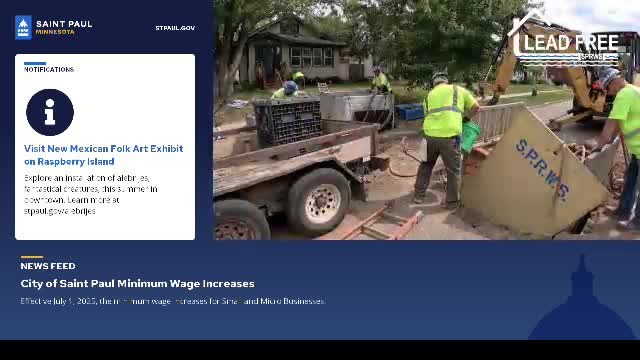
Saint Paul Regional Water Services (SPRWS) said in a presentation that it launched a 10-year effort in 2023 to replace lead service lines in its service area at no cost to property owners. The statement noted that lead is not present in water leaving the treatment plant but can enter drinking water through lead service lines that connect mains to buildings.
SPRWS described its corrosion-control treatment, which aims to minimize lead leaching by forming a protective scale inside pipes, and said removing lead service lines is the most effective way to eliminate lead from tap water. The agency said it owns water mains and service-line segments in the right of way; property owners own the portion of service lines from the property line into their homes.
At the program start in 2023, SPRWS said about 26,000 lead service lines needed replacement within its service area. The presentation gave an estimated total project cost of about $300,000,000 and said replacements are organized and prioritized using factors that include coordinating with other construction projects and prioritizing areas with higher concentrations of children under 5 and low-income populations.
SPRWS said participation in its lead-free program is voluntary. The agency described an alternative customer option: a lead assessment program that allows property owners to hire a licensed contractor to replace the private portion of the service line and finance the work through a 20-year low-interest assessment; if lead is confirmed, SPRWS will replace the public portion at no cost, typically within the same construction season.
SPRWS also noted additional household sources of lead can include older fixtures, faucets purchased before 2014, and lead solder; it recommended steps such as running cold water for three to five minutes after water has been still for six hours or longer and using filters certified for lead removal. The presentation directed listeners to saintpaul.gov/water/leadfree for more information.
No formal vote or directive on the program was recorded during the meeting.