Council adopts power code updates and new solar land‑use rules limiting rooftop and ground‑mounted installations
Loading...
Summary
Brigham City Council voted to update power-department code and to add solar definitions and land‑use rules; the changes set a rolling cap on residential solar equal to 15% of system load and reference National Electrical Safety Code fencing and security standards for larger ground‑mounted arrays.
Brigham City Council adopted changes to the city’s power department code and passed an ordinance adding solar‑specific land‑use definitions and standards at its Aug. 21 meeting.
The council approved three related items: amendments to Title 5 (power department code) that set procedural and crediting rules for distributed solar, a zoning ordinance (amending Chapter 156) that defines roof‑mounted and ground‑mounted solar arrays and limits ground arrays to one acre with screening, and an update to the Power Department Electrical Requirements and Standards Manual that clarifies construction and clearance standards.
Tom Cooper, Brigham City’s public power director, told the council the changes include a rolling approach to system saturation: the city will annually reassess how much residential solar the grid can accept, using a guideline of up to 15% of the city’s peak load for resident applications. “We will take a look at our system and see how much solar will be allowed collectively on the system to accommodate 15% of our load for residential application,” Cooper said. He explained the cap is intended to limit financial and technical exposure from wholesale power contracts when solar output differs from the city’s contracted power profile.
The zoning ordinance adds three defined terms (solar power generation facility, roof‑mounted solar array, ground‑mounted solar array) and allows roof‑mounted arrays as permitted uses in residential and multifamily zones limited to the roof surface. In industrial zones the ordinance allows ground‑mounted solar arrays but limits them to one acre and requires security screening; the draft language excludes chain‑link with slats as acceptable privacy screening and references National Electric Safety Code (NESC) standards for minimum fence heights and grounding where applicable.
Cooper and planning staff told the council that NESC section 110 calls for secure fencing standards around electrical generation and substation equipment and that concrete or solid security walls are often recommended for new installations.
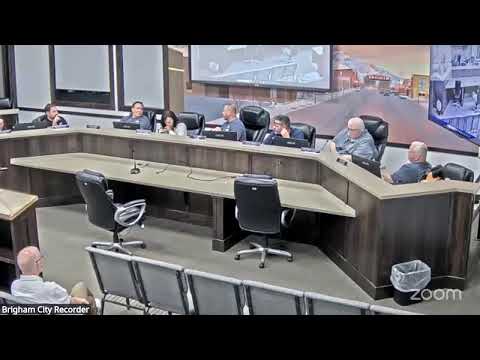
Council members agreed the revisions clarify technical and permitting requirements. The Title 5 changes, the zoning ordinance and the standards manual update were each approved by council vote. The Title 5 updates and standards manual update were approved by motion (roll call), and the ordinance to amend Chapter 156 passed on a roll‑call vote after a motion by Councilmember Smith and a second by Councilmember Jensen.
City staff said current customers with existing interconnection agreements will not see immediate changes to their contracts; the changes apply to new applications and to future annual capacity assessments. Cooper said the city plans to offer pathways for commercial customers to purchase renewable energy credits (RECs) from the city so that industrial users with corporate carbon‑free commitments can meet those goals.
No legal challenges or appeals were raised at the meeting; councilors directed staff to implement the adopted code changes and return with any needed administrative materials.