Get Full Government Meeting Transcripts, Videos, & Alerts Forever!
Get email alerts on the Transportation Pedestrian Safety topic
No spam. Unsubscribe anytime.
Lapeer Commission OKs design study for Genesee Street road diet and new pedestrian crossing
Summary
The Lapeer City Commission authorized staff to pursue design work for a road diet on Genesee Street between M-24 and Saginaw Street and for a marked pedestrian crossing after engineers presented safety, traffic and cost tradeoffs.
The Lapeer City Commission voted to authorize staff to pursue design work for a Genesee Street road diet and a pedestrian crossing between M‑24 and Saginaw Street, following a multi-hour discussion that focused on pedestrian safety, traffic backups and cost.
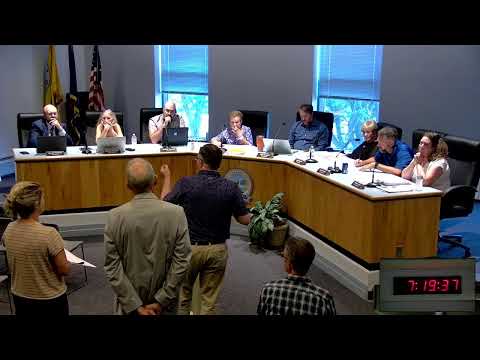
City Manager (unnamed) opened the discussion, saying the design would examine whether modifications would meet Michigan Department of Transportation standards and would help connect Crampton Park to downtown. The commission motion to pursue design work was made by Commissioner Swindell and supported by Commissioner Glisman; the commission carried the motion by voice vote.
Engineers and staff told commissioners the project would include options such as narrowing the travelway from four lanes to three, adding a marked pedestrian crossing with or without a raised refuge/island, connecting sidewalks to the park and maintaining bike lanes where feasible. Traffic engineer Haley Sabola said a conversion from four lanes to three "would really work all the way up until about 20,000 vehicles per day," and staff reported the corridor count used in the study was 14,475 vehicles on an average Tuesday.
The discussion addressed several operational and safety tradeoffs. Commissioners raised concerns that a center island could impede large-turning vehicles (trash trucks, emergency apparatus) and could worsen left‑turn backups at the M‑24 intersection during peak events. Sabola and consultants said a traffic signal upgrade known as a HAWK (High‑intensity Activated crossWalK) would function like a user‑activated signal but is expensive—Engineers estimated roughly $300,000 for a HAWK installation—so the study will also evaluate lower‑cost treatments such as high‑visibility striping, a refuge island sized to preserve left‑turn movements, and pedestrian signage.
Staff noted MDOT is replacing the Genesee Street bridge and that the replacement plans include wider, accessible sidewalks on both sides of the bridge; commissioners discussed whether that future sidewalk should be relied on instead of bike lanes at-grade. Commissioners also noted the recently completed tunnel trail under the roadway will likely increase pedestrian crossings, which factored into calls to study a crossing now.
Consultants said converting to a three‑lane cross section is associated with a reduction in crashes by removing conflicting left‑turn movements from through traffic. Sabola cited Federal Highway Administration guidance used in the packet and reiterated the 20,000 vehicles‑per‑day threshold commonly used to evaluate road diets.
The motion directs staff and the city’s consultants to develop design options and cost estimates for: (1) a three‑lane cross section for the Genesee Street corridor between M‑24 and Saginaw; (2) one or more pedestrian crossing treatments (striping, refuge island, or HAWK) with siting that minimizes conflicts with turning vehicles; and (3) pedestrian and ADA sidewalk connections to Crampton Park and the tunnel trail. Commissioners asked staff to include estimates for staged implementation and to return with refined traffic counts for peak festival and school‑period conditions.
Commissioners framed the vote as an authorization to study and design options, not a final approval to construct. The design work will return to the commission for review before construction funding or installation is authorized.
The vote and staff direction concluded the packet‑level study discussion; commissioners asked staff to return with firm designs and any additional traffic counts or cost estimates necessary to evaluate island versus no‑island options.