Get Full Government Meeting Transcripts, Videos, & Alerts Forever!
Get email alerts on the Infrastructure Funding topic
No spam. Unsubscribe anytime.
Traviso developer asks Leander to lift utility district bond cap, citing inflation and annexations
Summary
Taylor Morrison/Toll Brothers representatives told Leander City Council they have exceeded a $220 million bond cap for in‑city municipal utility districts and asked council to allow additional bond capacity or remove the cap so infrastructure costs from annexation and inflation can be reimbursed.
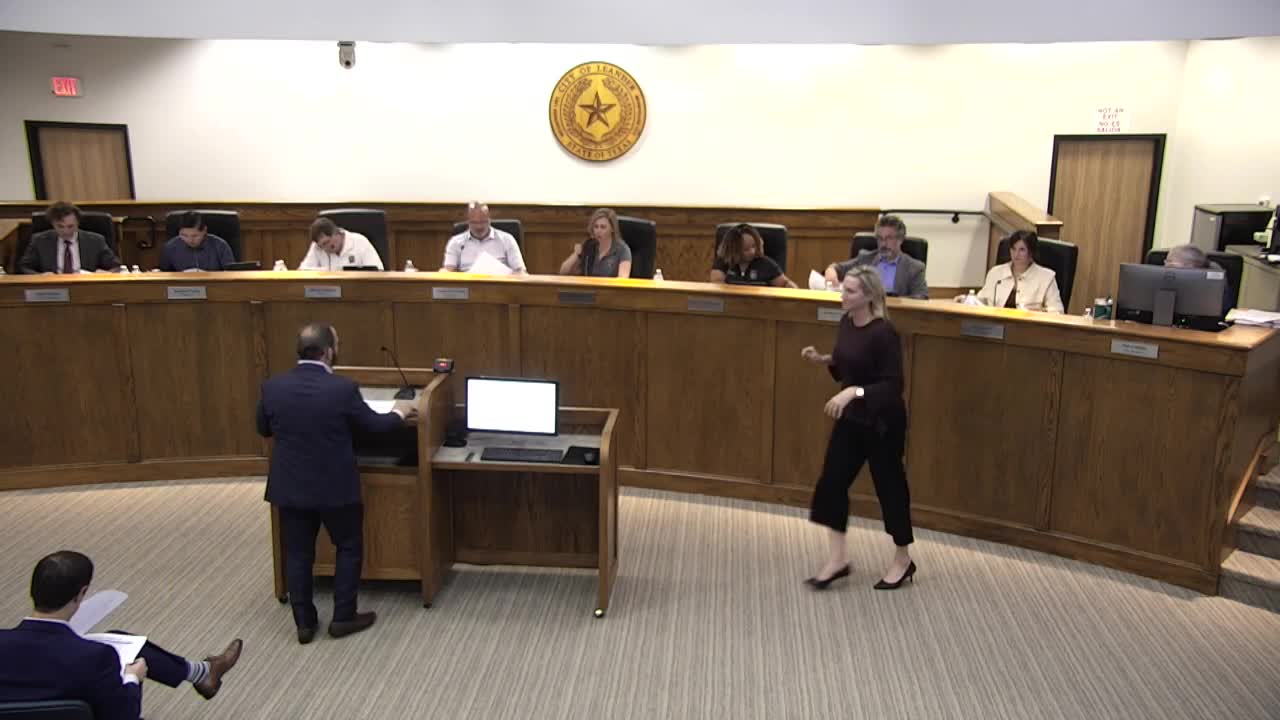
Good evening. Representatives for the Traviso development told the Leander City Council on Sept. 18 that they want the city to allow more bond capacity for the Travis Municipal Utility Districts that serve the large Treviso neighborhood. Mark Berman, vice president of Traviso Limited (a Taylor Morrison/Toll Brothers partnership), said the project has added acreage and rising construction costs that make the existing $220,000,000 bond cap insufficient.
Berman and counsel Trey Larry explained that the MUDs (municipal utility districts) finance infrastructure—streets, water, sewer and drainage—then the developer is reimbursed through bond sales approved by the Texas Commission on Environmental Quality as tax value appears. Berman said Traviso has sold roughly 2,000 homes to date with about 3,000 planned at buildout and that the developer expects about $25,000,000 in additional infrastructure costs tied to annexing new parcels (including a recently annexed parcel from the former Cedar Park ETJ).
Why it matters: the bond cap determines how much of the developer’s infrastructure investment can be reimbursed through MUD bonds rather than absorbed by the developer or pushed into other funding sources. Traviso’s presenters said inflation since the project began in 2012 has been roughly 40 percent, effectively reducing the buying power of the original cap.
Details of the request and council reaction Berman asked the council to either remove the cap or allow the districts to issue additional bonds so that reimbursements will “support additional bond sales” if assessed values justify them. Masterson Advisors’ John Bargansky, the districts’ financial advisor, walked council through charts showing outstanding debt, projected additional debt and the city’s current tax‑rebate arrangement with the MUDs. He said the city rebate portion of the tax rate would decline over time as district debt is paid down.
Council members asked why the developer wanted the cap removed now, whether the state has safeguards against over‑issuance of MUD debt and how the city would address liability when it ultimately receives the infrastructure. Traviso counsel and the financial advisor pointed to TCEQ bond‑application processes and state guardrails that require demonstration of capacity before bonds are approved. Berman said the practical risk if the cap remains is that some annexed parcels would not be economically viable to build because the developer would not be reimbursed for infrastructure costs.
Next steps City staff said if council is supportive of the annexation and additional MUD financing, staff would prepare facilities agreements and related documents; that preparation could take a couple of months. Council expressed cautious support and interest in returning with facility agreements and additional detail, and asked staff to continue to monitor performance of existing facilities and operation of infrastructure already accepted by the city.
Speakers quoted in this article are identified in the meeting record.