Get Full Government Meeting Transcripts, Videos, & Alerts Forever!
Get email alerts on the Libraries topic
No spam. Unsubscribe anytime.
Washington County proposes modest levy increase to support library operations, cites rising digital demand
Summary
Library Director Jackie Kramer presented the recommended 2026 budgets for Washington County Library and the Washington County Law Library, citing growing digital circulation, staff retention work and planned facility projects; the library levy would rise about 4.6% and MELSA funding is up after 2023 legislative action.
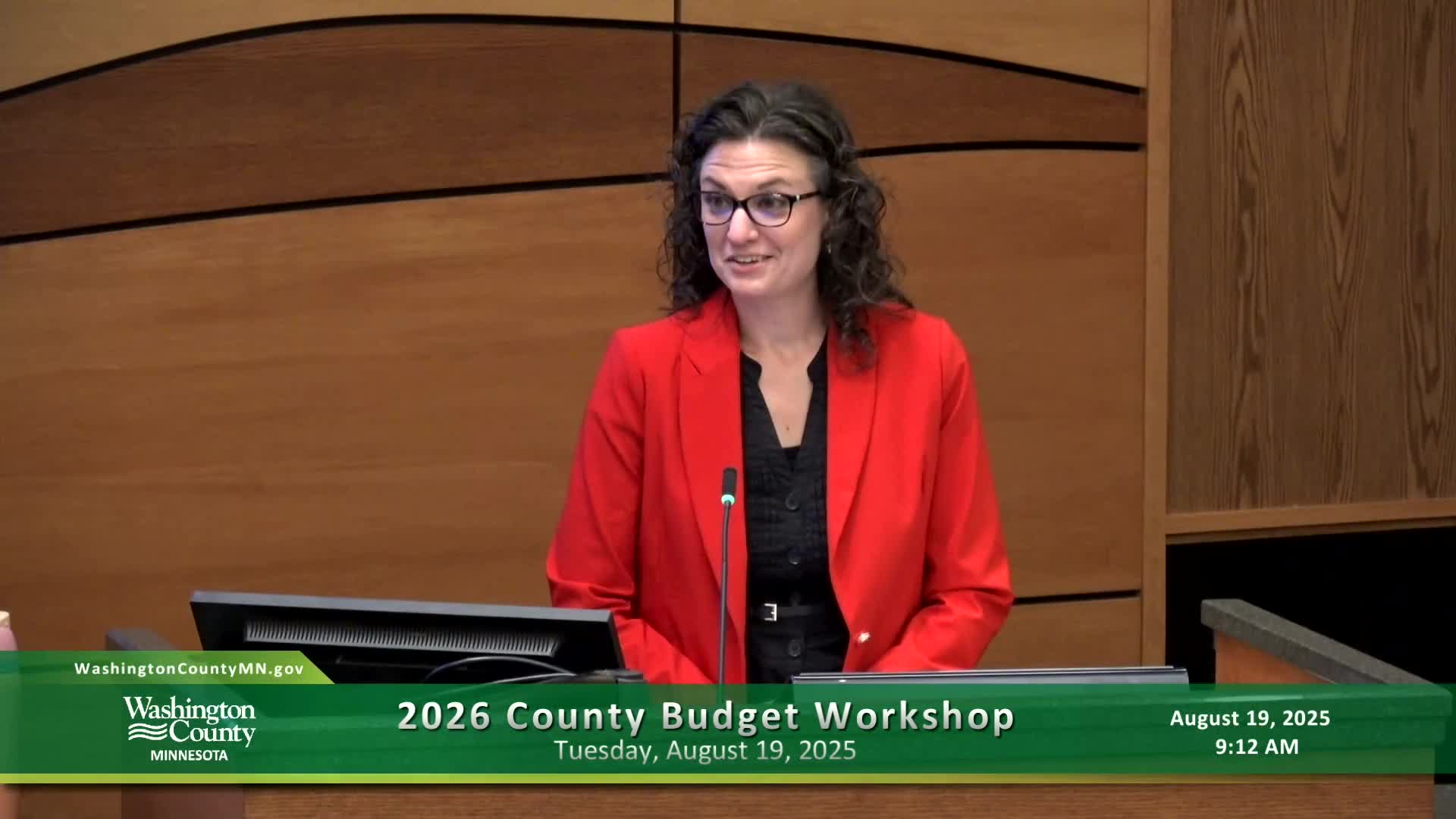
Library Director Jackie Kramer told the Washington County Board of Commissioners on Aug. 19 that the county’s proposed 2026 library levy contains a 4.6% increase to cover rising personnel, internal rent and technology allocation costs and to support strategic priorities across the library system.
Kramer traced the budget request to the library’s 2024 strategic plan and highlighted four priorities: evaluate and improve service delivery; strengthen organizational culture and operational effectiveness; enhance physical spaces and technology infrastructure; and expand the library’s reach. “We try to be at Washington County Library a safe, welcoming, and supportive place for our community in uncertain times,” Kramer said.
The budget presentation emphasized continued growth in digital services. Kramer said the library added the streaming platform Kanopy this year and reported a peak of 888 uses in July. She told the board that digital circulation demand is climbing and that digital licenses often cost “three to four times the cost of a physical version,” which is straining materials budgets.
Kramer summarized system operations: seven branch locations, three library locker sites, a law library in the Government Center and an active digital branch. She said a Valley Library pilot of extended access has been “a huge success,” registering nearly 230 community members, increasing visits at that site by about 24% and raising circulation by roughly 10% compared with 2024. Planning for additional extended-access sites is included in the recommended budget, with implementation costs to be requested in future years.
Kramer described investments in staff retention and development, including a staff retention strategy focused on meaningful work and professional growth, improved onboarding procedures and a revamped recruitment approach by the library’s equity change team. She said the library is not proposing supplemental budget requests this year but has adjusted its base budget to reflect higher costs for materials, contracts and technology.
Kramer also presented the recommended 2026 budget for the Washington County Law Library, noting a 4.5% levy increase that the law librarian attributed to salary, benefits and internal rent. She said the law library has recruited volunteer attorneys to meet demand for legal clinics and formed a new partnership with Mitchell Hamline School of Law and the Minnesota Justice Foundation to help unrepresented litigants prepare divorce paperwork.
Board members who asked questions and commented praised the library’s outreach and partnerships. Commissioner Bigham said the county survey shows high public interest in parks and libraries and called the library staff “incredible.” Commissioner Miron called the levy change “reasonable” given personnel cost pressures and praised the extended-access pilot. Commissioners raised questions about MELSA consortium sharing and clarified that items purchased by a municipal library foundation enter regular circulation for county residents.
Kramer said the library’s 2026 revenue picture includes a roughly 20% increase in funds distributed through MELSA, owing to legislative action in 2023 and timing differences between MELSA and county fiscal years. She reported no changes to full-time equivalent staffing for 2026. Kramer closed by thanking library staff and the library board and offering to answer questions from commissioners.
Details from the presentation and board discussion about specific programs, circulation counts and facility plans will be reflected in the 2026 adopted budget and later implementation materials.