Get Full Government Meeting Transcripts, Videos, & Alerts Forever!
Get email alerts on the County Budget topic
No spam. Unsubscribe anytime.
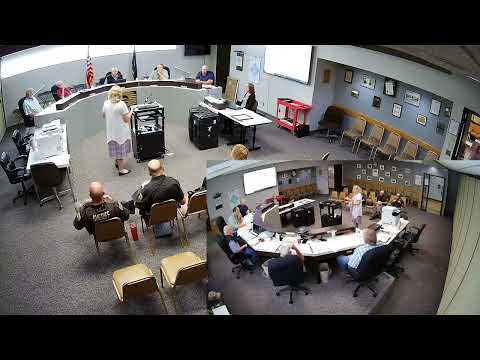
Scotts Bluff County commissioners debate how far to cut tax ask as officials weigh reserves and exceptions
Summary
County officials discussed options to lower this year’s property tax request from roughly $17.5 million toward a target near $14.09 while balancing reserves, bond payments and one‑time exceptions. Staff warned using exceptions this year will raise next year’s levy and commissioners said roughly $3 million in reductions may be required.
Scotts Bluff County commissioners spent the meeting focused on the county’s 2025 budget and how much to request in property tax revenue, with staff and elected officials trading options for staying “within the slice” — the state’s informal limit tied to inflation — or using prior‑year unused levy authority and other allowable exceptions.
County budget staff presented a current “tax ask” that ranged in the documents from about $17 million up to roughly $17.5 million, and showed modeling that would bring the levy down to roughly $14.09 per $1,000 of assessed value if the board limits the ask to last year’s mill levy and declines to apply most exceptions. Staff also modeled higher figures — a $14.8–14.9 range and a 15.05–15.5 range — and explained which exceptions or prior‑year unused authority would be required to reach each level.
The discussion centered on three levers: cutting services and positions, using prior‑year unused property tax authority and placing money in reserves or bond funds. Budget staff said adding a previously removed $250,000 back into a bond reserve would increase the bond portion of the tax ask to about $1.243 million. Staff also said the assessor had indicated valuation increases of roughly $200 million (with other estimates as high as $300 million discussed by commissioners), which would slightly ease levy pressure but would not wholly close the gap between the current ask and the board’s $14.09 target.
Commissioners and staff repeatedly cautioned that adding exceptions to the 2025 ask creates a carry‑forward effect: an exception that raises this year’s levy will typically have to be subtracted in the following year’s calculation or become part of the base used to compute next year’s tax authority. One commissioner framed that choice as “throwing yourself into a bigger bind next year” if exceptions are used now to avoid service cuts.
Board members suggested the county needs approximately $2.6 million to $3 million in reductions to reach the lower levy target; one participant summarized that ballpark as a roughly 17% reduction of the tax‑supported portion of the budget. Several commissioners urged prioritizing cuts in areas where tax‑supported demand exists, rather than relying on reserves or indefinite exceptions.
Staff asked the board whether to begin the formal process at the $14.09 “slice index” level and then add allowed exceptions, saying that approach matches state guidance and would make the county’s case clearer. Commissioners generally indicated a preference for starting from the slice figure and working up only with clearly justified exceptions, while acknowledging difficult choices remain for public safety, roads and detention budgets.
The board scheduled follow‑up presentations the next day from department heads (judges, the sheriff’s office, communications/dispatch and others) so the commissioners could hear program‑level details before finalizing requests.
Ending: Commissioners agreed to continue budget work in a follow‑up session; staff will produce updated spreadsheets that reflect the levy scenarios and the board’s preliminary direction to emphasize the slice target and limits on exceptions.