Get Full Government Meeting Transcripts, Videos, & Alerts Forever!
Get email alerts on the Infrastructure And Environment topic
No spam. Unsubscribe anytime.
San Diego, Yosemite and gateway communities urge coordinated response on border pollution, park‑gateway coordination and CBP staffing
Summary
San Diego tourism and Yosemite gateway officials told the Assembly committee that cross‑border pollution, Customs and Border Protection staffing limits and park‑gateway coordination problems are hampering tourism and public health in coastal, border and rural gateway communities.
San Diego and Yosemite region tourism leaders and industry advocates used the committee hearing to press for federal and state action on infrastructure and environmental issues they say constrain visitation.
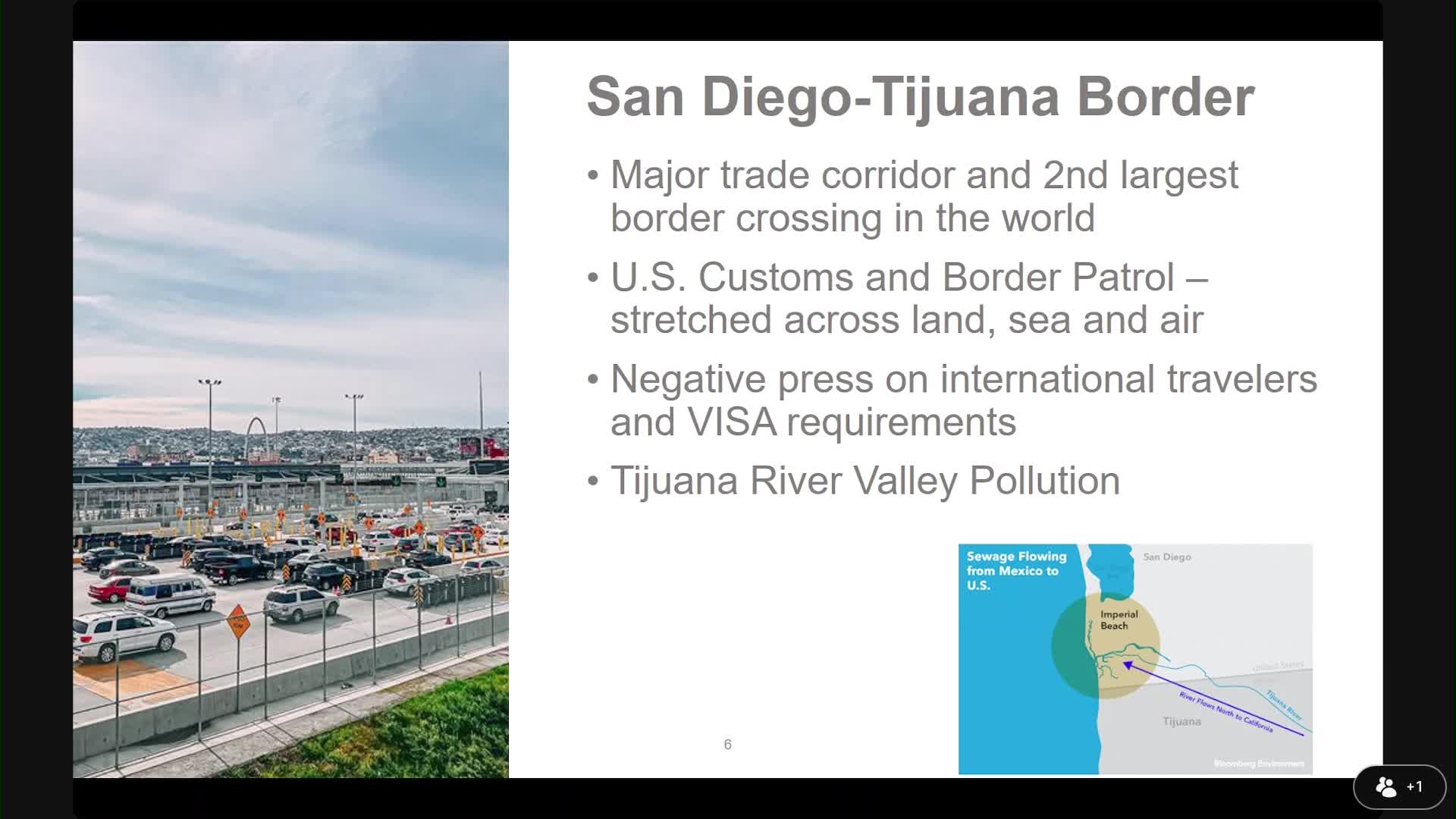
Carrie Verbeck Capich, chief operating officer of the San Diego Tourism Authority, said San Diego hosted 32.5 million visitors in 2024 and that the tourism sector generates $14.8 billion in visitor spending and $22 billion in total economic impact. She told the committee that cross‑border flows are critical: San Diego is part of a bi‑national region with about 7 million people and up to 200,000 daily border crossings. Verbeck Capich said parts of that cross‑border infrastructure are stressed by staffing shortages at Customs and Border Protection, limiting the ability to expand international service additions to the market.
Verbeck Capich also described environmental and public‑health impacts from flows in the Tijuana River Valley: "We share a watershed with the Tijuana region, and unfortunately we have up to 25,000,000 gallons of treated and untreated sewage that flows every day... It is a public health emergency for San Diego County," she said, noting repeated beach closures and advisories since 2015.
Rhonda Salisbury, chief executive officer of Visit Yosemite Madera County, recounted a multi‑county gateway model for Yosemite National Park and said gateways rely on the park for visitor demand. Salisbury said that after persistent advocacy the Department of the Interior issued an order requiring National Park Service units to meet quarterly with gateway stakeholders; she described this as an "incredible win" that will allow regular collaboration on visitor management and local impacts.
Why it matters: pollution, border processing constraints and strained park–gateway relationships reduce visitation and revenue for coastal, border and rural gateway economies. Panelists urged coordinated federal, state and local funding for wastewater treatment, CBP staffing and multi‑jurisdictional planning.
Public testimony reinforced those concerns. Assemblymember Quirk‑Silva and others cited long road closures (Highway 1) that limit access to coastal destinations and recommended infrastructure funding. Industry witnesses suggested federal and state partners are needed to address these cross‑border and park‑access challenges.
Ending: Witnesses asked the committee to consider targeted infrastructure investment—wastewater treatment and border staffing—and to support continued intergovernmental coordination, including the new DOI requirement for quarterly park–gateway meetings.