Get Full Government Meeting Transcripts, Videos, & Alerts Forever!
Get email alerts on the Events Festivals topic
No spam. Unsubscribe anytime.
Sacramento stresses music festivals and Terra Madre as essential economic drivers; warns promoters can move events out of state
Summary
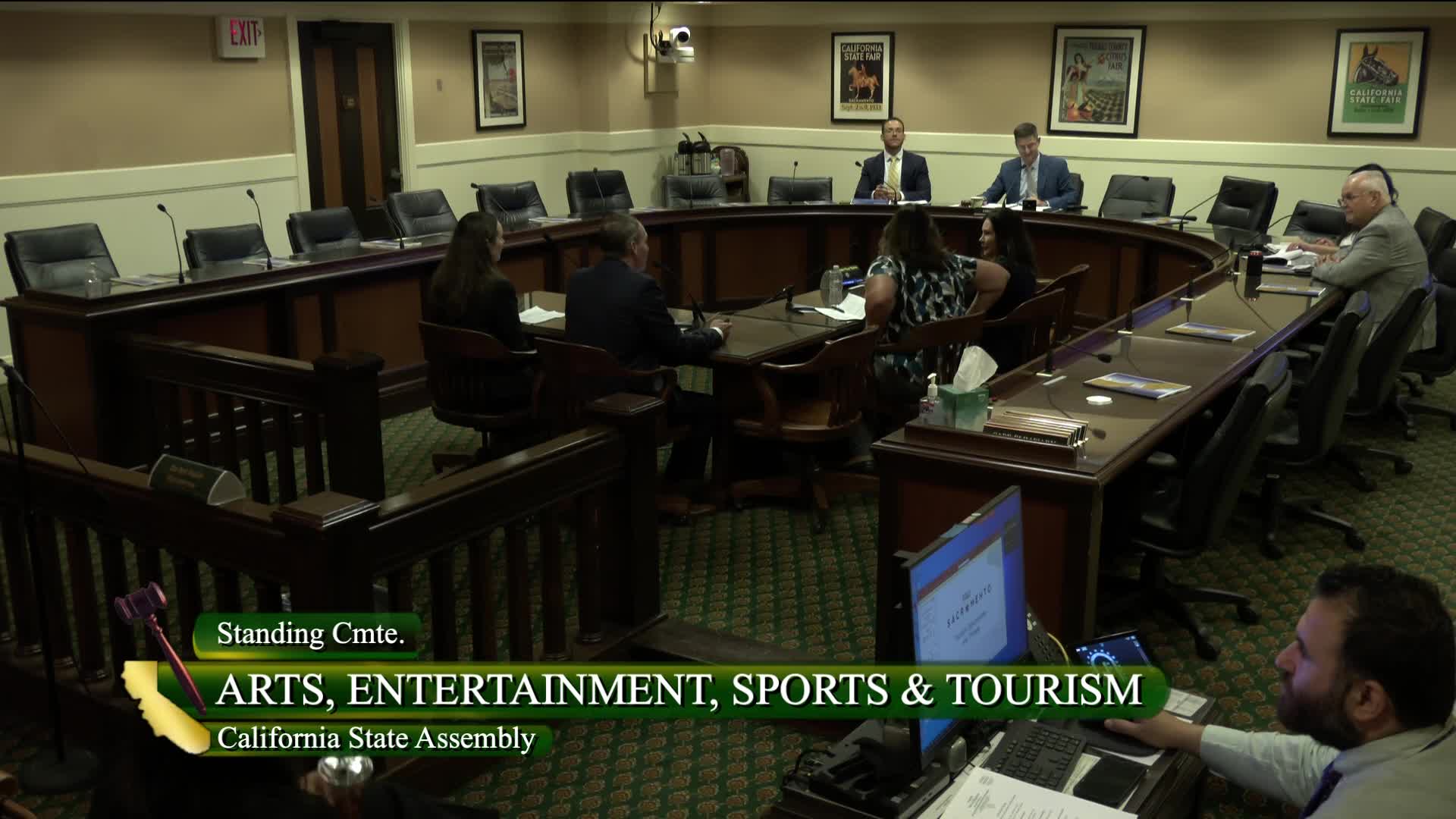
Sacramento tourism leaders told the Assembly committee that festivals such as Aftershock and Ironman and the incoming Terra Madre Americas conference are major local economic drivers but face financial risk. Officials urged state-level incentives and tax-sharing models to keep events in California.
Mike Testa, president and chief executive officer of Visit Sacramento, told the committee that Sacramento diversified after the pandemic from a convention-driven market into a multi-event destination and that large festivals generate tens of millions in local economic impact.
Testa said Aftershock, a four‑day hard‑rock festival, draws about 160,000 attendees and more than $40,000,000 in economic impact for Sacramento; more than half of attendees come from outside California, he said. He also described Ironman California and other festivals that create consecutive weekends of hotel demand in October.
Testa warned that music festivals are financially risky for promoters. He said promoters compare costs across states and that festivals will relocate if other states offer better financial terms. "When you look at some of the other states… [they] will share some of the tax revenue that's generated by the festival," he said, citing Kentucky's approach as an example. Testa argued this is analogous to film incentives and said Sacramento had to make a local investment to start a second music festival.
Terra Madre Americas, a major food conference historically held in Italy, will be held in Sacramento for the first time in September under a 10‑year agreement with Slow Food International. Testa reported early signs of international hesitation: some organizations from Mexico, Bolivia and Brazil have postponed attendance, citing concern about traveling to the U.S.
Why it matters: festivals and single events can generate hotel room nights, airport activity and restaurant revenue in cities that lack other natural tourism assets. Testa urged the legislature to examine incentives or tax-sharing structures that would keep events in‑state.
Other witnesses and stakeholders echoed the ask. John Lambeth of Civitas and witnesses from the California Travel Association Foundation said 22 states now operate events funds or similar incentive programs and urged California to consider models such as tax sharing to retain events.
Ending: Testa and other panelists recommended looking at event funding models and treating festivals and sporting events as economic development tools on par with film and business-attraction incentives.