Get Full Government Meeting Transcripts, Videos, & Alerts Forever!
Get email alerts on the Municipal Debt topic
No spam. Unsubscribe anytime.
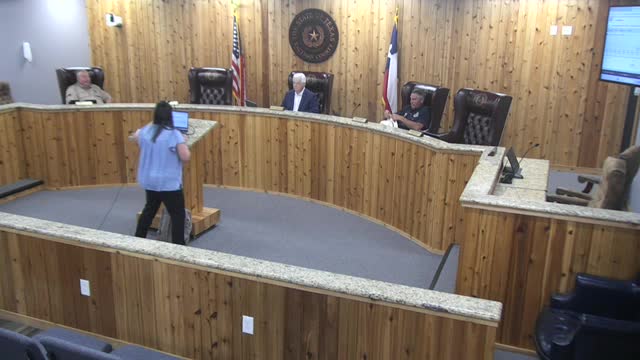
Kaufman County participants monitor live bond order book as underwriters prepare to negotiate yields
Summary
County participants watched a live order book during a bond order period, asking questions about colors on the screen, oversubscription, and what happens if orders do not cover maturities. Underwriter representatives said oversubscription lets them negotiate yields down and that underwriters must step in if some maturities remain uncovered.
Kaufman County participants monitored a live bond order period and discussed the order book’s display while underwriters processed bids.
The group focused on a color-coded order book the presenters displayed. An underwriter representative (unnamed) told participants “Ignore the red. Green and blue is good,” and described blue orders as institutional buying and black as retail buying. The representative said the display showed “$2.28 all the way to $2.45,” which they identified as the maturities on the screen. The representative explained that if the blue (institutional) orders exceed the black line that represents the maturity level, the sale is oversubscribed and the underwriters can “negotiate everything down a little bit.”
Why it matters: the level of orders and whether the sale is oversubscribed affect how aggressively underwriters can negotiate yields or prices, which can materially affect the county’s borrowing costs.
Participants discussed timing and next steps. The representative said there was an hour to an hour-and-a-half ordering period, followed by an additional hour to hour-and-a-half of time during which underwriters would finalize negotiations. The representative said that “worst case scenario, if the blue or the green does not cover the maturity, that's where the underwriters would have to step in and put up the capital.” They added that after the initial ordering window closes, underwriters may still receive last-minute orders that could change the picture.
Participants referenced several figures shown on the screen during the ordering period. One participant said aloud “Only 9,000,000 left,” and at another point “1,000,000” was stated in the same conversation. The representative noted a ratio of total orders at about “2.4 times” for some maturities and that there were larger totals on later maturities that had over orders, while the first few maturities still needed more orders. A participant said the system showed “98,000,000 total orders” but that some of those orders applied to other maturities rather than the first three.
The representative described a sequence of steps after the ordering period: (1) the ordering window closes, (2) underwriters conduct yield/price negotiations with those who oversubscribed, and (3) the underwriters report back to county staff. The representative said they would “reach back out to us later just to kinda discuss what happens there.”
The conversation also identified firms appearing on the display; the representative mentioned “Raymond James,” and another participant referred to “RBC” while reading the screen.
No formal action or vote was recorded in this portion of the transcript; the discussion consisted of staff and participants observing the live order book, clarifying display elements, and asking about next steps.
Ending: The group agreed to wait for further updates from the representative once the underwriters completed negotiations.