Get Full Government Meeting Transcripts, Videos, & Alerts Forever!
Get email alerts on the Parks And Recreation topic
No spam. Unsubscribe anytime.
Dallas proposes efficiencies, signals phased decommissioning of older community pools
Summary
Parks director briefed council on a Parks & Recreation budget that seeks roughly $2.9 million in efficiencies, includes a $5.9 million transfer for Fair Park operations, and flags a phased plan to decommission aging community pools while relying on newer regional aquatic centers and spray‑grounds.
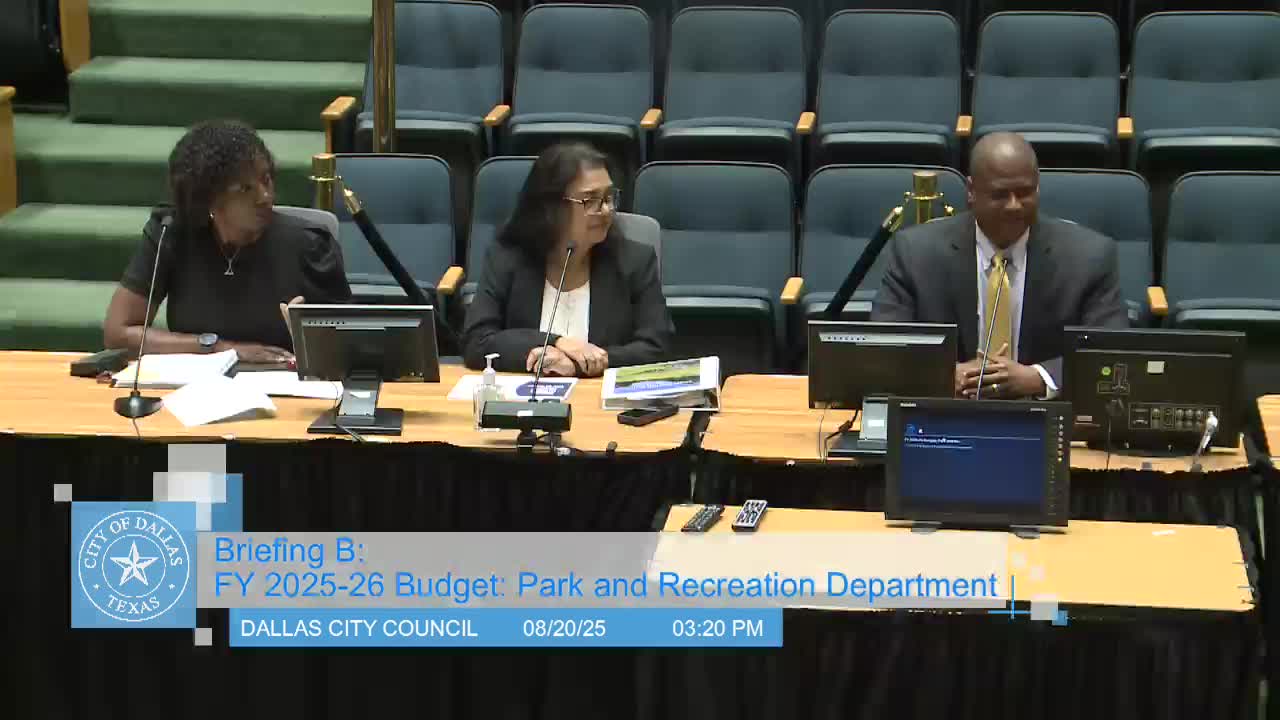
City Parks leadership on Wednesday told Dallas City Council that the parks budget for the coming cycle includes operational efficiencies and proposed changes to how the department manages older “legacy” swimming pools.
What staff presented: - Efficiencies: Parks and Recreation identified about $2.9 million in department‑level efficiencies by optimizing recreation center hours, aligning some facility management models with third‑party operators, adjusting staffing and overtime for weekend events, and reducing some contractor and vegetation maintenance costs for low‑visibility sites. - Fair Park: Staff said they plan a $5.9 million transfer into a Fair Park special fund to support operations. The department presented a projected operating budget of roughly $18.8 million for Fair Park in FY26 and said it expects to generate $10.4 million in revenue while requesting a $2.5 million enhancement in the near term to support operations. - Legacy pools: Director John Jenkins told council several community pools date to the 1940s–1970s and have limited remaining useful life. The department said it will follow an updated aquatics master plan to prioritize facilities for decommissioning and to plan replacements or alternative amenities (splash pads, spray grounds, or regional aquatic centers). Jenkins said staff is proposing a phased approach, roughly two to three pool decommissions per year while ensuring replacement amenities or access are available where possible.
Why it matters: Parks are a visible city service and the aquatics discussion touched on equity, access, and capital funding. Staff said residents use newer regional aquatic centers for longer recreation visits and that older neighborhood pools have lower average time‑on‑site and require growing maintenance investments.
Numbers cited by staff: - Departmental efficiencies identified: about $2,900,000. - Proposed transfer to new Fair Park fund: $5,900,000. - Fiscal year Fair Park operating plan (FY26): $18,800,000 in expenses, $10,400,000 expected city/earned revenue requirement; enhancement request $2,500,000 for FY26. - Example program use: the Parks director said some legacy pools average low attendance and that a 2015 aquatics master plan recommended replacement with modern facilities and spray grounds in many service areas.
Council response and next steps: Council members asked for district‑level briefings and public outreach before any decommissioning is finalized. Several members said they want advance notice and planning to avoid leaving neighborhoods without any accessible aquatic features; staff said they will present a formal legacy‑pool proposal to the Park and Recreation Board for public review and will provide timelines district by district.
Ending: Staff said they will continue to pursue alternative revenue strategies (naming rights, updated contracts, and private partnerships) to reduce reliance on the general fund and will bring a legacy pool plan to the park board and then back to council.