Get Full Government Meeting Transcripts, Videos, & Alerts Forever!
Get email alerts on the Housing Policy topic
No spam. Unsubscribe anytime.
Saint Paul council hears criticism of supportive housing at Kimball Court, lays moratorium on new sober/supportive conversions and upholds zoning denial for 269
Summary
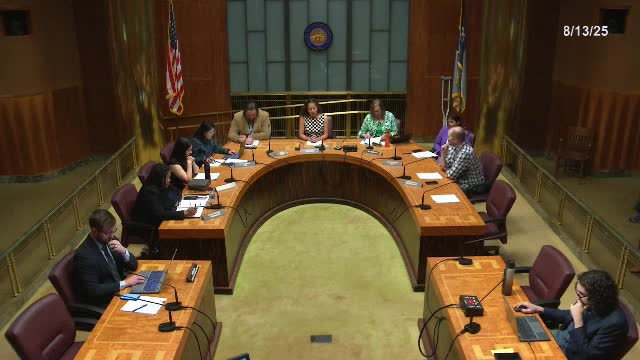
Council closed a public hearing on an interim ordinance to pause approvals for sober houses and supportive housing while the city completes a zoning study; residents described problems at Kimball Court and the council later denied an appeal seeking to convert a sober house at 269 Harrison to a 12‑resident supportive facility.
The Saint Paul City Council held a public hearing and then laid over an interim ordinance that would impose a temporary moratorium on new approvals for sober houses and supportive‑housing facilities pending a zoning study, as residents described safety and zoning problems tied to existing supportive‑housing sites.
The moratorium stems from a state policy shift and a surge of applications that city staff and council members said made the Board of Zoning Appeals (BZA) process unworkable; the ordinance was laid over to Aug. 20 for final adoption after public testimony. The matter is important because it affects where and how supportive services are provided, how state and federal funding streams intersect with local land‑use rules and the city’s ability to ensure safe operations.
Residents urged the council to examine operations at Kimball Court, a permanent supportive‑housing program in the Midway neighborhood, submitting testimony and a written report alleging inadequate on‑site services, safety issues and regulatory noncompliance. Maisie Curling said the Kimball Court program “was run extremely poorly in a way that was dangerous” and asked the council to review a previously submitted report. Julie Hellock testified that Beacon Interfaith’s Kimball Court lacked a conditional‑use permit for supportive housing and alleged unresolved drug and safety problems, including the April 2024 overdose death of a nonresident who had been a guest.
Council members acknowledged the concerns while stressing limits on city authority and the need for a measured policy response. Council President Naker recognized that the situation is difficult and said the moratorium was necessary “due to the sheer scale of issue” created by changes in state approval and funding processes. The public hearing was closed and the moratorium ordinance laid over to Aug. 20 for final adoption.
Separately, the council considered ABZA 205‑6, an appeal of a Board of Zoning Appeals denial involving a conversion at 269 Harrison from an approved 12‑resident sober house to a 12‑resident supportive housing facility with on‑site services. David Ide of the Department of Safety and Inspections explained the zoning distinction: sober houses are self‑supporting residences without on‑site state or federal funded services, while supportive housing includes on‑site services and can trigger separation requirements from other congregate facilities.
The BZA had denied the variance request because it found the applicant’s rationale was financially driven and did not meet the ordinance’s six variance findings (notably practical difficulties and unique plight of the land). The council reviewed the record, heard neighborhood testimony and denied the appeal, upholding the BZA decision; Council President Naker moved to deny the appeal and the motion passed by the council vote.
Council members said they balanced neighborhood concerns, zoning standards and the limits of municipal authority. Chair Johnson voiced concern about inconsistent prior decisions and supported the moratorium as a way to create consistent rules moving forward. The moratorium and the BZA appeal outcome leave the 269 Harrison property authorized to continue as a 12‑resident sober house under current zoning, while the city proceeds with a zoning study to clarify rules governing sober houses and supportive housing.
The council laid the interim ordinance over for final adoption on Aug. 20 and denied the ABZA appeal; staff noted statutory deadlines and the existing moratorium will affect timelines for similar pending applications.