Get Full Government Meeting Transcripts, Videos, & Alerts Forever!
Get email alerts on the State Legislation topic
No spam. Unsubscribe anytime.
MICA briefs Olmsted County on 2025 legislative session: mixed outcomes for county budgets, targeted wins for SSIS modernization, AMRTC expansion and clean water
Summary
Minnesota Intercounty Association (MICA) staff updated commissioners on the 2025 session, reporting statewide fiscal pressure that produced cuts in transportation and some local aids but also bonding and appropriations for SSIS modernization, AMRTC bed expansion, clean water funding and local road programs.
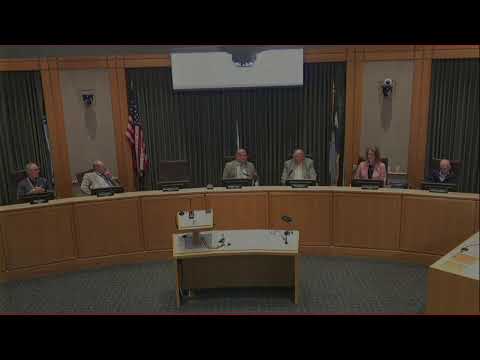
Representatives from the Minnesota Intercounty Association (MICA) gave an informational briefing to Olmsted County commissioners summarizing the 2025 legislative session’s effects on counties.
Nathan Jessen, MICA’s executive director, said counties faced a state budget constrained by a large structural deficit and described one notable outcome: changes in the composition of property tax shares and county program aid (CPA). “We’re a voluntary group of 17 counties from across the state,” Jessen said, and he noted Olmsted receives slightly above‑average CPA per capita; he described recent redistribution factors that will modestly increase Olmsted’s CPA in 2026.
Transportation and bonding: Amber Backus, MICA’s transportation liaison, described a difficult transportation negotiations process and a special-session transportation bill that reduced some transit and active-transportation funding and slowed a prior dedication of auto-parts sales tax to transportation. She said some of those reductions were offset by an increased surcharge on electric vehicles that will raise EV fees in certain cases to as much as about $200. Backus called the bonding bill a relative win for counties, saying it provided funding for the local road improvement program, local bridge replacement and a wetland replacement program.
Health and human services: Nancy Soleski, MICA’s public‑health and human services liaison, said the session provided $35 million for SSIS systems modernization (plus earlier set-asides) and authorized funds to expand state forensic treatment capacity. She described an AMRTC expansion package that combines operating and bonding funding she characterized as roughly $75 million to create additional beds (presentation materials cited a $55 million bonding item plus operating dollars); Soleski said a review panel and continued work on priority admissions remain active and that counties will resume certain cost shares beginning July 1 and face an estimated new county cost of roughly $14–18 million in the upcoming biennium for specific state-mandated placements if offsets are not found.
Environment and solid waste: Rachel Sysnowcek, MICA’s environmental liaison, briefed the board on the clean water fund and other environment items. She said the final clean water appropriations followed Clean Water Council recommendations and that more than $300 million will flow over the next two years through clean-water appropriations. Sysnowcek also reviewed product stewardship and packaging‑waste work (the Packaging Waste and Cost Reduction Act remains in early implementation) and said counties will continue to press for more state support for solid-waste management, including work on electronic-waste and battery stewardship that did not pass this session. On data centers she said the enacted bill includes additional water-use review provisions for projects with potential aquifer impacts.
Public safety, pensions and other items: MICA staff summarized changes to community supervision funding (three-year averaging), ambulance operating deficit grants and a mixed set of pension and disability changes that will be addressed further in work groups. MICA also walked commissioners through broad end-of-session budget numbers and the state’s use of reserves and forecasted surpluses and deficits.
Why it matters: MICA presenters emphasized that counties continue to face constrained state resources and must rely on a combination of bonding, targeted grant programs and committee work groups to manage program and infrastructure needs. Commissioners asked questions and commended MICA staff for analysis and the prepared materials.
No formal county action was taken; the presentation was informational.