Get Full Government Meeting Transcripts, Videos, & Alerts Forever!
Get email alerts on the Animal Services Policy topic
No spam. Unsubscribe anytime.
Debate at council chambers over Austin Animal Center rule change draws volunteers, veterinarians and adopters
Summary
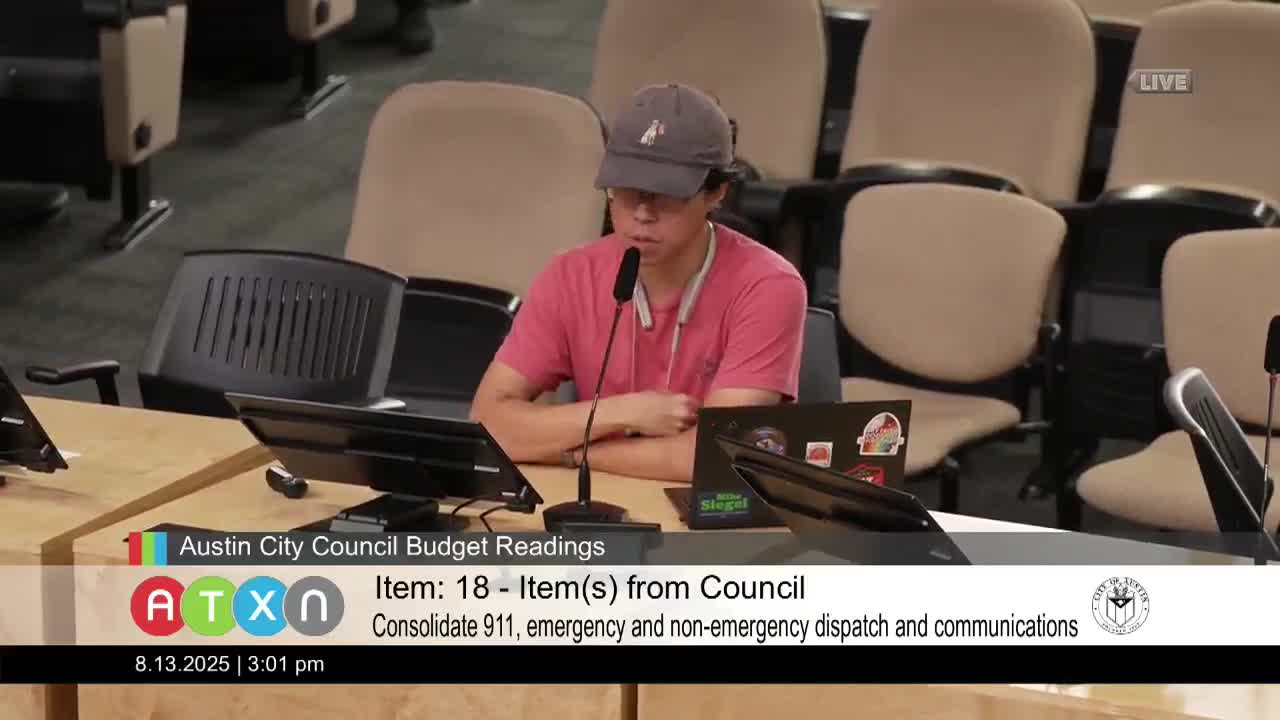
A high-profile and emotional debate unfolded during public comment over a proposed resolution to change city policy at the Austin Animal Center (AAC).
A high-profile and emotional debate unfolded during public comment over a proposed resolution to change city policy at the Austin Animal Center (AAC). The ordinance under consideration would allow AAC veterinarians to perform spay procedures on visibly pregnant animals without the 48-hour advance notice to rescue partners that is currently required by city policy.
Opposing viewpoints at the microphone - Rescue organizations and many adopters told council the existing notification requirement gives rescue groups time to pull pregnant animals and care for litters (foster families and adopters said they frequently adopt animals born in foster care). They argued the ordinance would increase the number of fetuses intentionally killed in shelters and could undermine the city's "no-kill" metrics and public trust. Several veterinarians and volunteers also asked for fuller stakeholder engagement and for any policy change to be considered by the Bridal Advisory Commission and AAC partners before council action. - AAC volunteers, other shelter supporters and some veterinarians said the rescue-notification requirement has driven a high intake of maternal animals and that giving shelter veterinarians discretion to spay pregnant animals would reduce downstream births, relieve capacity pressures and better match veterinary practice to shelter needs. A number of volunteers described years of overcrowding and long kennel stays for adult dogs and cats.
Budget context and staffing concerns Some speakers opposed the policy change while council members were simultaneously debating a budget that included cuts and restorations to AAC's veterinary and emergency care line items. Several public commenters — including AAC volunteers and independent veterinarians — warned that cutting emergency veterinary funding while expanding surgical workload would be a mismatch; others urged the council to restore emergency and specialty veterinary funding so stay abortions would not stretch the shelter's capacity.
Council and staff direction Council did not take a final vote on the ordinance during the budget session. Several council members and staff said they wanted additional implementation detail and asked that the Bridal Advisory Commission and affected rescue partners be included in further review. Staff also noted the need to ensure emergency and specialty veterinary capacity before expanding surgical workload at AAC.
Why the issue drew so much attention The item combined three sensitive community concerns: 1) animal-welfare outcomes when shelters are over capacity; 2) how no-kill live-release metrics are defined and reported; and 3) whether rescue groups, volunteers and veterinary staff have had sufficient input into a significant procedural change. Several speakers said the council should not adopt a policy change in a budget meeting without a more standard stakeholder process.
What to watch next Council asked staff to return with additional stakeholder analysis, and several council offices signaled they wanted the Bridal Advisory Commission or a separate public process to review the matter before any final change to the city code or AAC policy. The item will remain on the radar because it intersects with AAC funding and shelter capacity decisions in the adopted FY26 budget.