
Agoura Hills urges balanced, science‑based approach to proposed statewide 'Zone 0' wildfire rules
Get AI-powered insights, summaries, and transcripts
Sign Up Free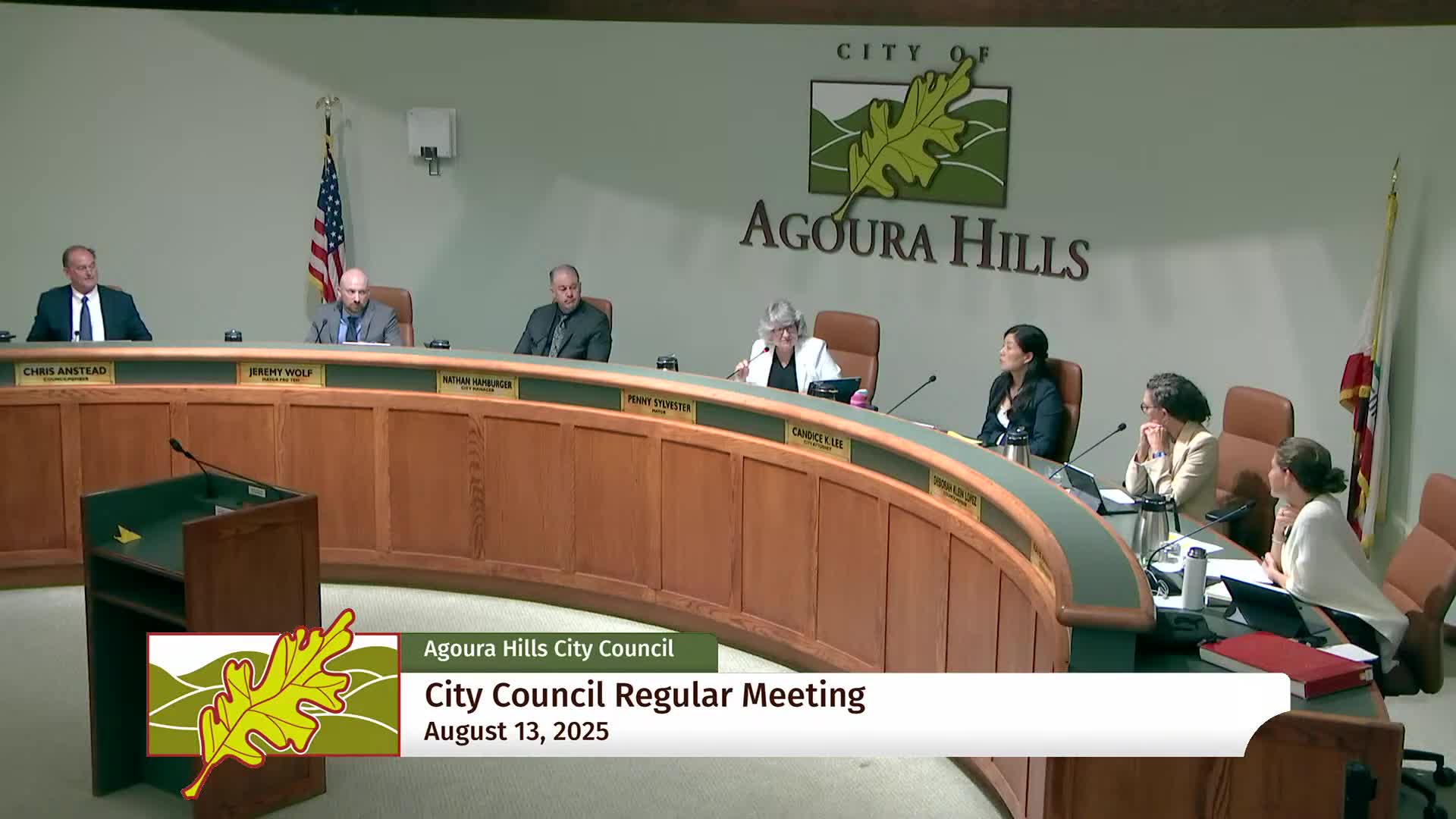
Summary
The council unanimously approved a letter to the California Board of Forestry urging a measured, science‑based approach to any Zone 0 regulation that would mandate vegetation removal adjacent to structures; the mayor emphasized support for home hardening while warning against one‑size‑fits‑all vegetative removal.
The Agoura Hills City Council unanimously approved a letter to the California Board of Forestry and Fire Protection asking the board to adopt a balanced, science‑based approach to proposed “Zone 0” regulations that would affect vegetation directly adjacent to structures in high fire hazard zones.
Mayor Penny Sylvester, who requested the item, said the proposed regulations built off AB 3074 and could require removal of vegetation within five feet of structures statewide. Sylvester said she supports home hardening measures but raised concerns about a rigid, statewide mandate that could force removal of trees and other vegetation that provide biodiversity, shade and other environmental benefits.
“The legislation called for an ember‑resistant zone, not a non‑combustible zone,” Mayor Sylvester said, summarizing the original intent of AB 3074; she urged the Board of Forestry to ensure clarity, regional variation and homeowner protections before rules are finalized.
Public comment and expert input cited by the council included work by researchers at the University of California; council members referenced studies and expressed the need for peer review and regional nuance. Jay Crutcher, speaking during public comment, urged the council to consider low‑humidity, high‑wind conditions and cited research stating that Zone 0 can materially reduce structure ignition risk from flame contact and radiant heat if implemented with defensible‑space maintenance.
Council member Deborah Klein Lopez and other members urged the board to avoid a rushed, sacrosanct, one‑size‑fits‑all rule. Klein Lopez noted practical enforcement questions — how hydrants, homeowners’ costs and appeals would be handled — and urged science‑based, implementable solutions.
Council members stressed two consistent aims: they want aggressive home hardening and defensible‑space practices that reduce ignition risk and at the same time want to preserve biodiversity and avoid unintended consequences from blanket vegetation removal. The council’s letter asks the board to allow local discretion, consider environmental tradeoffs, require clear appeal and notice processes, and rely on peer‑reviewed science rather than limited or insurance‑industry literature.
Council member Chris Anstead moved to approve the letter; Council member Deborah Klein Lopez seconded. The motion carried 5‑0.
What happens next: staff will transmit the council’s letter and the council asked staff to continue to monitor Board of Forestry hearings and public workshops so the council can provide further comment as rule language is developed.