Get Full Government Meeting Transcripts, Videos, & Alerts Forever!
Get email alerts on the Public Records topic
No spam. Unsubscribe anytime.
City council director explains public‑records process to TRUE Commission; offers guidance on costs and scope
Summary
Jason Teal, council director and secretary, told the TRUE Commission that routine public‑records requests taking 30 minutes or less are not charged, while broad requests that consume many staff hours may incur recoverable costs under Florida law; he recommended commissioners vet requests as a body before asking staff to comply.
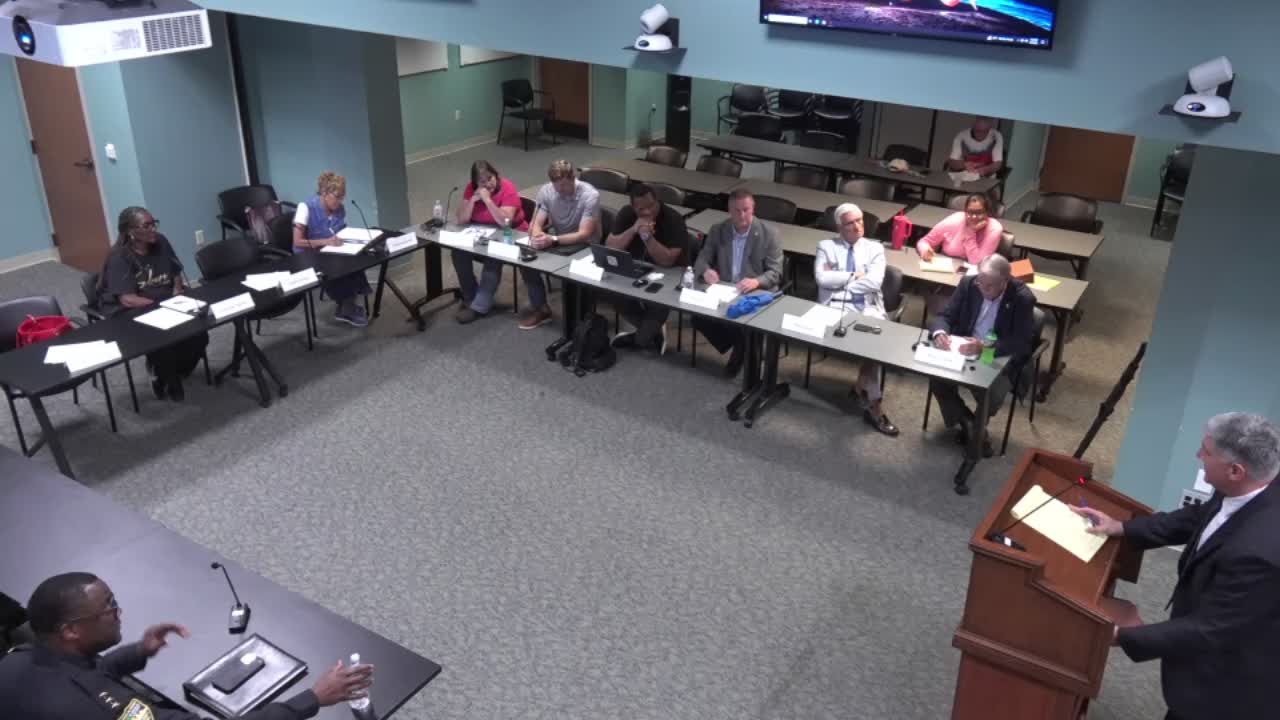
Jason Teal, director and secretary for the City Council, briefed the TRUE Commission on Aug. 7 about how the council handles public‑records requests and the practical limits of staff resources.
Teal said the council’s approach balances the public’s right to records with the cost of compliance. “If a public records request comes in, that is going to take a half hour or less of staff time to be able to comply with that public records request, then we don't charge for it,” he said, noting that Florida law permits recovery of reasonable costs for more time‑consuming requests.
Why it matters: commissioners earlier raised questions after an expansive records request by a colleague that would have required many staff hours and crossed multiple departments. Teal advised that when a single commissioner files a broad request the city may ask whether the full commission has sanctioned the request, and that the council can provide an estimate of the cost of compliance before proceeding.
Key points from the briefing: - Individual vs. board requests: Teal emphasized that an individual commissioner may make a public‑records request as a private citizen, but that does not equate to speaking for the full commission. When a request has broad implications or significant staff cost, the council may ask whether the commission as a whole wants to pursue it. - Cost and scope: Teal described examples in which expansive requests—such as asking for all documents across the length of a corridor—would require dozens of staff hours; the council’s practice is to propose narrowing date ranges or scope and to provide an estimated compliance cost if necessary. - Practical advice: He urged commissioners to clarify what information they want, consider narrowing requests, and, if the commission wishes to pursue a review, take the request up as a commission action so staff and the public understand its official status.
Teal also discussed the council’s streaming and public‑access work. He said the council uses a vendor (Granicus) and is expanding distribution to platforms including YouTube to increase accessibility; some meetings are already available online.
Ending: Commissioners discussed whether a single commissioner’s records request should be routed through the body; Teal recommended using the commission’s open meeting to vet and, if warranted, formally request staff work so the burden and cost can be assessed and, if needed, allocated.