Get Full Government Meeting Transcripts, Videos, & Alerts Forever!
Get email alerts on the Property Tax topic
No spam. Unsubscribe anytime.
Brigham City holds Truth-in-Taxation hearing on proposed 4–4.6% property tax increase to shore up fleet and benefits costs
Summary
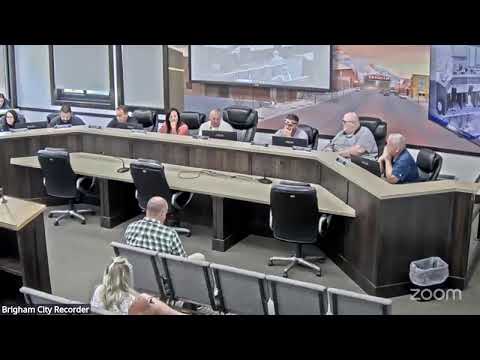
Brigham City held a public hearing Aug. 7 on a tentative budget that would raise property taxes roughly 4.35–4.6%, mainly to cover higher fleet replacement costs and an estimated increase in employee insurance; final adoption is scheduled for Aug. 21.
Brigham City held a public hearing Aug. 7 on a tentative property tax increase the city says is needed mainly to replenish its fleet-replacement fund and to cover rising employee insurance costs. Financial Director Tom Cotter told the council and residents the tentative budget would increase the city’s property-tax levy by about 4.35% (Cotter said the exact percentage can vary to about 4.6% depending on tax-commission calculations) and that the city expects the change to raise roughly $155,000 for the general fund fleet program.
Why it matters: The hearing is part of Utah’s statutory “truth in taxation” process. If adopted, the change would add an ongoing revenue stream the city says is necessary to replace ambulances, garbage trucks and fire engines that have risen sharply in price in recent years and to absorb an estimated increase in employee insurance costs for 2026.
Cotter told the council the city operates a separate fleet fund that buys vehicles and leases them to operating departments to smooth replacement costs. He showed examples of rapid price increases: an ambulance purchased in 2018 for $184,000 that now costs about $320,000 to replace, a garbage truck that moved from about $240,000 to $450,000 and a fire engine that rose from roughly $332,000 to more than $1.1 million in recent years. “How do we avoid this? How do we help pay for it?” Cotter asked, describing a fleet escalation built into leases to account for inflation.
Cotter also cited an estimated 14% rise in employee health-insurance costs for fiscal 2026 that he said would add about $70,000 to the tentative budget. He said the fleet adjustment and the insurance estimate were the principal drivers of the proposed tax change and described how Utah’s certified-tax-rate system works — the state tax commission and county auditor set a baseline “certified tax rate,” and a taxing entity must hold a truth-in-taxation hearing if it intends to collect more than the prior-year budget.
Public comment: Roughly two dozen residents spoke during a three-minute public-comment period. Several, including Colleen Fuller, said rising taxes and fees were squeezing fixed-income households; Fuller said, “I’ve watched my taxes go from $500 clear up to $2,100.” Other speakers supported the modest city increase as reasonable for public safety equipment: Caleb Barker told the council, “I feel that a dollar and 50¢ or so is well worth being able to buy new equipment for our emergency responders.” Residents also pressed officials on related concerns such as garbage-can damage, park reservation fees, and options to reduce insurance costs through interlocal purchasing agreements.
Council process and next steps: The council opened the public hearing during the Aug. 7 meeting, heard comments and closed the hearing the same night. No final action was taken; the council is scheduled to vote to adopt or revise the budget and property-tax rate at its Aug. 21 meeting. Cotter and staff emphasized that under Utah law the certified tax-rate process and the assessed value changes reported by the county assessor affect individual taxpayer bills differently, and that the city has complied with required notice and publication steps.
What was not decided: The council did not adopt the tentative budget or tax rate on Aug. 7. Cotter and staff said some revenue adjustments in the tentative budget will rely on a mix of sources — property tax, sales tax, and ambulance revenue — and that the council had already reduced the initially larger proposal through work sessions earlier in the budget process.
Ending: Officials encouraged residents to participate earlier in the budget cycle (the mayor’s initial presentation occurs in May and council work sessions follow) and to contact the county assessor or auditor if they believe their property value or available abatements were calculated incorrectly. The council will take final action on the budget and tax rate at its Aug. 21 meeting.