Get Full Government Meeting Transcripts, Videos, & Alerts Forever!
Get email alerts on the Land Use Development topic
No spam. Unsubscribe anytime.
Payson staff: Juniper Pines subdivision moving through review as residents press drainage, tree‑removal and traffic concerns
Summary
The Payson Common Council on Aug. 13 received a status update from planning staff on the Juniper Pines and Pink Door Mini Storage subdivision and heard several residents pressing for faster fixes and clearer answers on grading, tree removal and stormwater runoff.
The Payson Common Council on Aug. 13 received a status update from planning staff on the Juniper Pines and Pink Door Mini Storage subdivision and heard several residents pressing for faster fixes and clearer answers on grading, tree removal and stormwater runoff.
Nicole Adams, planning staff, said the project is continuing through the town's subdivision and civil‑improvement review. She told the council the at‑risk grading permit was applied for in May 2024 and issued in July 2024, the developer submitted a preliminary plat in July 2024 that the Planning and Zoning Commission approved with conditions in March 2025, and the project is now in civil improvement and final‑plat review. The preliminary plat shows 24 single‑family lots, one commercial lot, one multifamily lot and four tracts reserved for future development, Adams said. Final plat approval and construction require submittal and town review of civil improvement plans, posting of financial assurances and acceptance of improvements by council.
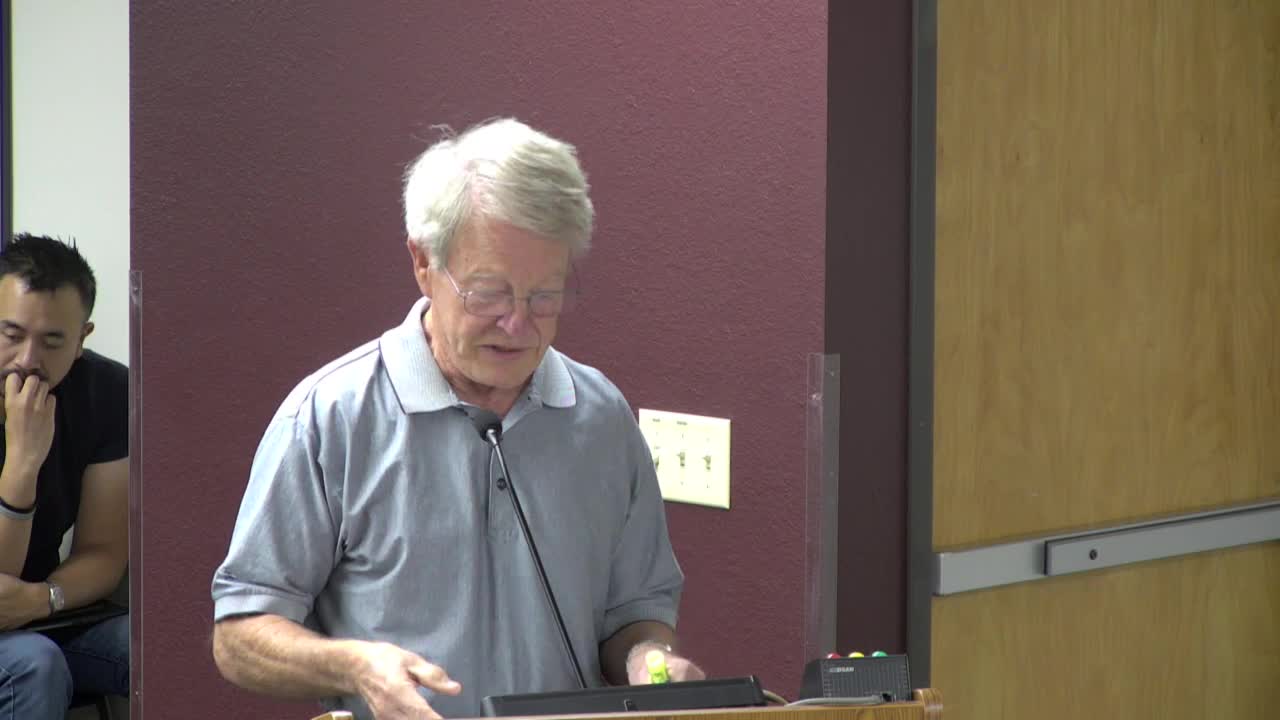
Residents said the project is already creating problems. Mike White, a Star Valley resident, said he has documented grading without appropriate permits, what he called the removal of about 34 acres of trees, and increased runoff that sent floodwater toward downstream properties during a recent storm. White and other speakers said the town’s tree ordinance and required replacement standards appeared not to have been enforced and asked why an at‑risk grading permit had been repeatedly extended.
Adams said the developer provided two performance bonds in mid‑2024 (amounts: not specified in the update) and that town staff had inspected the site after runoff complaints. She said a traffic study required for final approvals has not yet been received. Adams also said that a July submittal included an updated drainage and geotechnical report; Adams did not present technical conclusions at the meeting and said engineering staff would follow up.
Water‑system staff described interlocking regulatory steps that affect timing. A water‑department staff member filling in for Water Resource Manager Baden Aldridge said the developer has asked to modify a public well and that Arizona Department of Water Resources and Arizona Department of Environmental Quality approvals are required because the well serves the public. That staff member said ADWR/ADEQ review needs drainage/floodplain elevations and final subdivision grades to show the well casing would not be overtopped in a 100‑year flood; until the drainage report and civil plans are settled, ADEQ/ADWR submittals cannot be completed.
Council members asked staff to press for the outstanding technical reports and to follow up with ADOT about whether the developer’s traffic work listed in the civil plans will require any state action. Town staff said they would provide the drainage and well materials to council members and to ADOT if needed, and stressed that the current timeline was not unusual for a project with multiple agency reviews.
Residents asked the council to enforce town code for interim erosion and drainage protections while final approvals are pending. Adams said the town code contains interim drainage requirements and that code enforcement and engineering staff have authority to require corrective measures before final plat approval.
The council did not take a formal vote on the development during the meeting; staff said they would continue coordination with the developer and would bring final plat or civil plans back after resubmittal and comment resolution.
Community members and councilors who spoke in public comment tied Juniper Pines to wider concerns about transparency, permitting decisions and enforcement; several asked for clearer, regularly posted updates from staff so neighbors could track engineering responses and performance bond information.
What’s next: staff said the developer must resubmit corrected civil improvement plans (including the traffic study and any outstanding drainage/geotech responses); after staff review and resolution of comments a final plat and construction agreement would come to council for acceptance of improvements and building plan review would proceed.