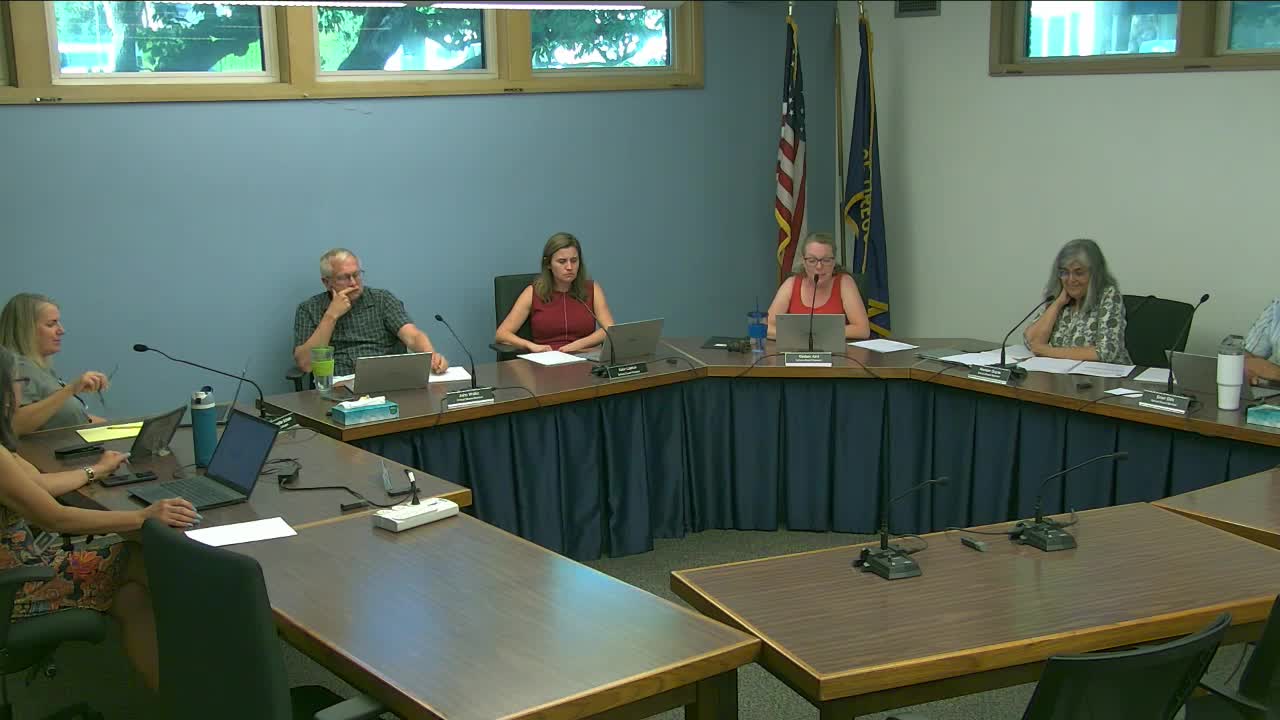
Board reviews technology device protection program as costs rise; staff weigh deposits, mandatory damage fees, and in‑house repairs
Loading...
Summary
Staff told the board the district paid approximately $264,000 to a commercial repair vendor in 2024–25 and presented options to address rising device repair and replacement costs.
District technology staff presented the board with a comprehensive review of the Technology Device Protection Program, describing a sharply rising cost trajectory driven in part by the loss of a regional Electronic Service District (ESD) repair program and higher commercial repair bills.
Staff reported that in 2024–25 the district paid a commercial vendor (Iterity, identified in the materials) roughly $264,000 for device repairs and replacement — approximately double what the district paid when it used the Clackamas ESD repair program. The presentation included year‑to‑year figures showing a widening gap between fees assessed to families for device damage and the amounts actually collected: for the 2022–23 year staff reported about $27,000 assessed and $9,707 collected (a roughly $18,000 gap) and for the most recent year about $58,780 assessed and $11,602 collected (a roughly $47,000 gap). Staff noted most damage incidents occur at middle school grade levels.
To address the trend, staff proposed several options for board consideration: pursuing a shared repair technician with neighboring districts or a part‑time/on‑site tech to reduce vendor costs; piloting self‑repair capacity; implementing a security deposit (staff cited a possible range of about one quarter to one third of device cost, roughly $100–$125, refundable subject to wear‑and‑tear rules); retaining an annual device protection fee (district increased the optional fee from $25 to $40 last year and staff estimated that a modest rise to $50 might be part of a blended approach); or making damage fees mandatory and enforceable through the district’s student accounting/registration system (for example, restricting participation in optional extracurricular activities until fees are paid). Under Oregon law staff noted the district cannot make device issuance itself conditional on payment because devices are part of core curriculum/access to FAPE, but Oregon statutes allow a refundable security deposit and require waivers or reductions for eligible families.
Staff estimated a full‑time technician (compensation plus benefits) would cost roughly $150,000 per year, with parts potentially roughly half the labor cost, and said parts (like screens or motherboards) can run hundreds of dollars per repair. Staff said shared staffing with another district could make an in‑house position financially viable. They also noted administrative and space requirements for an internal repair operation and that the district’s inventory will include many devices entering the 4–5 year range, which typically show higher repair rates and costs.
Board members asked clarifying questions about how mandatory damage fees and security deposits would interact with existing waivers and the district’s newly integrated student accounting system (Destiny). Staff reported that families who qualify for fee waivers would also be eligible for deposit waivers as required by state statute. Staff told the board they plan to return with a formal recommendation at the board’s meeting on the 25th (staff phrased this as the "25th") that could include a blended approach of deposits, modest fee changes, and enforcement mechanisms.
No final policy was adopted at this meeting; the board asked staff to further analyze cost comparisons, partnership options for shared repair staff, and equity impacts of deposit and mandatory fee options before the formal recommendation.