Get Full Government Meeting Transcripts, Videos, & Alerts Forever!
Get email alerts on the Data Reporting Deaths topic
No spam. Unsubscribe anytime.
Commissioners press Austin Animal Center for clearer data on unassisted deaths and software transition
Summary
Commissioners and volunteers pressed staff for clearer, consistent reporting after a spike in unassisted deaths; staff said a portion of the discrepancy resulted from animals coding as dead-on-arrival and that ShelterBuddy software implementation and staffing constraints have complicated preventative medicine tracking.
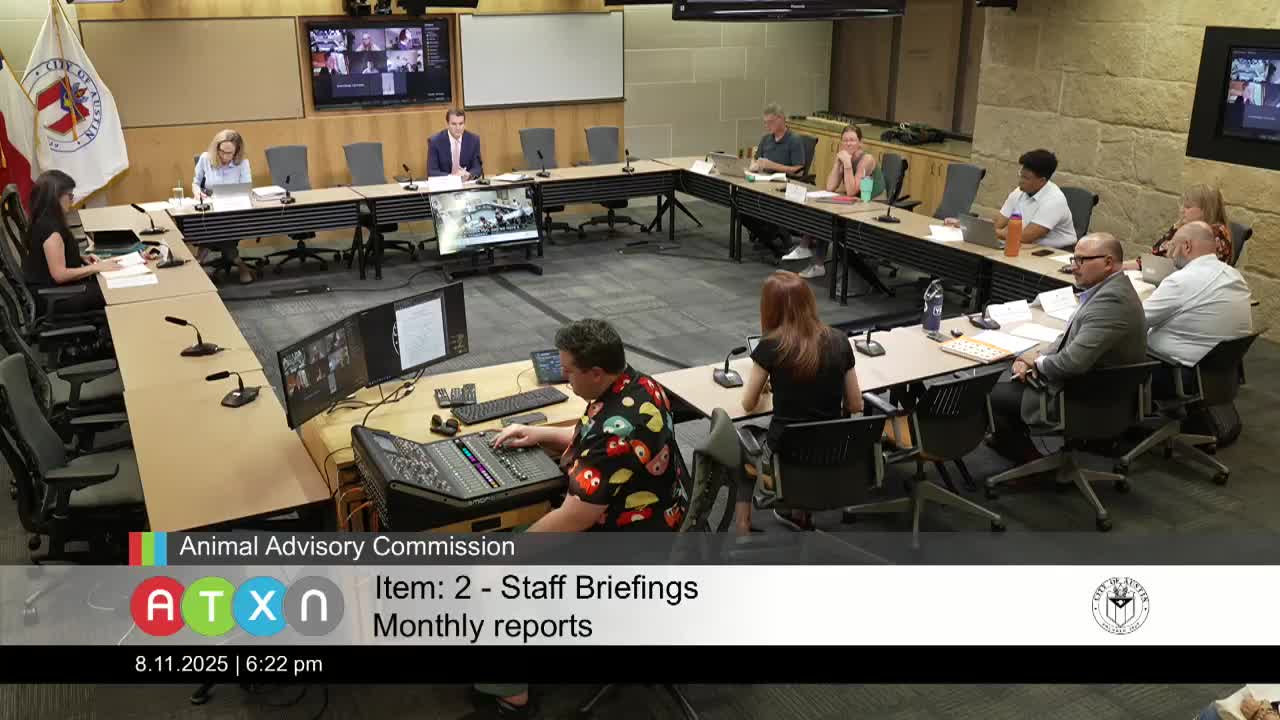
Commissioners and volunteers raised questions at the Aug. 11 meeting about a spike in “unassisted deaths” recorded at Austin Animal Center and asked staff to provide clearer explanations and historic comparisons.
Volunteer Shelley Leebam said the number of unassisted deaths—66 in June—was “way out of line” with prior years and that 25 deaths in July included 11 adult cats; she asked whether an outbreak, changes in coding, or other issues explained the trend. Leebam asked the commission for help identifying policy steps to reduce those deaths.
Jason Garza told the commission that some of the initial spike was the result of intake miscoding: staff had received animals that were DOA and were incorrectly recorded, and record corrections raised the live-outcome rate for the month after the initial reporting. Garza presented a monthly dashboard showing inventory, adoptions (767 in July), reunifications (82) and foster activity. He said 66 animals were euthanized in July, 64 for medical reasons and two court-ordered.
Commissioners sought a breakdown of causes, an explanation of how “dying in kennel” differs from compassionate euthanasia that does not count against live-outcome metrics, and age cutoffs used to distinguish kittens from adult cats. Staff explained that city code requires notifications for euthanasia except in cases where an animal is “agonal” or “lateral,” which a veterinarian may treat as immediate humane euthanasia; otherwise, necropsy, notifications and the city’s reporting rules apply.
Staff acknowledged that implementing a new record system, ShelterBuddy, and shifting operational priorities made consistent preventative-medicine reminders more difficult. The veterinary team said monthly heartworm preventives reduce risk but are not 100% effective: heartworm infections become detectable on antigen tests only about six months after infection. Staff said they are working to formalize pledge/transfer requests and to log rescue responses more consistently.
Why it matters: Small numbers of deaths and transfers can materially change live-outcome percentages for a large shelter. Commissioners said better, auditable data and clearer definitions are essential for public trust and informed policy recommendations.
Next steps: Staff agreed to return with a deeper review of the July adult-cat deaths, year-over-year comparisons, and a plan to improve recordkeeping and rescue-plead accountability.