Get Full Government Meeting Transcripts, Videos, & Alerts Forever!
Get email alerts on the Oklahoma Street Reconstruction topic
No spam. Unsubscribe anytime.
Municipal services committee deadlocks on Oklahoma Street design after residents press to save trees and parking
Summary
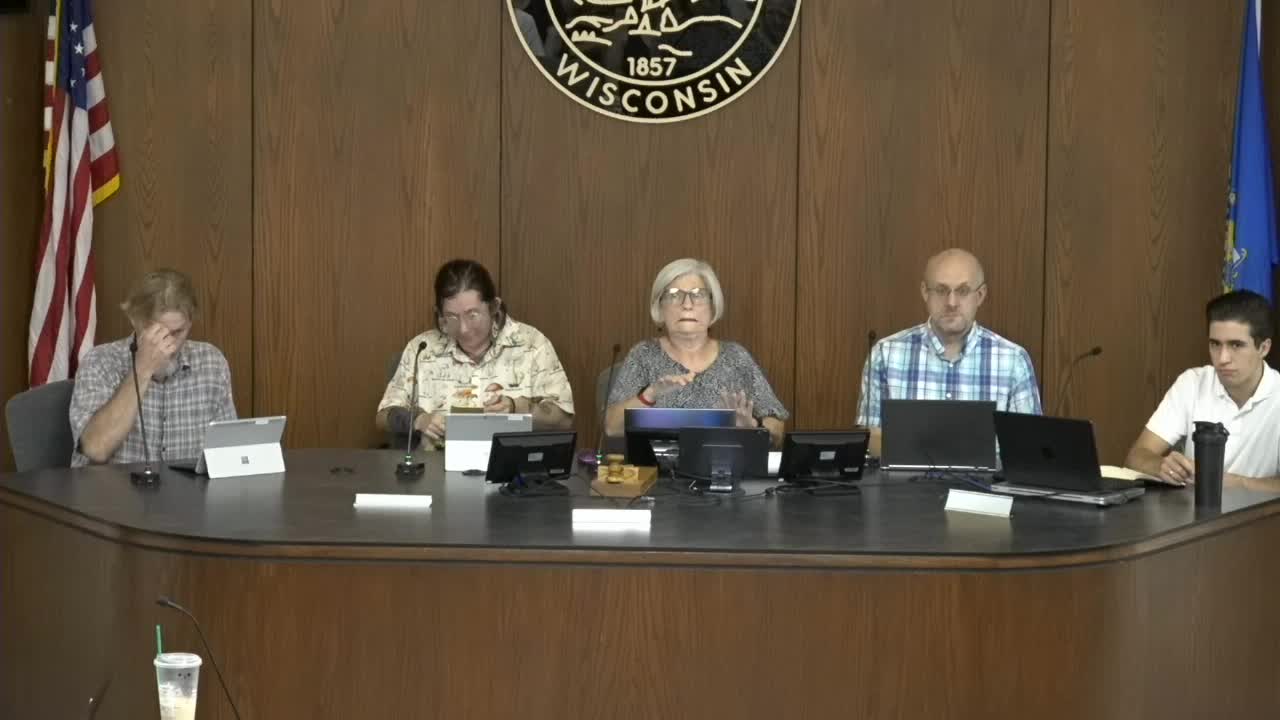
The Appleton Municipal Services Committee spent more than an hour on Aug. 11 debating the proposed reconstruction of West Oklahoma Street, hearing nine public speakers who urged preserving mature trees and two-sided street parking, and ultimately rejecting the amended design at committee.
The Appleton Municipal Services Committee spent more than an hour on Aug. 11 debating the proposed reconstruction of West Oklahoma Street, hearing nine public speakers who urged preserving mature trees and two-sided street parking, and ultimately rejecting the amended design at committee. The committee voted 2-3 on the final, amended proposal, and the item will be reported to the common council next week with a recommendation to deny the amended plan.
The dispute centered on the city’s Complete Streets design for the block of West Oklahoma Street, which would replace aging water mains and laterals and repave the street but would reduce the face-to-face roadway width to allow parking on only one side. Residents said the narrower street would remove mature trees and worsen parking for households with multiple cars; supporters of the narrower design cited traffic-calming and long-term safety benefits.
Why it matters: The project pairs urgent infrastructure work — staff explained utility replacements are scheduled as part of the city’s two-year reconstruction process, with utilities typically done the year before paving — with neighborhood concerns about losing canopy, parking access and potential higher costs if the design changes. Committee members and staff noted tradeoffs among right-of-way width, fire-department clearance standards, tree preservation and project cost.
Residents speaking at the podium described West Oklahoma Street as a historic, tree-lined neighborhood. “I personally ask you again to vote no to the current proposal to narrow Oklahoma Street,” said Sarah Leed of 1027 West Oklahoma Street, who presented a petition she said contained nearly 50 signatures opposing the narrowing and noting a minimum of 41 trees slated for removal under the presented plan. Other residents cited similar concerns about tree loss, student parking tied to Appleton West High School and difficulty with enforcement of existing parking rules.
City staff and engineers described the technical basis for the proposal. Traffic engineer Lam said staff conducted multiple daytime observations and counted about eight to 16 parked cars on the stretch during the observation windows, out of roughly 122 legal parking spaces, which he said equated to about a 13–15% occupancy rate on an average day. Deputy Director Neuberger explained the design trade-offs tied to emergency access: with parking on one side the recommended face-to-face width is 26 feet; with parking on both sides the recommended face-to-face width is 32 feet, and narrowing below the 32-foot dimension could conflict with fire-department clearance standards.
Staff also described the project timeline and tree removals tied to utility work: the city typically removes trees identified for removal ahead of utility construction so crews can replace water mains and sanitary laterals; staff said the utilities work is slated as the earlier year of the reconstruction cycle (utilities in 2026 followed by paving). Project-management staff warned that delaying or substantially reworking the design could tighten or imperil the construction schedule and raise costs because bids and material prices rise over time.
Cost and funding: A member of the finance committee noted that keeping the wider street alignment would increase the project’s cost — an estimate mentioned during the meeting was about a $159,000 increase — and that roads are paid from a mix of wheel tax revenues, borrowing and general funds. Staff also cautioned that any additional traffic-calming features not already in the design (for example, nonstandard bump-outs or speed humps) were not included in the published budget estimates.
Committee action and votes: The item (agenda item 25-0919) drew several procedural motions. Alder Meltzer moved to hold the item for further study; that motion failed, 2-3. Meltzer then moved to amend the design to maintain the current street width (preserve two-sided parking); the amendment carried, 3-2. The committee then voted on the amended design (the version that would maintain the existing width), and that amended item failed 2-3. The committee chair said the item will be reported to the common council with a recommendation to deny the amended item and that the council will consider it next week.
Votes at a glance - 25-0919, Approve Oklahoma Street asphalt reconstruction design (as presented/amended): Amended version failed in committee, 2-3; committee will forward the item to the common council with a recommendation to deny the amended plan. - 25-0920, Approve long-term temporary occupancy permit 25-104-T for a construction dumpster at 100 West Lawrence St. through Nov. 1, 2025: Approved, 5-0.
What comes next: Committee members and residents repeatedly said they expect the common council to take up the project the following week. Staff said re-noticing or further design changes would require additional public notice and time; if council or committee provides a clear alternative direction, staff can prepare revised plans, but a materially different schedule could affect the planned 2026 utility work and the broader reconstruction timetable.
The meeting record shows strong neighborhood engagement: nine residents spoke during public comment, and committee discussion ran well past the scheduled time before the committee moved to the permit item and adjourned.