Get Full Government Meeting Transcripts, Videos, & Alerts Forever!
Get email alerts on the Special Activities District topic
No spam. Unsubscribe anytime.
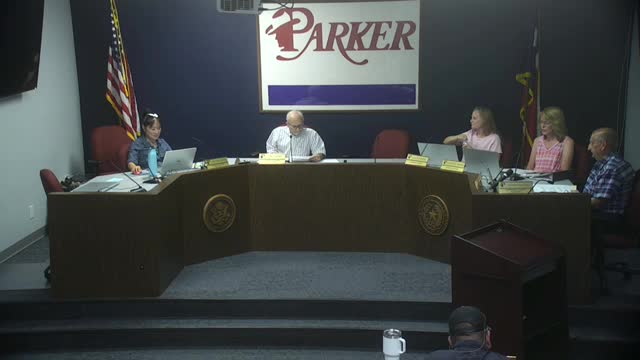
Planning commission debates amending Special Activities District size and allowed uses after South Fork rezonings
Summary
Members discussed whether to change the Special Activities District (SAD) ordinance’s minimum acreage and its permitted uses after rezonings left the district substantially smaller than the ordinance requires. No formal change was adopted; staff were asked to gather materials and return with recommendations.
Members of the Parker Planning Commission discussed whether to amend the city’s Special Activities District (SAD) ordinance after rezonings left the district well under the ordinance’s existing acreage threshold.
The commission discussed that the SAD ordinance currently requires a minimum of 175 acres for designation, and speakers said rezoning and development have left only about 37–38 acres in the area that had been identified for SAD uses. Commissioners and staff debated whether to lower or remove the size requirement, keep SAD rules but require applicants to seek a special-use permit, or otherwise rewrite the permitted uses in the ordinance.
Commissioners said the SAD regime was originally created as a narrow, site-specific allowance intended to accommodate the South Fork project. One speaker summarized that the original intent was a “special exception for South Fork” and cautioned against opening the provision broadly. Participants also flagged likely review criteria for any future applications—traffic and congestion, public-safety impacts and line-of-sight concerns at intersections—and emphasized that changing the SAD could expand eligibility to smaller parcels if the acreage threshold is reduced.
No formal amendment or vote was recorded. Participants asked staff to collect the relevant zoning packet, examples of how other cities handle special-activity or tourist-oriented districts, and any ordinance language cross-references (including a cited Section 4(b) referenced during discussion). A staff member and others said they would distribute materials and convene again for a follow-up meeting at least two weeks out; a final meeting date and any formal motion to amend the ordinance were not adopted during the session.
Speakers pressed for legal and administrative review before any change. Several participants recommended involving city staff identified as Catherine to confirm whether existing properties would be grandfathered, whether the South Fork property remains a qualifying SAD site under current law, and whether a special-use permit path would be more appropriate than rewriting the SAD ordinance.
Participants also discussed revising the list of permitted uses in the SAD (hotels, motels, bed-and-breakfasts and other tourism-related uses were cited as examples). One suggestion was to simplify the ordinance text by describing the district as “tourism-related commercial uses” and relying on the special approval process to vet specific proposals rather than enumerating a long list of permitted uses.
The commission’s next steps were limited to gathering materials, consulting staff, and returning with a recommendation. No formal votes were taken on amendments to the SAD ordinance during this meeting.