Get Full Government Meeting Transcripts, Videos, & Alerts Forever!
Get email alerts on the Student Conduct And Technology Policy topic
No spam. Unsubscribe anytime.
New state laws prompt Goose Creek CISD to propose updated student code of conduct and cell-phone restrictions
Summary
District staff outlined changes required by House Bill 6 (discipline), House Bill 1481 (personal communication devices) and discussed how the district will implement DAEP/ISS consequences, medical and IEP exemptions, and procedures for school-issued devices and college dual-enrollment access.
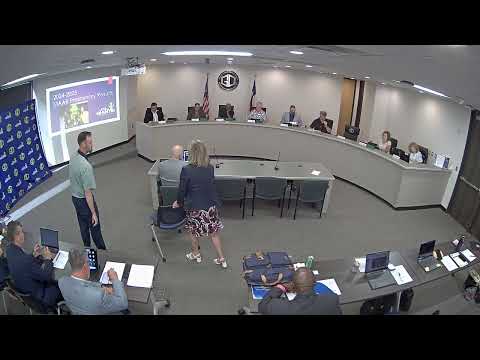
GOOSE CREEK CISD staff told trustees they will bring an updated student code of conduct to the board for adoption in August to comply with recent state legislation that tightens discipline rules and imposes a districtwide prohibition on student use of personal communication devices during the instructional day.
Miss Smith, who presented the overview, summarized changes tied to House Bill 6 and House Bill 1481 and flagged a Senate Bill 3 discussion in the special session related to THC exemptions for 21-and-over adults. She told the board the district will recommend a policy that requires students to keep personal communication devices (cellphones, tablets, smartwatches and similar devices) stored during the instructional day — likely in backpacks — rather than buying separate storage pouches for every student.
Why it matters: The new state requirements mean Goose Creek CISD must adopt, implement and enforce a written policy prohibiting students from using personal communication devices on school property during the school day. Trustees were briefed on disciplinary options, health and special-needs exemptions, and technical issues affecting college and dual-enrollment testing.
Key points and staff recommendations
- Discipline and vaping: Under HB 6, the district must allow DAEP (disciplinary alternative education program) as an option for first-time possession of vapes; if DAEP is not used a 10-day ISS (in-school suspension) would be required. Miss Smith said the district plans to keep DAEP placement as the mandatory response for first-time e-cigarette violations, citing a decline in violations when the district used that approach.
- Cell-phone policy (HB 1481): The presenter said the recommended approach is not to prohibit bringing devices onto campus, but to designate a storage method during the instructional day (the working recommendation: stored in backpacks). Proposed discipline in the recommendation: first offense — device confiscated, parent pick-up and 1 day ISS; second offense — parent pick-up and 2 days ISS; third offense — 3 days ISS; fourth and subsequent offenses — 15 days DAEP. Miss Smith said staff are mindful of smartwatch and earbud enforcement challenges.
- Exemptions and special cases: The district will permit devices for students when the device is necessary to implement an IEP or 504 plan, or when a qualified physician documents a medical need (example: continuous glucose monitors and related phones). These students will be identified to campuses and teachers in advance.
- School-issued devices and college access: School-issued iPads and district-managed devices are not covered by HB 1481’s restrictions when used for instruction; the district’s device-management setup restricts student ability to load external apps. Presenters noted technical issues remain for dual-enrollment and external vendor two-factor authentication (Duo), and the district is working with colleges and legal counsel to create workable procedures for codes and login processes so students can complete exams and remote verifications.
- Timeline: Staff will present the full revised code of conduct to trustees on Aug. 4, with a copy circulated to trustees about a week earlier for review; staff also plan TASB webinars this week to finalize wording.
Board questions and concerns
Trustees asked how the policy will be enforced (instructional day only, on school grounds), how it would apply to practices or extracurricular events, and how health-related exceptions will be handled; staff said the statutory language ties enforcement to the instructional day on school grounds and that after-school events are not covered by the ban. Trustees also raised concerns about students attempting to circumvent rules (standing off school grounds), and staff said enforcement will begin with consistent campus-level procedures and parent communications.
Ending note: Staff characterized the change as a major culture shift that will take time and consistent enforcement; they asked trustees to review the code in the coming weeks for adoption at the August meeting.