Get Full Government Meeting Transcripts, Videos, & Alerts Forever!
Get email alerts on the Infrastructure Bond topic
No spam. Unsubscribe anytime.
Lewiston officials review narrow May bond loss, plan renewed campaign and outreach
Summary
City staff and consultants reviewed the May Main Street bond vote results, post-election survey findings and outreach lessons; council signaled support for returning a reduced bond to the November ballot and staff will return with ballot language in August.
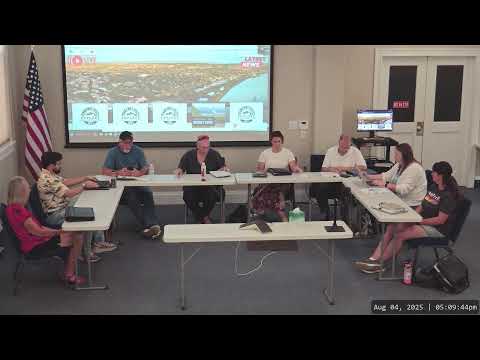
Lewiston — City staff and their bond consultant reviewed results and lessons from the May Main Street bond election on Aug. 4 and recommended more time and targeted outreach before asking voters again.
Public Works Director Dustin Johnson told the Lewiston City Council that the May bond received almost 62% support but fell short of the two-thirds (66.7%) supermajority required. “We needed a super majority. We came about a 150 vote short,” Johnson said during the work session.
The council heard a summary from Christine Stoll of Clearwater Financial, who led the post-election survey and outreach review. Stoll said the city had high, concentrated support in many precincts but low overall turnout — about 18% in May — and that lower turnout and confusion about required disclosure language contributed to the shortfall. “You had 60 almost 62% in favor. You needed 66.7%,” Stoll said, summarizing the vote counts.
Why it matters: The Main Street package combines water, sewer and stormwater work with associated surface improvements downtown. The city faces near-term pipe failures and has limited ARPA and local funds; failing to complete the comprehensive project would mean repeated street digs and higher cumulative disruption and cost.
What the consultant reported: Stoll summarized the bond outreach effort — mailers, social posts, earned media and open houses — and the post-election survey (May 28–June 30). The survey drew 474 responses; respondents who reported receiving city communications were more likely to have voted yes. Key takeaways included: - The bond drew about 61.9% support in May but needed 66.7%; the margin missed by roughly 150–154 votes. - Turnout in May was about 18%; estimated November 2025 turnout is roughly 34%. - Every precinct gave more than 50% support, but only some precincts exceeded the two-thirds threshold; the green precincts on Stoll’s maps would have pushed the city over the threshold earlier on election night. - Voters who took the post-election survey most often said they needed clearer information about funding sources and how existing enterprise funds would be used; 34% of survey respondents listed concerns about roundabouts or traffic changes as a reason for not supporting the measure.
Council discussion and next steps: Councilors asked whether the city could simply resubmit the measure and whether more time for education would help. Several council members — including Councilors Spickelmeyer, Wright, Klein and Schroeder — said the campaign’s technical language and legally required disclosure text had created confusion and trust problems with some voters. Councilor Wright noted many respondents said they “didn’t feel informed enough to vote.”
Staff said there are several funding paths to consider. Director Johnson said state transportation participation from the Idaho Transportation Department (ITD) could lower the city’s general-obligation bond ask and cited early conversations with ITD leaders about programming state funds for the portions of the project in state right-of-way. Johnson told the council that ITD had agreed to contribute to transportation components in its right-of-way and that programming could be worth roughly $4 million–$7 million toward the overall project, though formal inclusion in the state capital budget is still required.
The mayor and director Johnson told council members that staff may present reduced bond language and a resolution for council consideration in August. Johnson referenced a memo in the council packet showing staff could present ballot language at the Aug. 11 meeting; staff later said the August 18 or 25 meetings are alternatives if scheduling requires it.
Consultant recommendations: Stoll recommended continuing outreach, recruiting community ambassadors, using post-election survey questions as educational tools and focusing communication on how existing enterprise funds would pay debt service so voters understand tax impacts (or lack thereof). She also recommended seeking additional grant partners to reduce the bond size and targeting early and absentee voters who historically supported the measure more strongly.
Direction from council: Councilors generally supported returning the question to a higher-turnout election cycle (November) rather than waiting longer, provided staff have more time to clarify funding details and messaging. Council members asked staff to prepare bond language and budget analyses and return to council with a resolution and supporting materials in August for consideration of a November 2025 placement.
What’s next: Staff will work with bond counsel and Clearwater Financial to craft ballot language and an outreach plan and will present a resolution and materials in August for council action. If the council approves placement, the proposition could appear on the November ballot; staff also said they are continuing to use available ARPA dollars for other critical pipe work in the interim.
Ending: Councilors emphasized that better, clearer outreach and early engagement of voters — especially absentee and early voters — would be central if the bond returns to the ballot.