Get Full Government Meeting Transcripts, Videos, & Alerts Forever!
Get email alerts on the 2026 Major Events Procurement topic
No spam. Unsubscribe anytime.
Philadelphia outlines 2026 procurement portal, corridor investments and outreach to diversify event spending
Summary
Philadelphia officials and event-industry partners on June 16 told the Economic Opportunity Review Committee they are building a centralized procurement and outreach effort to help local, minority- and women-owned businesses secure contracts tied to the city’s 2026 slate of major events.
Philadelphia officials and event-industry partners on June 16 told the Economic Opportunity Review Committee they are building a centralized procurement and outreach effort to help local, minority- and women-owned businesses secure contracts tied to the city’s 2026 slate of major events — including FIFA World Cup matches, the MLB All-Star Game, the PGA Championship and multiple NCAA championships — and said they will pair procurement tools with direct neighborhood investments and training.
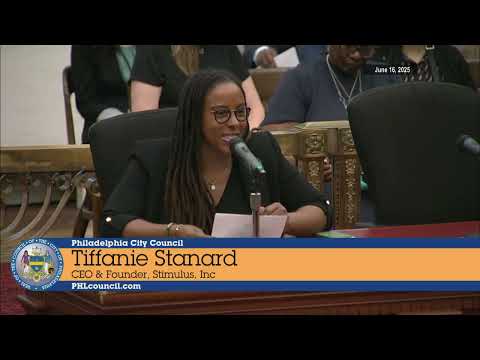
The plan centers on a private-sector platform, Stimulus Inc., that the city is contracting to collect supplier data, publish a consolidated calendar of RFP/RFI opportunities and notify businesses about potential partnership matches. “Our goal is to be an extension of the city of Philadelphia to ensure that we’re helping the small businesses really navigate all the opportunity,” said Tiffany Standard, founder and CEO of Stimulus Inc. She said the platform will ask firms about capacity and openness to collaboration, then email matched businesses and let them opt in to partner pursuit; Stimulus expects to launch the platform between September and October 2025.
Why it matters: City leaders framed 2026 as a once-in-a-generation economic opportunity but said procurement notices alone are insufficient to reach all neighborhoods and small firms. Michael Numis, the city’s 2026 director, said the administration will combine procurement outreach with direct investments in roughly 20 commercial corridors, targeted marketing and new visitor routing so attendees “drive people to different neighborhoods every single week.” He described audits now under way to identify corridor needs, from marketing to physical improvements, that the FY25–FY26 budgets are intended to support.
Details from event and market organizers: Jennifer Nagel, vice president for external affairs at the Philadelphia Convention and Visitors Bureau (PHLCVB), said the bureau booked 20 citywide conventions plus six World Cup matches as of the meeting and that confirmed conventions are expected to generate about 1.5 million overnight visits. Nagel recited PHLCVB’s 2024 figures — the bureau hosted 267 events, including 21 citywide conventions, which she said produced roughly 542,000 attendees and generated about $410 million in direct spending and $636 million in total economic impact — and emphasized PHLCVB’s role connecting meeting planners with local suppliers and supporting a Discovering Diversity Guide that highlights businesses in Black- and Brown-majority neighborhoods.
How the portal and partnerships will work: Stimulus will collect firm-level data (services offered, employee and revenue ranges, capacity), create a centralized calendar of city and external partner procurements and surface recommended partner matches when a supplier indicates they are open to collaboration. “If you say yes, then you will receive an email that not only gives you information about that RFP opportunity, but also a potential, partnership collaboration,” Standard said. She added that matching is opt-in and that it remains the businesses’ responsibility to form and submit joint proposals.
City support, permitting and neighborhood readiness: Numis said the administration is auditing corridors with council district offices and community groups to determine what each corridor requires — marketing, beautification, infrastructure, or permitting assistance — and acknowledged that some adjustments require legislative action or interagency work. On permitting and operational issues such as sidewalk dining or extended food truck hours, Numis said those topics are being coordinated with the commerce department and the city’s nighttime-economy staff; the city plans a phila.gov/2026 web portal that will publish permitting information, procurement links, safety guidance and event listings.
Public testimony and access concerns: During public comment, Matt Zhang, CEO of East West IT Services and chair of a newly formed Chinese American Chamber of Commerce, testified that his minority-owned IT firm and other Chinese American businesses face persistent barriers to city, state and federal contracts. Zhang described difficulties with certification processes, lengthy review timelines and the documentation required for some small-business programs. He said he and other entrepreneurs need assistance completing applications and meeting financial-documentation requirements for certifications and grants.
Resources and next steps: The Office of Economic Opportunity (OEO) said it will continue regular “doing business” workshops (third and fourth Wednesdays monthly, typically 1–3 p.m.; OEO noted this month’s workshop schedule changed and listed an upcoming session). Stimulus, PHLCVB and the city described plans to share procurement data and registry links with chambers and business associations so that businesses can receive notices; Stimulus said it is also operating similar programs in New Jersey and New York for World Cup-related opportunities.
Quotes and attributions in this article come from committee remarks and presenters during the June 16, 2025 Economic Opportunity Review Committee meeting. Figures and program descriptions are reported as presented by speakers during that meeting.