Get Full Government Meeting Transcripts, Videos, & Alerts Forever!
Get email alerts on the Supported Decision Making topic
No spam. Unsubscribe anytime.
Committee hears bills to require courts to consider supported decision making before guardianship
Summary
The Michigan House Families and Veterans Committee heard testimony on House Bills 4676 and 4677, which would require courts to consider supported decision making and other less‑restrictive alternatives before appointing guardians for people with developmental disabilities.
The Michigan House Families and Veterans Committee heard testimony on House Bills 4676 and 4677, a package that would require courts to consider less‑restrictive alternatives, including a formal supported decision making (SDM) arrangement, before appointing a guardian for a person with a developmental disability.
Representative McDonald, chair of the Michigan Legislative Disability Caucus, told the committee that "no two people with disabilities are the same. The disability community is not a monolith." She said the bills would amend Michigan statutes governing court‑appointed guardianships so judges must weigh alternatives such as durable powers of attorney, assistive technology, and the newly codified approach known as supported decision making. "Our bills do not end court appointed guardianships for people with developmental disabilities," McDonald said, adding that guardianship should be used only "when absolutely necessary for an individual's safety."
Representative Wozniak, a sponsor, said HB 4677 would "formally defin[e] supported decision making as a recognized alternative to full guardianship" and described SDM as a "person‑centered tool that respects autonomy while still providing necessary support." Wozniak said the bills would create a priority list for potential supporters and require judges to explain why someone on that list was not chosen, and would include education for parties and potential supporters so supporters understand responsibilities if they step into the role.
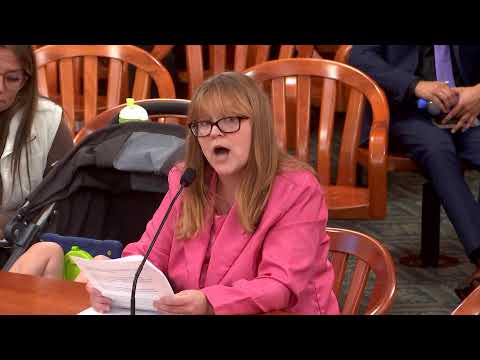
Linda Van Wormer, a Dearborn Heights resident who spoke via Zoom and who has used SDM after a Wayne County probate judge denied a guardianship petition, described her experience under a partial guardianship and said SDM allowed her to retain decision‑making authority while getting help from family. Her sister, Amy Peckinpah, and other members of Van Wormer's support network also described the family's use of SDM and recounted a court process that lasted years and produced recurring reports and limitations on Van Wormer's autonomy.
Experts and advocates emphasized safeguards and evidence. Jonathan Martinez, identified in testimony as a national expert on SDM, and Simon Secada, director of community and institutional rights at Disability Rights Michigan, told the committee that SDM has been added to other states' laws and that exploitation and failures also occur under guardianship. Secada criticized a Michigan Probate Judges Association letter opposing one of the bills, saying the letter overstated concerns about durable powers of attorney and that Michigan law presumes capacity until a court finds otherwise. "Those concerns exist in guardianship as well," Secada said.
Estate‑planning attorney and policy analyst Ellen Shagrue Hyman said Michigan law presumes competence at age 18 and that many adults, with or without disabilities, rely on others to help make decisions. She told the committee that formalizing SDM in statute could make it easier to use tailored documents and supports and avoid the all‑or‑nothing outcome that guardianship can produce.
Committee members asked about practical effects. Representatives asked whether judges and probate officials support the change; testimony noted a letter of opposition from the Michigan Probate Judges Association but also cited input from probate judges and practitioners who see benefits. Witnesses said the bills are not intended to eliminate guardianship where necessary but to ensure courts consider a range of options before restricting rights.
No formal vote on HB 4676 or HB 4677 was recorded at the hearing; the committee heard testimony and then moved to the next package of bills.
The testimony and materials submitted to the committee included a written letter from Jonathan Martinez and a copy of the Wayne County probate court opinion in which Judge Freddie Burton Jr. denied a petition for guardianship and found the person could use supported decision making to make decisions about her life.
Ending note: Committee consideration continues; no committee vote on the bills was taken at the hearing.