Get Full Government Meeting Transcripts, Videos, & Alerts Forever!
Get email alerts on the Lwrp Stream Crossing topic
No spam. Unsubscribe anytime.
Grand Island conservation panel finds First Street stream crossing consistent with LWRP, sets conditions
Summary
The Grand Island Conservation Advisory Board agreed to refer a First Street stream-crossing project to the town building department as "consistent with" the town's Local Waterfront Revitilization Program, subject to a draft set of conditions emphasizing setbacks, low-flow timing, best management practices and mitigation.
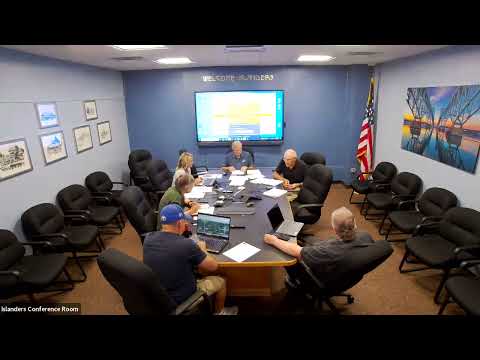
The Grand Island Conservation Advisory Board on Tuesday voted that a proposed First Street stream crossing is “consistent with” the town’s Local Waterfront Revitalization Program (LWRP) provided the applicant accept a set of terms and conditions.
The board’s recommendation — which will be sent to the town building department so the town board and permitting staff can act — seeks to protect tributary habitat and the Niagara River coastal zone by requiring setbacks, limits on disturbance and compensatory mitigation for aquatic habitat loss.
Board members said the site is a tributary headwater area and part of the island’s riparian corridor system, and that the applicant’s current drawings are insufficiently detailed about the bridge location and construction footprint. Paul Lechner, a conservation advisory board member, told the group the creek and its riparian zone provide wildlife movement, intermittent fish habitat and natural filtration for road and lawn runoff that ultimately flows to the Niagara River.
Lechner said the project as submitted would place nearly 35 cubic yards of fill below the ordinary high water mark. The board’s draft conditions ask for a minimum 25-foot setback from the creek centerline or ordinary high water mark on each side (with a possibility of requiring more depending on the mapped high-water boundary), work scheduled for low-flow/dry periods, use of erosion- and sediment-control best management practices, preservation of existing trees and replanting with native species where disturbance occurs, and a requirement that disturbed areas be stabilized after construction.
The board flagged a scheduling concern: the applicant’s Nationwide Permit 14 authorization from the U.S. Army Corps of Engineers expires March 13, 2026. Members warned that federal and state permit conditions can change when nationwide permits are reviewed, and that delays could leave the applicant subject to tighter future rules.
Members repeatedly emphasized that the town still must make the formal LWRP consistency determination: the conservation board’s action is a referral that the building department will forward to the town board with the board’s recommended conditions. Rhonda (town staff) provided aerial and ground photographs during the presentation and the group discussed placing the no‑mow riparian zone on site drawings or the permit record to notify future property owners.
The board voted in favor of asking Rhonda to prepare a draft consistency letter and authorized Paul Lechner to edit and finalize the draft before it is sent to the building department and the applicant. Board members recorded their approval by voice vote; the meeting transcript records a roll of "ayes" without a roll-call tally.
Board members said they intend to use the First Street referral as a template for future stream‑crossing referrals under the town’s LWRP, so that building-department staff will be able to process similar projects more predictably.
The referral now proceeds to the town building department and then to the town board for the formal LWRP consistency determination and any permit action.
Notes: The recommendation is advisory to the town board and does not itself grant any permit. The board discussed prior reviews of nearby culverts and the difference between piping and bridging; several members stated a clear preference for bridging rather than installing multiple culvert pipes because bridges preserve more natural flow and wildlife passage.