Get Full Government Meeting Transcripts, Videos, & Alerts Forever!
Get email alerts on the Urban Forestry topic
No spam. Unsubscribe anytime.
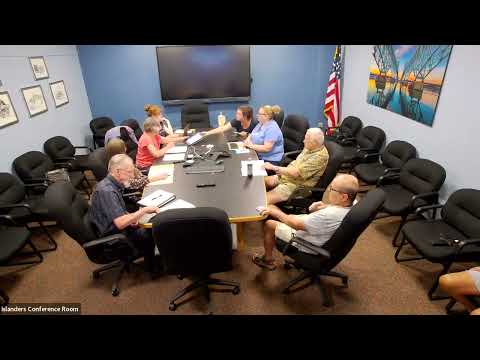
Conservation board advances pared-back tree ordinance to pursue Tree City USA recognition
Summary
Members of the Grand Island Conservation Advisory Board reviewed a draft town tree ordinance, agreed to remove most private-property provisions to improve chances of passage, and set follow-up work to align the ordinance with Tree City USA requirements and local practice.
The Grand Island Conservation Advisory Board on an interim vote agreed to pursue a streamlined tree ordinance that removes most private-property provisions, with the stated goal of obtaining Tree City USA recognition and associated grant opportunities.
Board Chair Diane Evans said the group will focus first on a version the town board will accept, then consider stronger rules later. The board emphasized that the Tree City USA designation covers public trees and requires a community forestry program, an official tree board or department, an annual expenditure on community tree care and an Arbor Day observance — elements the board said the town can reasonably document if the ordinance is pared down.
Members and staff discussed why past draft ordinances failed, including political resistance to regulating private property, inconsistent font/formatting in earlier public materials and concerns that strict private-property provisions prompted developers or landowners to clear lots before submitting plans. Several members said enforcement of existing site-plan landscape requirements is inconsistent, and that strengthening enforcement or adding items to the planning checklist might produce better results than adding new rules the town will not enforce.
The board asked for input from the town arborist, Dave Cole, and from long-time town staff including Crawford (last name used in meeting materials), and agreed to prepare a public-facing draft for early review. Members agreed to use a shared document for pre-meeting comments and to hold one or more focused drafting sessions before bringing a recommendation to the town board. Chair Diane Evans said she would circulate the proposal and links to sample ordinances; members discussed hosting a Google Doc so participants could comment before an in-person discussion.
Board members also discussed the timing for a Tree City USA application, noting the Arbor Day observance and a budget line showing at least $2 per capita of annual community tree expenditure are among the application requirements. Members agreed the ordinance (and supporting bookkeeping) should be aligned with the Tree City requirements so the town can pursue designation next calendar year, and planned a dedicated agenda item at an upcoming meeting to finalize language and identify the board or department that will administer the program.
Board members expressed sharply different views about how far to go on private-property regulations. Some said a “vanilla” ordinance that applies only to public trees and to developer/site-plan review is a pragmatic first step; others urged stronger protections for mature trees and limits on large-scale clear-cutting in subdivisions. Several members urged that any new ordinance must be paired with clear, enforceable site-plan checks and better coördination among engineering, planning and code enforcement so requirements are not merely advisory.
The board set next steps: circulate the current draft to members by Google Doc for comment, hold a subcommittee meeting to collate edits, schedule a full-board discussion in August or September to finalize the text for referral to the town board, and consult Dave Cole and public works staff earlier in the drafting process.
The board declined to endorse private-property regulation at this stage — instead prioritizing measures that can be documented and enforced now so the town can qualify for Tree City USA and related funding. Several members said they intend to return later with proposals to strengthen protections after the initial ordinance gains acceptance.