Get Full Government Meeting Transcripts, Videos, & Alerts Forever!
Get email alerts on the Streets Funding topic
No spam. Unsubscribe anytime.
Xenia council places 0.24% income-tax increase on November ballot to fund street repairs
Summary
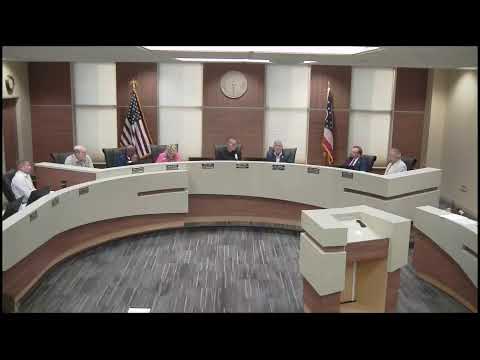
City Council on July 24 introduced an ordinance to raise Xenia’s municipal income tax rate by 0.24 percentage points for five years and approved ballot language to send the question to voters on Nov. 4, 2025.
City Council on July 24 introduced an ordinance to raise Xenia’s municipal income tax rate by 0.24 percentage points for five years and approved ballot language to send the question to voters on Nov. 4, 2025.
City Manager Brent Merriman told council the increase would “take the city's rate to 2.49%” and that the measure is intended to raise dedicated money for repaving and rehabilitation. Merriman said staff estimates the levy would generate “somewhere in the neighborhood of $2,000,000 annually” and that council has calculated a multi‑year need of “somewhere in the neighborhood of, you know, $40,000,000 at a minimum” to address the city’s street system.
Why it matters: council members and staff said current funding covers many thoroughfares and state routes but is not sufficient to fix neighborhood streets and aging storm‑water and curb systems that contribute to road failure. Finance Director Ryan Duke said Xenia has spent roughly $13 million of city funds and nearly $22 million total (city funds plus grants) on streets in the last decade, but added that “it needs to be 2 or 3 times that in order to actually get into those neighborhood streets.”
Council action and next steps - At the meeting council introduced Ordinance 2025‑18, which would amend sections of the city income‑tax code to increase the rate by 0.24% for five years, with an effective start date mentioned by staff as Jan. 21, 2026 if the measure passes. - Council then voted to table the ordinance so that no further legislative action will be taken by council until after the election; staff said the ordinance would be returned to council after the vote. - Council approved Resolution 2025‑89 authorizing the Greene County Board of Elections to place the measure on the Nov. 4 ballot and approved the city’s proposed ballot language.
City officials framed the levy as a targeted, time‑limited ask. Merriman and Mayor Urschel told the public the council chose a five‑year duration to give voters a chance to evaluate performance before any renewal. Mayor Urschel said the council expects to show voters a plan for how levy revenue would be used and that, if the revenue is approved, staff plans to begin spending in 2026.
On outreach, Merriman said council members and staff plan a public information campaign: “we're gonna have a booth every day at the fair… from noon to 9” and other events to explain the plan and expected outcomes.
What the money would and would not cover Staff and council emphasized that the proposed income‑tax increase is earmarked for asphalt work on streets and would not be used for stormwater, water/sewer, or curb-and-gutter replacements (those are funded or addressed through other assessments and fees). Merriman and Duke said the city has recently put in place stormwater fees and other funding tools intended to cover those overhead infrastructure needs so the new income‑tax revenue can be applied primarily to pavement and resurfacing.
Who expressed support and reservations Council members across the dais said they support the measure as the most viable route to accelerate repairs; Councilman Crawford, a realtor, said road conditions are reducing property values and investor interest. Several council members said they prefer an income tax to a property tax because income tax spreads some cost to people who work in Xenia but live elsewhere. At least one council member described personal conservatism about tax increases but said she would vote to place the question before voters.
Ballot language, statutory clarifications The council approved the ballot wording and noted that the Ohio Secretary of State and the county board of elections have final approval over exact language. Council members asked staff to confirm specific exemptions and examples of income that would not be taxed; staff said the increase would not affect certain non‑earned income categories governed by state law (staff later clarified that child support is exempt and said they would provide any additional statutory detail upon request).
Implementation constraints Staff said paving projects require early bids and contractor scheduling; they explained that bids are typically sought by February and that contractors’ seasonal schedules make late additions expensive or infeasible. That means any new funding must be planned early to take advantage of favorable pricing.
Votes and motions related to the levy - Ordinance 2025‑18 (introduction of income‑tax amendment): introduced at the July 24 meeting; council subsequently voted to table the ordinance pending the Nov. 4 vote. (Moved and seconded; roll call to table carried.) - Resolution 2025‑89 (place question on Nov. 4 ballot): moved by Councilman Parks, seconded by Councilwoman Cerise; roll call vote — ayes carried; resolution approved.
Context: years of deferred maintenance City officials said decades of deferred maintenance, rising paving costs and an aging stormwater/concrete infrastructure beneath many neighborhood streets mean the city faces a long rebuild. Merriman and Duke estimated roughly 200 lane miles in Xenia require full reconstruction rather than surface overlays, and staff said even a five‑year levy would not fully eliminate the backlog but would accelerate work and allow neighborhood projects in addition to thoroughfares.
Community engagement and oversight Council discussed creating a volunteer oversight committee to review progress and provide transparency; staff will return with draft legislation to establish that body if the levy is approved. Mayor Urschel and other council members invited residents to public meetings and outreach events to review proposed spending priorities and expected project lists for the initial implementation year.
Ending note Council placed the income‑tax question before voters and asked staff to produce a clearer year‑by‑year outline of what could be completed if voters approve the levy and what the city could accomplish without it. The ordinance will remain tabled until after the Nov. 4 election and any further action depends on the voters' decision.