Get Full Government Meeting Transcripts, Videos, & Alerts Forever!
Get email alerts on the Student Transportation topic
No spam. Unsubscribe anytime.
Transportation department outlines routes, eligibility and app tools for start of term
Summary
Coordinator Julie Atkins briefed the board on fleet size, routing, eligibility rules and the district’s use of MyRide K12 and PowerSchool for real-time route information and updates.
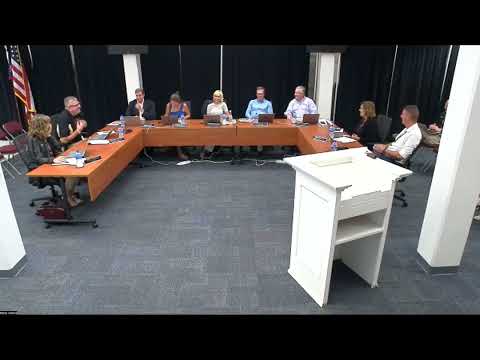
Julie Atkins, coordinator of transportation, told the board the district’s fleet and routing were set but will continue to be adjusted as registration changes in the weeks after school opens.
Atkins said the district currently operates 41 buses, seven vans and three SUVs; employs 41 people in transportation; and runs about 45 daily routes. She said daily mileage across the system is roughly 2,837 miles and the department scheduled 948 field trips last year.
Atkins walked the board through eligibility rules the district applies under board-authorized administrative guidelines: children in grades K–5 are generally designated eligible for district transportation unless a parent opts out; students in grades 6–12 must live at least two miles from school to qualify for regular transportation; and high school students who obtain a valid parking permit are ineligible for bus service. The district uses PowerSchool to publish individualized route information for families and asked parents to expect routing adjustments over the first two to four weeks of the term while enrollment changes are processed.
The district also encourages families to use the MyRide K12 app to get estimated arrival times and to receive alerts when buses run late. Atkins said the app and PowerSchool are complementary: PowerSchool houses the official routing record, while MyRide can send timeliness alerts.
Atkins said the transportation office solicited about 300 advance opt-out responses this summer and that routes were built from prior-year routing data and adjusted as new enrollments arrived. She asked parents to arrive at stops five minutes early and to observe safety rules at bus stops; the department will designate consistent safe waiting locations for routes as drivers settle into neighborhoods.
Ken Kramer, assistant superintendent for business operations, and Atkins answered board questions on the two-mile rule and how routing interacts with ridership changes. Atkins noted that the first year of middle-school transition often produces the most parent calls when sixth graders discover they no longer qualify under the two-mile rule.
Atkins and Kramer recommended patience from families while routes stabilize and reiterated safety expectations for drivers and parents.