Get Full Government Meeting Transcripts, Videos, & Alerts Forever!
Get email alerts on the Public Safety Tax topic
No spam. Unsubscribe anytime.
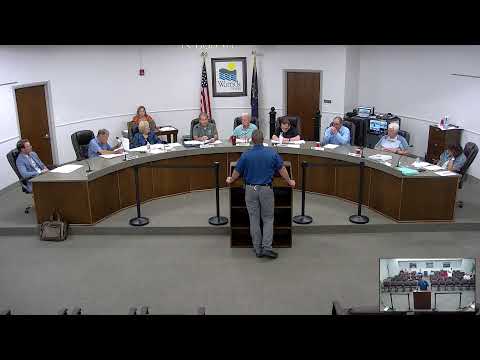
Warrick County hears township requests at public-safety tax hearing; council rejects 5% allocation increase
Summary
Township trustees and fire chiefs urged the county to use Public Safety Local Income Tax (PSLIT) funds for equipment and additional staffing; the council declined a motion to increase 2025 allocations by 5% and approved other budget measures.
Warrick County Council held a public hearing on the county’s Public Safety Local Income Tax (PSLIT) and heard appeals from township trustees and fire chiefs seeking funds for vehicles and station staffing, then voted against a proposal to increase next year’s PSLIT allocations by 5%.
The hearing opened with Pigeon Township Trustee Mike Masoner presenting a request for funds to replace an aging brush truck. “Our brush truck is a 1988 model… it is the oldest truck in our fleet. It has been cobbled together by our members. We can’t really afford to take it somewhere and have it worked on,” Masoner said. He said the township hopes a single new vehicle could replace two failing units and described a target cost of roughly $70,000–$80,000 for a crew cab, 4-wheel-drive unit outfitted with a 200‑gallon tank and pump.
Ohio Township Trustee Chad Bennett and Ohio Township Fire Chief Scott Forman told the council the township’s single staffed station covers a large population and a high share of county emergency calls. “As a population base of 45,000… I don’t know of another population base that high that is only served by one staffed fire station,” Forman said, and he said staffing a second station would “reduce response time, which is gonna save lives and reduce property loss for 60% of Ohio Township.” Forman said Ohio Township logged about 1,250 of the county’s 3,023 emergency calls (about 41% as of Aug. 4), and that overlapping calls were a frequent operational stressor.
County staff provided the council with the state’s PSLIT estimate for the coming year: $15,358,679, an increase over last year, and warned that Senate Bill 1 will reduce future revenues. Council members repeatedly cited the state budget change as a constraint on how much the county can commit. “We’re gonna have to sort of live with this for the next three years and be very, very careful on what we do,” said a council speaker during discussion of the county’s budget outlook.
After public testimony, a council member moved to raise allocations to eligible public‑safety providers by 5% over the 2025 levels. The motion was seconded and put to a roll-call style vote; it failed, 2 in favor and 5 opposed. Council members who were recorded opposing the 5% increase included Pat Brooks, Ron Bacon, Greg Richmond and Brad Overton; the transcript lists five opposing votes in total. Council members said concerns included uncertain new assessed value tied to the developing town of Victoria Woods and anticipated cuts from the state that will reduce county revenue in coming years.
The council did approve other related budget actions later in the meeting, including directing staff to consider a modest 2% wage increase for county employees as part of the operating budget (motion carried 4–3; recorded opposing votes were Brad Overton, Chris Westkind and Rick [last name not specified in the transcript]).
Council members closed the PSLIT public hearing by motion; the council recorded the close as approved without opposition.
Why it matters: The PSLIT is restricted by statute to public‑safety spending. Township officials told the council that without additional local support they face rising vehicle maintenance costs, recruitment and retention challenges, and coverage gaps that lengthen response times across partly rural service areas. Council members said they must weigh those requests against declining revenue projections and other pressing county costs including the jail bond and existing public‑safety responsibilities.
Council discussion and public testimony at the hearing will inform the county’s final PSLIT allocations during the council’s budget process.
Ending: County staff said more precise allocation figures will be finalized as the county completes its 2026 budget and as the state publishes any updates to the PSLIT estimates; speakers on both sides urged further work on regional options such as fire territories or interlocal agreements as longer‑term solutions.