Get Full Government Meeting Transcripts, Videos, & Alerts Forever!
Get email alerts on the Litigation And Legal Matters topic
No spam. Unsubscribe anytime.
Council enters closed session and directs special counsel in Nunley v. City of Wayne
Summary
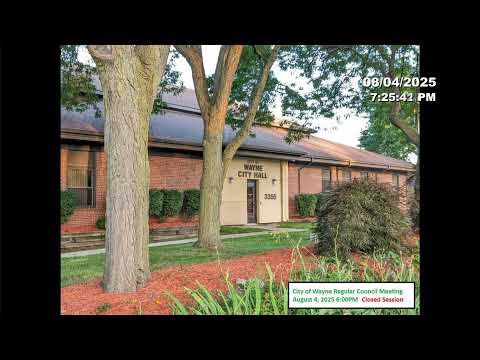
Council voted to go into closed session under the Michigan Open Meetings Act and later motioned to direct special counsel to proceed in Nunley v. City of Wayne; the motion to add a direction item and the subsequent direction to counsel passed by roll call.
The Wayne City Council on Aug. 4 voted to enter closed session to discuss the case Nunley v. City of Wayne, citing the Michigan Open Meetings Act. The motion to go into closed session passed on roll call; council later moved to add an additional closed-session item (8b) to give direction to special counsel regarding the same case and then voted to authorize special counsel to proceed as discussed.
Roll-call votes were recorded for the motions to enter closed session, to suspend the rules and add item 8b, and to direct counsel; each recorded as "yes" by council members present. The council made a public motion after the closed session directing special counsel to proceed in the Nunley case; the meeting minutes record the motions and the roll-call approvals.
Legal basis: during roll call the statute cited was the Michigan Open Meetings Act; council referenced MCL 15.268(1)(e) (as read in the meeting record) as the statutory authority to hold a closed session for strategy in pending litigation.
Why it matters: Closed-session litigation actions are routine for municipal councils but have substantive legal and fiscal implications; the council's direction to special counsel authorizes a specific next step in the city's handling of the case.
What was recorded publicly: the motions to go into closed session, to add a direction item to the closed session, and the final motion directing special counsel to proceed were each made and approved by roll call. No further details of the closed-session discussion were disclosed in the public record at the meeting.