Get Full Government Meeting Transcripts, Videos, & Alerts Forever!
Get email alerts on the Short Term Rentals topic
No spam. Unsubscribe anytime.
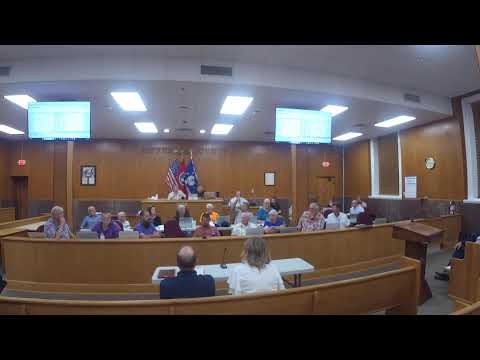
Jefferson County commissioners pull short-term rental rules back to committee after legal, enforcement concerns
Summary
After weeks of committee work and public comment, the Jefferson County Commission removed a short-term rental (STR) resolution from the table and voted to send the revised, attorney-reviewed draft back to the Public Service Committee for further work, citing enforceability, inspection and occupancy questions.
Jefferson County commissioners voted to remove a short-term rental (STR) licensing resolution from the table and send the attorney-reviewed draft back to the Public Service Committee for additional work, saying the document changed considerably after review by legal counsel and the Tennessee County Technical Assistance Service (CTAS).
The measure to remove the resolution from the table carried 16-3. A later motion to return the resolution to the Public Service Committee — with a request that the county environmental official Tom Carter and County Attorney Doug Drennan attend the committee review — passed 16-3. Commissioner Ronnie Coleman moved to send the item back to committee; the motion was seconded by Commissioner Jim Snodgrass.
Why it matters: The proposed resolution would create licensing, permitting and enforcement rules for short-term rental units across Jefferson County, a topic that speakers and commissioners said could affect neighborhood safety, housing supply and county revenues. Supporters and opponents told commissioners the draft needed clearer, enforceable inspection standards, consistent occupancy limits and predictable grandfathering language.
Committee draft, legal changes
Commissioner Katie Huffaker told the commission the committee spent months meeting with stakeholders and that the draft the committee approved was significantly altered by CTAS and county legal review. Doug Drennan, county attorney, said the changes removed provisions the county could not enforce and substituted processes that rely on certified state inspectors and an appeals process.
"The county simply can't," Drennan said when explaining why certain enforcement mechanisms in the committee version could not remain in the ordinance.
Enforcement and inspections were central concerns. The county does not have a county fire marshal or an in-house codes inspector, both of which would be needed to make some of the committee's inspection-based enforcement feasible. The attorney's revisions therefore required applicants to supply affidavits or certified inspections rather than rely on county inspectors.
Public testimony and revenue estimates
During public comment property owners and managers urged clear, workable rules. Kathleen Billers, a resident involved in the drafting effort, said, "there's already estimated to be at least a thousand short term rentals in the county," and cited a conservative revenue estimate range discussed during the meeting.
Other speakers representing short-term rental businesses urged clarity on topics such as licensing for properties managed by professional management firms, treatment of older hotel units versus individual cabins, and camera and privacy rules around pools.
Process and next steps
Commissioners said they want the committee to review the attorney changes with the environmental director and county attorney present, to reconcile public-safety goals with what county government can legally and practically enforce. Commissioner Katie Huffaker asked that the committee consider certified-state-inspector language as an interim approach to life-safety checks.
The commission voted to return the item to the Public Service Committee so the committee can work from the attorney-reviewed draft, involve key staff and present a revised motion for a future full-commission vote.
Ending
Committee members, county staff and legal counsel will reconvene to reconcile public-safety priorities, enforceability and staffing/cost implications before the resolution comes back for a final vote.