Get Full Government Meeting Transcripts, Videos, & Alerts Forever!
Get email alerts on the Sustainability Building Ops topic
No spam. Unsubscribe anytime.
Council requires limited 'cool-seal' trial and maintenance after partial waiver for Lovejoy Lane parking
Summary
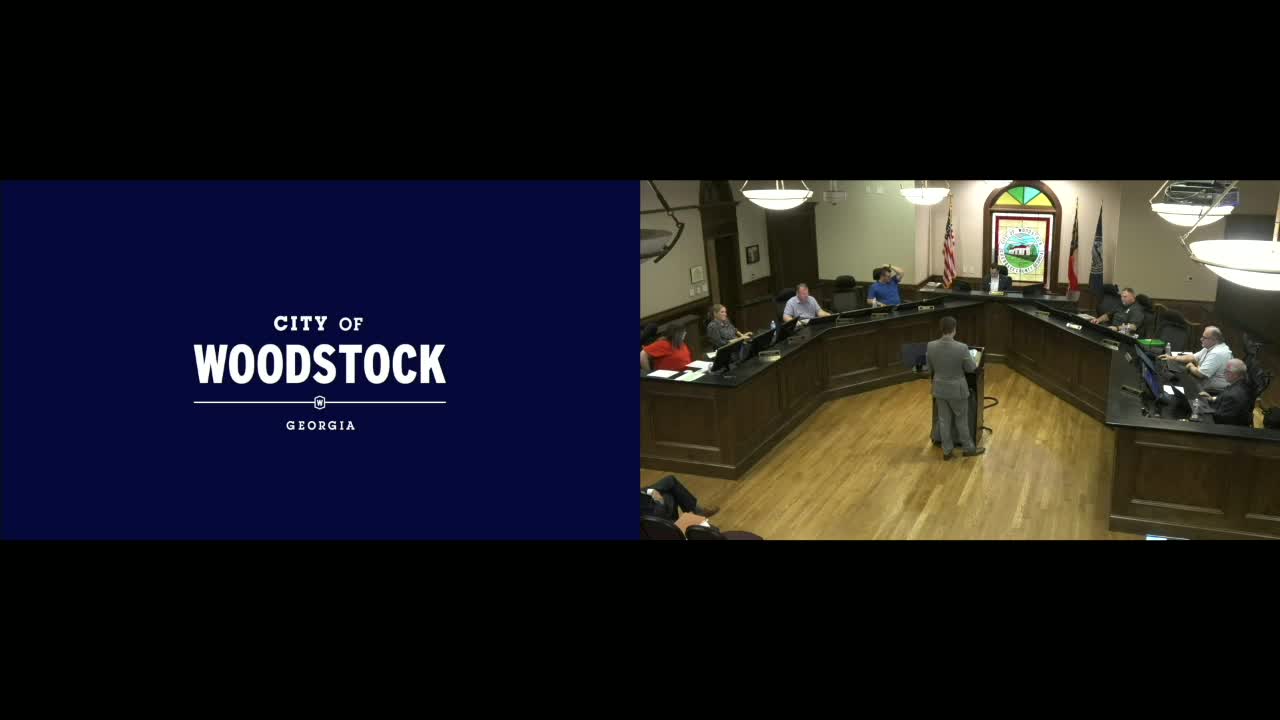
The City of Woodstock on Aug. 25 partially approved a developer request to amend a zoning condition for a medical-office parking lot at 604 Lovejoy Lane, requiring a monitored "cool-seal" trial on a defined area and maintenance per manufacturer guidance.
The City of Woodstock on Aug. 25 partially approved a developer request to amend a zoning condition that required cool-seal coating for a newly built medical-office parking lot at 604 Lovejoy Lane, while adding a short-term monitoring requirement and maintenance obligations.
Background: The site (general commercial zoning with Parkway overlay) had previously received a conditional variance that allowed an overage of parking spaces in exchange for the installation of underground EV-charging preparation and a cool-seal coating condition. After construction, disagreement arose about the practical scope of the required cool-seal surface area and whether the product would perform on top of asphalt.
What the council approved: After staff proposed an amended condition that would require cool-seal coating of all drive aisles (a larger area) and asked for verification sampling, council adopted the compromise motion. The developer will apply the cool-seal coating to a specified portion of the lot (a 15,000-square-foot minimum area comprised of a combination of parking spaces and drive aisles) and ensure that at least 30% of the applied area is in drive aisles. The developer must take simultaneous, repeated temperature measurements of coated and uncoated surfaces at the same time of day, under comparable shade conditions, for 30 consecutive days, capturing both surface and ambient temperature. The product must be maintained per the manufacturer's specifications; enforcement is through standard code-enforcement mechanisms tied to the zoning condition.
Why it matters: The item tests a sustainability measure that the planning commission and staff wanted to encourage (cool-seal coatings can reduce surface temperatures) but that city officials said required measurable evidence before demanding full-lot treatment. Council chose a pilot-style approach to balance verification science and developer burden.
Voices from the meeting - Mr. Dunn, planning staff, said staff had revised a prior condition to narrow the required application area and proposed monitoring language to produce usable data for a later policy discussion. - Applicant Parks Huff said the builder was willing to work with staff on a monitored pilot and to maintain the cool-seal material per manufacturer's instructions; he suggested placement up front where exposure and lack of shade would produce clearer test data.
Implementation and reporting - Pilot size: 15,000 square feet minimum of cool-seal coating, combining parking spaces and drive aisles; at least 30% of applied area to be drive aisles - Monitoring: Simultaneous surface and ambient temperature readings for coated vs. uncoated areas, same time of day, comparable shade, for 30 consecutive days; results to be compiled and may be presented to council in a work session - Maintenance: Seal coat must be maintained according to manufacturer specifications; maintenance enforcement falls under code enforcement; if a future owner repaves the lot the city may revisit the requirement through a petition process - Vote: Council approved the amended condition 3-0
Next steps The applicant will install the cool-seal pilot area, perform the temperature monitoring and maintain the coating per the product instructions. Staff said the data will inform future decisions on whether the city should expand cool-seal requirements in other projects.