Get Full Government Meeting Transcripts, Videos, & Alerts Forever!
Get email alerts on the Clock Tower topic
No spam. Unsubscribe anytime.
Spartanburg council hears hours of comment and staff history as clock tower’s future is debated
Summary
After an extended staff presentation and public comment, City Manager Chris Storey recommended relocating the historic clock’s mechanical elements to the new joint city–county government building; council took no final vote and asked staff to return with options.
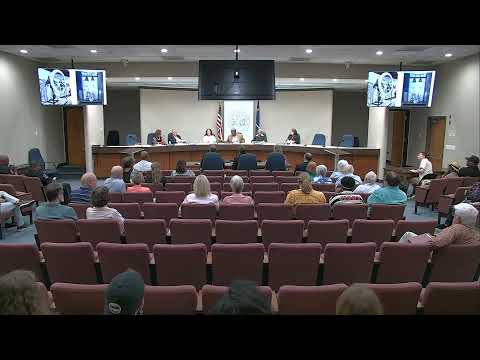
Spartanburg City Council on Aug. 25 heard a detailed history of the Daniel Morgan clock and nearly three hours of public comment as staff described options to move the clock tower to accommodate downtown redevelopment and to make its bell and clockworks publicly accessible in a new city–county building. Council made no final decision and directed staff to return with relocation and display options.
The issue drew dozens of speakers during the public-comment period, many urging the council to keep the tower in its current Morgan Square location and others supporting the staff recommendation. City Manager Chris Storey framed the discussion with a timeline going back to 1881, saying the city has had three primary government buildings with clock elements and arguing the proposed move would “return the clock to its historic position overlooking the seat of local government” while making the clockworks and bell accessible to the public inside the new building.
Why it matters: The clock is a visible downtown landmark, residents said, and the pending downtown projects tied to Project Core would square off the Herald Journal block and change Main Street’s street edge. Staff said the redesign would allow higher-quality frontage, make the new hotel footprint economically viable and put a taller, new clock tower atop the new joint government building; opponents said moving the existing tower would sacrifice green space, on-street parking and a place that is accessible 24/7.
Speakers who urged keeping the tower in place cited community donations and petitions. James A. Jones said the tower “was built by the people of Spartanburg” and called moving it “theft.” Kimberly Branch told the council she and others had submitted a petition and said “we have confirmed 2,422 supporters for the Downtown Spartanburg Clock Tower to remain where it is” (as stated at the meeting). Paul Abbott, a resident and local candidate, said the people he had spoken with were opposed to moving it. Other speakers offered measurements and historical context and suggested compromise locations within downtown.
Supporters of relocation said the change is driven by large concurrent private investments. Storey showed renderings of the new government building with a much taller civic clock and said the staff recommendation would restore and display the historic clockworks indoors, where they could be preserved and interpreted. Storey also said staff do not view the South Carolina Heritage Act as preventing the city from proceeding because, he said, the Bicentennial Committee’s materials do not identify the tower as a Revolutionary War monument; an attorney-general opinion was mentioned by commenters but the city’s legal position, Storey said, is that the statute’s protections do not clearly apply to the tower in its present form.
Council members raised practical questions: how the historic elements would remain accessible if placed inside a government building that is not open 24 hours, what the cost and engineering risks to dismantle and relocate the structure would be, whether moving the tower would leave it visually “overshadowed” by new taller development, and whether there are alternative prominent downtown sites that keep public access and preserve the tower’s character. Several council members said they are open to relocation if a suitable, accessible downtown alternative can be identified.
No formal vote was taken. Storey outlined three possible paths: (1) adopt the staff recommendation to restore the clockworks and bell inside the new government building; (2) analyze alternative downtown relocation sites and return with a definitive plan and cost estimate; or (3) keep the tower in its current position and advise project designers to accommodate it. Council members asked staff to return with more detailed options and cost estimates, and several said the council should act within the coming weeks so related Project Core work can proceed on schedule.
The clock discussion dominated the meeting’s public engagement and produced requests for compromise solutions, legal clarity on the Heritage Act, and engineering estimates for moving or reconstructing the tower. Staff and council said they will continue discussions and bring recommendations back to the council at a future meeting.