Get Full Government Meeting Transcripts, Videos, & Alerts Forever!
Get email alerts on the Municipal Investments topic
No spam. Unsubscribe anytime.
Kenai Peninsula Borough receives investment-pool briefing from METAR Public Funds
Summary
METAR Public Funds presented its assessment of the borough's investment pool, reporting a roughly $400 million portfolio, a 3.45% book yield and a 2.31-year weighted average maturity; presenters recommended a roughly two-year duration target and noted the portfolio currently outyields its benchmark.
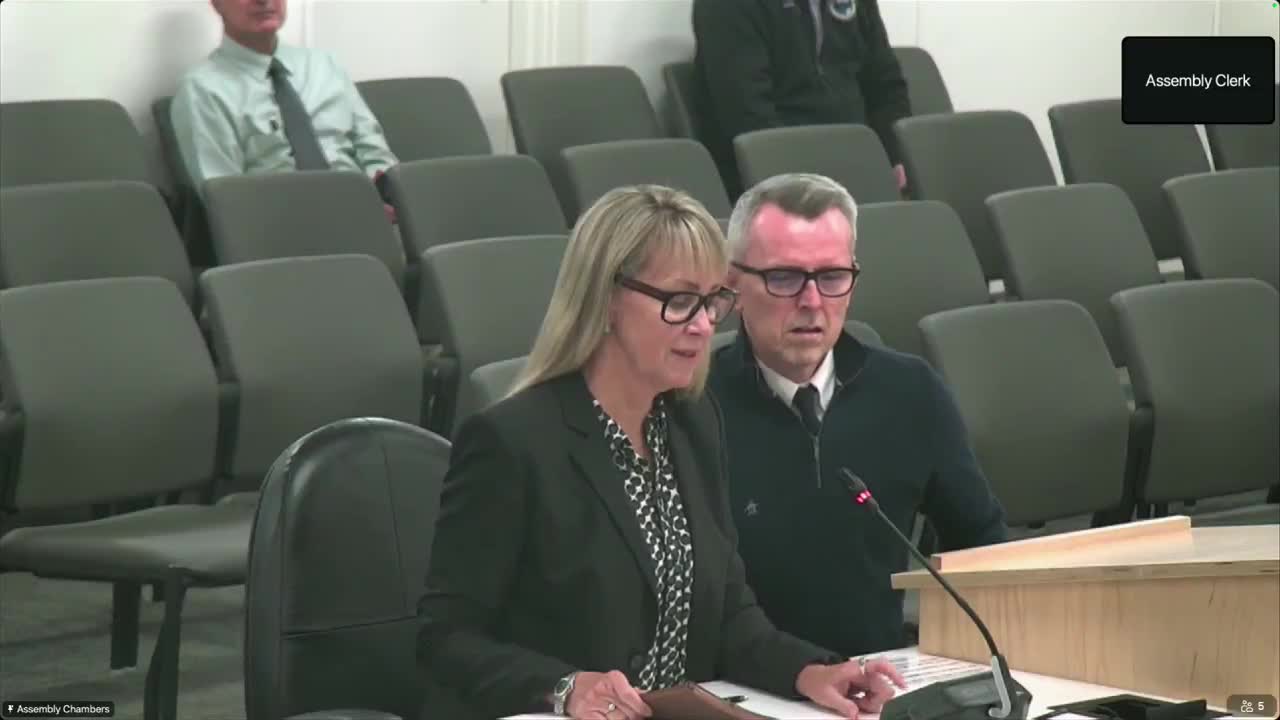
Kenai Peninsula Borough finance committee members heard a presentation Aug. 19 from METAR Public Funds about the borough’s investment pool, including current yield, duration and strategy.
Rick Phillips and Tanya Dazio of METAR told the committee the portfolio they manage for the borough yields about 3.45% with a duration-weighted average maturity of roughly 2.31 years. Phillips said the borough’s total portfolio is roughly $400,000,000 and that, in METAR’s analysis, “every 1 basis point is $40,000 per year” for that size portfolio.
The presentation outlined METAR’s primary objectives for public portfolios — safety, sufficient liquidity to meet bills, and earning a reasonable return over economic cycles — and recommended a roughly two-year average maturity as a “sweet spot” for the borough’s operating funds. Phillips said that modestly extending average maturity can increase long-run income: “that’s an extra 0.6 percent or 60 basis points…$2,400,000 of extra income just over the long run.”
Tanya Dazio described the current sector mix and operational details of the portfolio, showing investments spread across treasuries, mortgage-backed securities, corporate notes and agencies. She reported a current expense charge to the borough of about 6 basis points, saying, “We charge 6 basis points on average, so point 06%.” That fee reduces a hypothetical 3.56% gross yield to about 3.5% net in the firm’s example.
Phillips walked the committee through METAR’s view of the macroeconomic backdrop — the drivers they call FIGE (Federal Reserve policy, inflation, growth and employment) — and said markets expect multiple Fed cuts but METAR forecasts fewer cuts, citing stickier inflation and tariff-related effects on prices. He highlighted that intermediate- and longer-term yields react to inflation and growth expectations rather than solely to Fed policy.
Committee members asked about specific items in the presentation. Assemblymember Baseman asked about the fee; the firm responded with the 6-basis-points figure. Assemblymember Cox asked about the firm’s use of artificial intelligence in models; METAR said AI is used to help model cycles but that it remains one tool among many and does not replace human judgment. President Ribbons and others thanked the presenters and encouraged continued reporting in normalized formats, such as comparisons to the consumer price index.
METAR provided the committee with a maturity bucket chart showing a pipeline of reinvestment opportunities across 0–6 months to 2.5–5 years and emphasized balancing liquidity needs with return. The presentation closed with an offer to take follow-up questions; the committee moved on to the public-hearing items on its agenda.
Why this matters: the assembly’s investment strategy affects how much interest income the borough can apply to operations and capital needs, and the committee is weighing liquidity needs against potential higher yields further out on the curve.