Get Full Government Meeting Transcripts, Videos, & Alerts Forever!
Get email alerts on the Sign Code Amendments topic
No spam. Unsubscribe anytime.
Plan commission reviews proposed sign-code amendments to remove content-based rules; public hearing planned for Sept. 24
Summary
Appleton City staff presented proposed text amendments to Municipal Chapter 23 (Article 14, signs) to remove content-based sign definitions following federal court precedent. Staff said changes will move certain right-of-way sign regulations to Public Works policy and return to the commission for a public hearing Sept. 24.
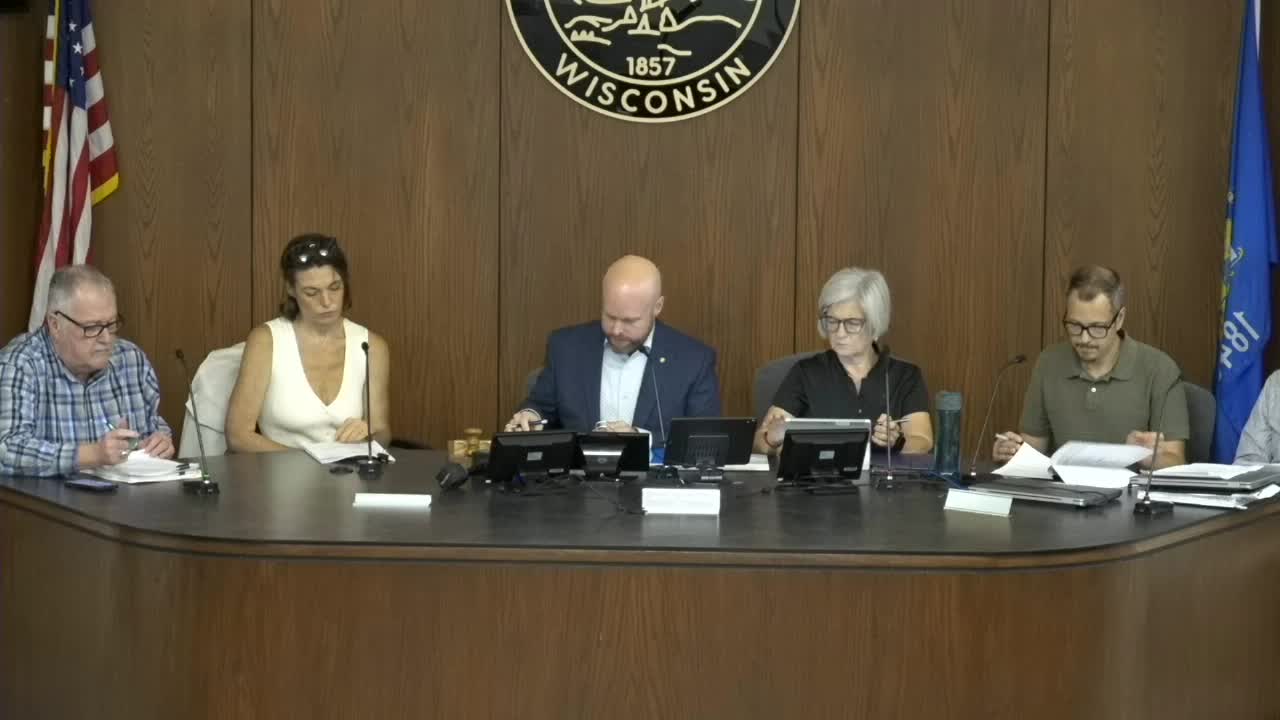
City staff on Aug. 13 presented proposed text amendments to the Appleton municipal zoning code, Chapter 23 Article 14 (signs), aimed at removing content-based definitions and other provisions that may be legally vulnerable under recent federal court decisions.
Lindsay, a city planner, said the proposed revisions focus on eliminating content-based definitions in the sign code, particularly for temporary signs, and on removing regulations that overlap with right-of-way authority. “The emphasis really is removing that content based definitions for various signs,” Lindsay said, adding the changes respond to Reed v. Town of Gilbert and other federal court cases.
Staff said the Department of Public Works will adopt or update a separate signs-in-the-right-of-way policy so the zoning code no longer regulates uses in the public right-of-way. Lindsay said the amendments also included a technical review to remove duplicative or misplaced regulations.
A representative of the mayor’s office noted the city attorney’s office has tracked relevant case law and that staff have exercised enforcement discretion where necessary. “These changes are really just to reflect the practices that we've been undertaking as a best practice,” the mayor said. The mayor added that if the code is not updated, staff will continue to exercise discretion in enforcement.
Staff advised the Plan Commission that the revisions will return for a public hearing before the commission and then proceed to the Common Council for adoption, likely on the council’s Sept. 24 agenda. No public commenters attended the meeting to speak on the amendments.
The presentation was informational; no formal action or vote on the amendments occurred at the Aug. 13 meeting. Staff encouraged commissioners and the public to review the draft and submit questions or comments ahead of the public hearing.