Get Full Government Meeting Transcripts, Videos, & Alerts Forever!
Get email alerts on the Council Procedures topic
No spam. Unsubscribe anytime.
San Antonio mayor seeks city‑manager initialing and earlier legal review for CCRs; council debates whether ordinance must change
Summary
At a Aug. 13 special session, Mayor Jones proposed that the city manager initial receipt of CCRs and that the city attorney provide earlier written legal review; councilmembers disagreed on whether the proposal requires changing existing council ordinances. No formal action was taken.
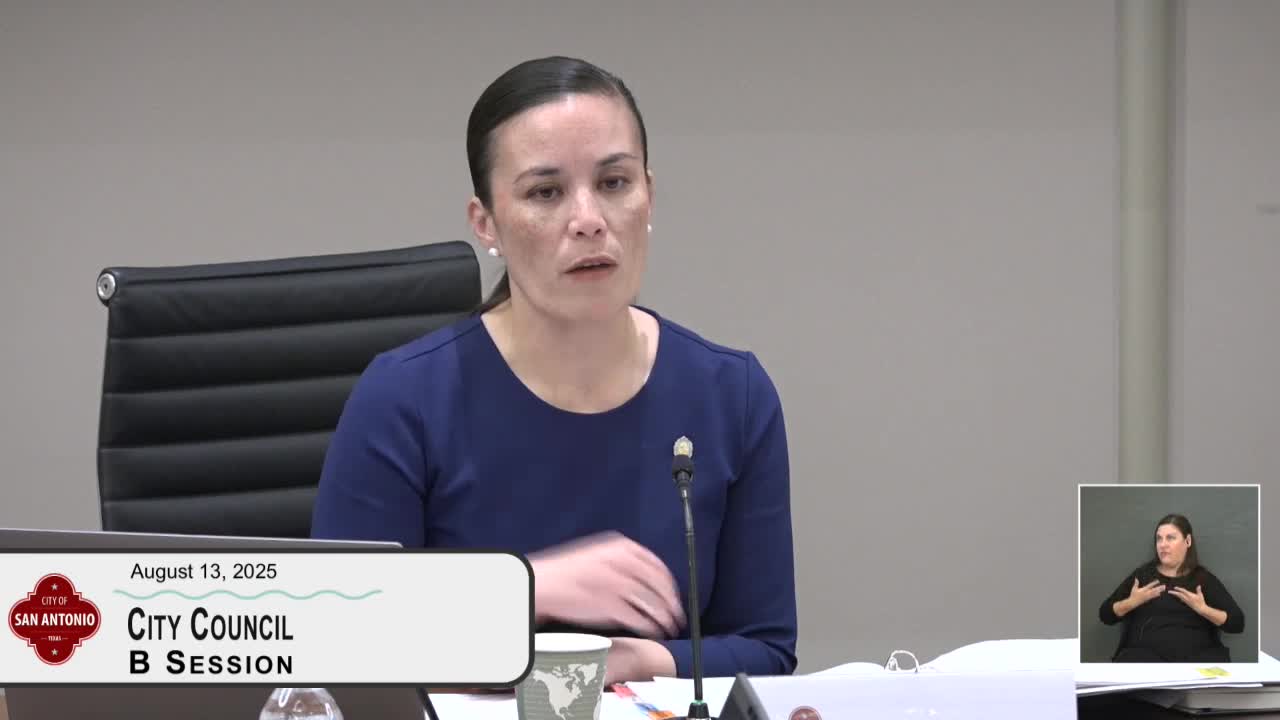
Mayor Ron (Jones) presented a memorandum during a special San Antonio City Council session on Aug. 13, 2025, proposing that the City Manager provide written acknowledgement (initials) when a CCR is filed and that the City Attorney perform an earlier legal review so elected officials and staff can identify potential legal risks before items consume council time.
The proposal, Mayor Jones said, is meant to speed internal processing and reduce legal exposure while not increasing the authority of unelected staff. “No le da a Erick más poder,” Jones said, describing the manager initial as a confirmation that notification actually occurred rather than a veto of council action.
The debate centered on whether the mayor’s memorandum changes or conflicts with the council’s CCR ordinance and whether any change should require a full ordinance amendment. Councilmember Claudia Castillo said the mayor’s suggested changes “absolutamente entran en conflicto con esta ordenanza,” and argued any substantive change should come to the council for a vote. Castillo and other colleagues repeatedly cited the council’s rulemaking authority in chapters the transcript identifies as chapter 11 and chapter 13 and traced changes to prior amendments in 2003, 2007 and 2024.
Council members and staff clarified procedural details discussed in the session: when a CCR is submitted, the mayor’s memorandum would ask the City Manager to acknowledge receipt within 24 hours; the City Attorney’s office would likewise acknowledge notification within 24 hours; and written legal concerns identified by the City Attorney would be returned to councilmembers in writing (a timeframe of “within 96 hours” was referenced during the discussion). City Manager Erick Hernández told the council he is “indifferent” about which notification method councilmembers use and said the manager’s office would provide whatever acknowledgement approach the council decides.
City Attorney Andy Segovia explained that his office provides legal advice and cannot unilaterally stop council proposals; he also confirmed that the city can draft ordinance language requiring any future change to the CCR process to be adopted by a council vote. “Si el consejo quiere hacer esto … tienen cualquier ordenanza habilidad para hacerlo,” Segovia said when asked whether the council can require that supplements or changes be adopted by vote.
Several council members supported early legal review as a way to reduce wasted staff and council time. Councilmember Marc (Court) described the CCR process as a tool residents use to request policy work and said earlier review could prevent items that don’t need full council attention from consuming resources. Councilmember White and others suggested the memo’s changes were aligned with current practice but urged that any substantive rule changes be brought to a session A for full council consideration.
Opponents, including Castillo and others, argued the memo as written could be read as altering the established CCR rules and that such alterations should not be executed without a formal ordinance amendment. Councilmembers raised additional procedural concerns: whether requiring coordination with the mayor’s office could create inadvertent quorums, whether past CCRs from prior councils should be refiled if authors no longer serve, and whether electronic signing (DocuSign) could solve logistical problems with obtaining manager initials.
The council heard multiple suggestions about next steps: continue committee-level discussion, keep the current CCR process in place while testing the mayor’s proposed administrative steps for a trial period, or prepare a formal ordinance amendment for a future full‑council vote. Mayor Jones confirmed the item was for discussion only and no action would be taken at the Aug. 13 meeting. “No se va a tomar ninguna acción el día de hoy,” she said.
The session ended with the council moving into executive session; members agreed to bring feedback back to staff and to consider whether any proposed changes should be drafted as an ordinance and scheduled for a future public vote.