Get Full Government Meeting Transcripts, Videos, & Alerts Forever!
Get email alerts on the Automatic License Plate Readers topic
No spam. Unsubscribe anytime.
Sedona council reviews license‑plate reader system as residents raise privacy concerns
Summary
Sedona officials and residents debated the police department's recent deployment of Flock automatic license plate readers, focusing on data retention, sharing with other agencies, oversight and the timing of the purchase. Council members asked staff for a pause and more public input before the system is used.
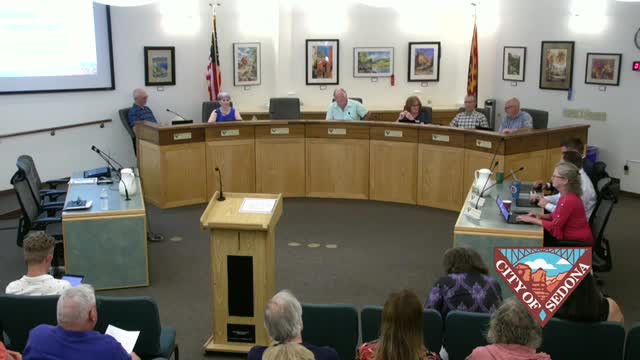
Sedona city officials spent hours on a contentious discussion about automatic license plate readers installed around the city, after the police department presented how the system works and a Flock Safety representative answered technical and policy questions.
The presentation outlined the technology’s investigative uses and safeguards. “Flock does not own it. Flock does not sell data,” Trevor Chandler, director of public affairs for Flock, told the council, adding the company stores images in the AWS GovCloud and said the firm does not apply facial recognition.
Supporters and the department described multiple cases where ALPR hits reported by nearby agencies helped locate suspects or missing people. “This technology provides Sedona Police with a real‑time tool to identify and intercept these suspects before they can further victimize our residents and businesses,” Patrol Commander Chris Dahl said, listing examples of suicidal or violent suspects located after ALPR alerts from outside agencies.
But many residents urged the council to suspend use and reconsider the program, citing privacy, potential data sharing with federal authorities, and the lack of an earlier public process. “We should not become a data collection point for any government, present or future, that would use that information to erode privacy,” Randy Cruz told the council during public comment.
Why it matters
Council members and residents said the issue matters because camera data—though billed as a law‑enforcement tool—creates a record of vehicle movement through Sedona’s streets and tourist corridors. Opponents warned that even limited, lawful uses could expand or be repurposed, and several speakers noted litigation and contract terminations in other cities as examples.
What the system does and does not do
Police and the Flock representative described the system as still‑image cameras that automatically read license plates and match them against ACIC/NCIC and locally generated “hot lists.” Chandler and Dahl emphasized technical limits: the system does not perform facial recognition, does not query the Motor Vehicle Division for owners automatically, and is intended to provide leads, not evidence of who was driving.
Key program details and department policy
- The department said 11 cameras have been installed at primary entry and thoroughfare points intended to help perimeter searches and locate vehicles tied to Amber/Silver alerts, stolen vehicles and suspects reported by other jurisdictions. - Flock and police described a standard retention practice of 30 days for most agencies; the company said some customers keep data longer and that the minimum retention Flock supports is seven days. Chandler said a limited set of images can be retained for machine‑learning improvements but without location or agency metadata. - Access is logged, individual user credentials are required, hot‑list entries require supervisor approval, and quarterly audits are part of the policy package Dahl outlined.
Council debate and next steps
Councilors, the city manager and police leaders acknowledged the procurement and deployment did not receive the kind of public discussion many residents expected. Several council members said the project should not move to operational use before the council and community set clearer rules.
After public comment and council discussion, the police commander said the cameras were not being actively used for enforcement and only one department account currently had access. Commander Dahl told the council he could turn access off if instructed. Multiple council members asked staff to pause any operational use and return with a proposed plan that includes the items residents and councilors raised.
What council asked staff to address before use
Council members asked staff to prepare a proposal that would include: a clear data‑retention recommendation, limits or rules for interagency sharing, a transparency portal or public reporting approach, a civilian advisory or review mechanism, and a recommended timeframe and metrics for any pilot. Several councilors specifically asked staff to present options for shorter retention periods (including multi‑day windows) and to show how sharing would be controlled and audited.
Public reaction
About a dozen residents addressed the council. Supporters said the technology helps solve crimes that cross jurisdictional lines and protects tourists and residents alike. Opponents urged removal of the system or a much more restrictive set of policies—some asked for immediate removal of cameras and for a public vote.
Where things stand
No formal council vote to adopt operational use or to terminate the contract was reported in the meeting. Council members directed city staff and police to return with a recommended public process and specific policy options; police leadership said it would not put the system into active investigative use until the council had given further direction. Commander Dahl said the system can be turned off while staff and council consider policy changes.
The council scheduled further follow‑up and asked staff to compile the timeline and records showing when the camera purchase and deployment were discussed in city budget and procurement documents, so that the council and public can see when decisions were made.
Ending
The session ended with council and staff agreeing to more work before activating the system for routine use: a detailed policy package, community input, and explicit council direction on retention, sharing and oversight. The department and the Flock representative said they would provide additional documentation requested by the council and that Flock’s transparency portal examples could be shared for the council and public to review.